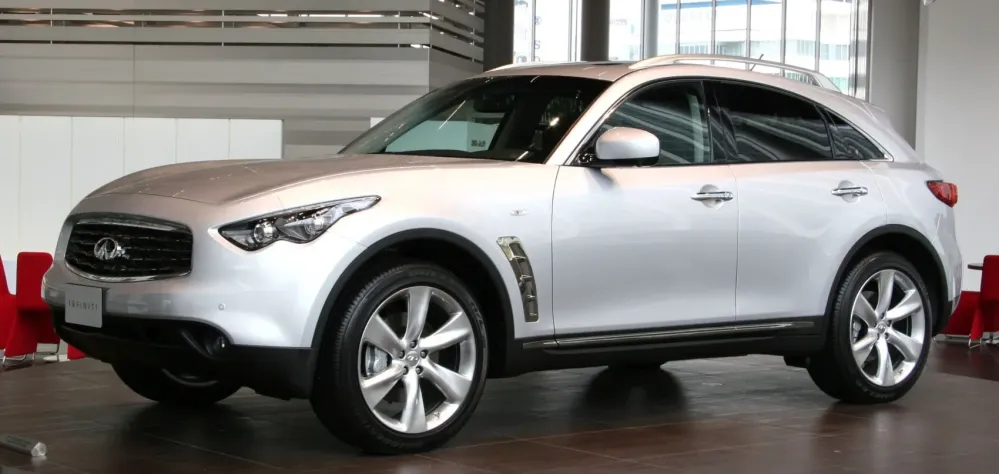
Click on image to view the full photo gallery
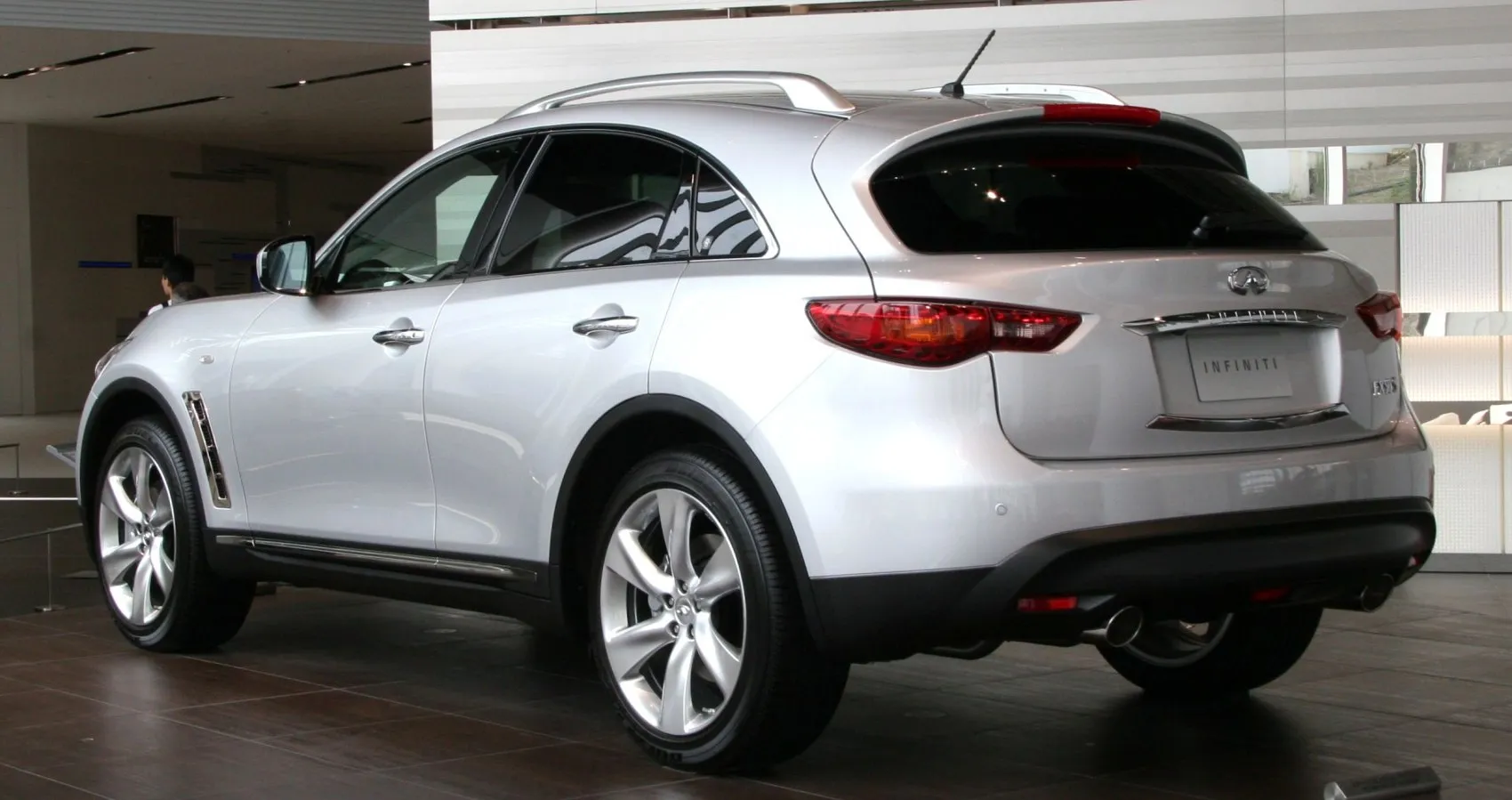
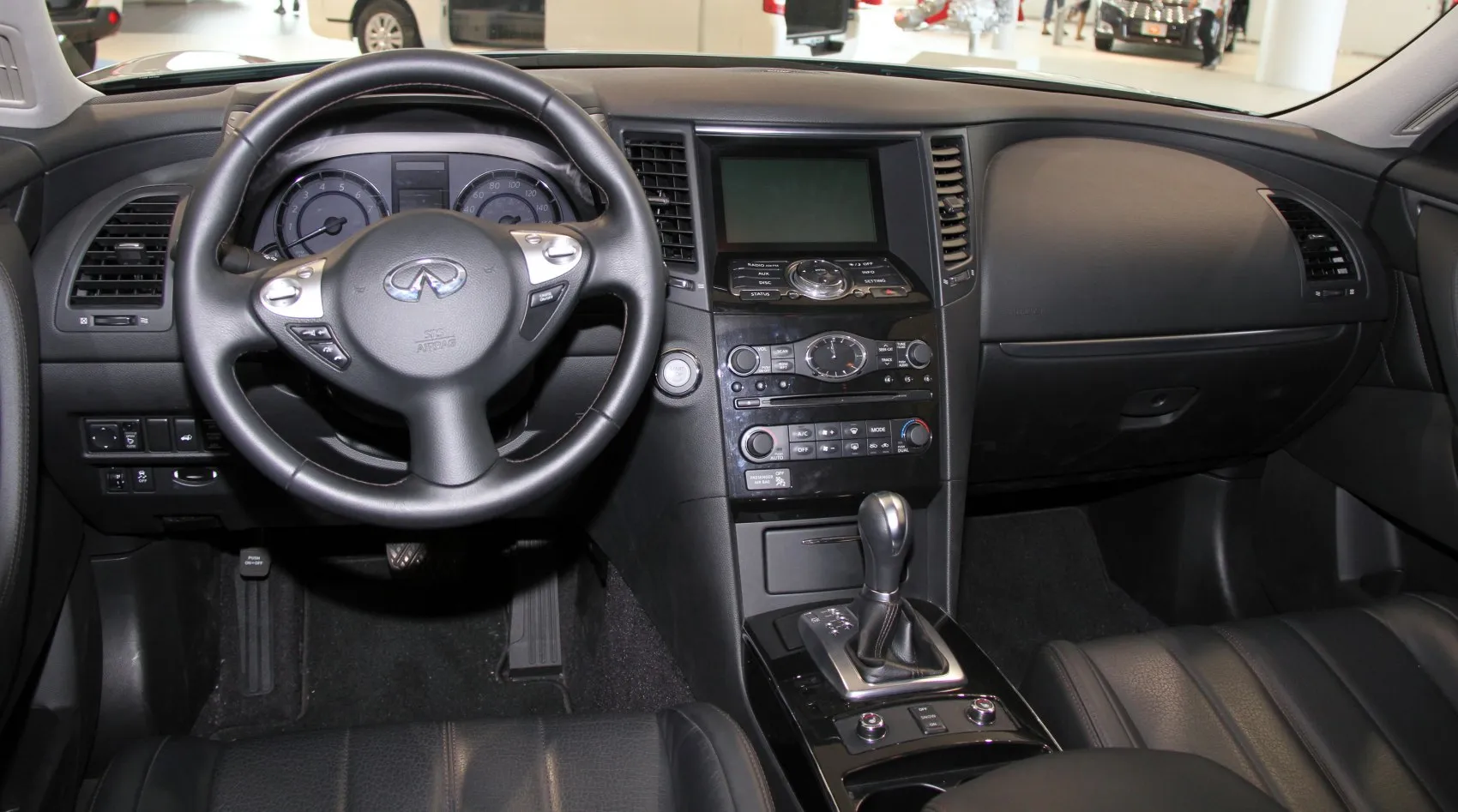
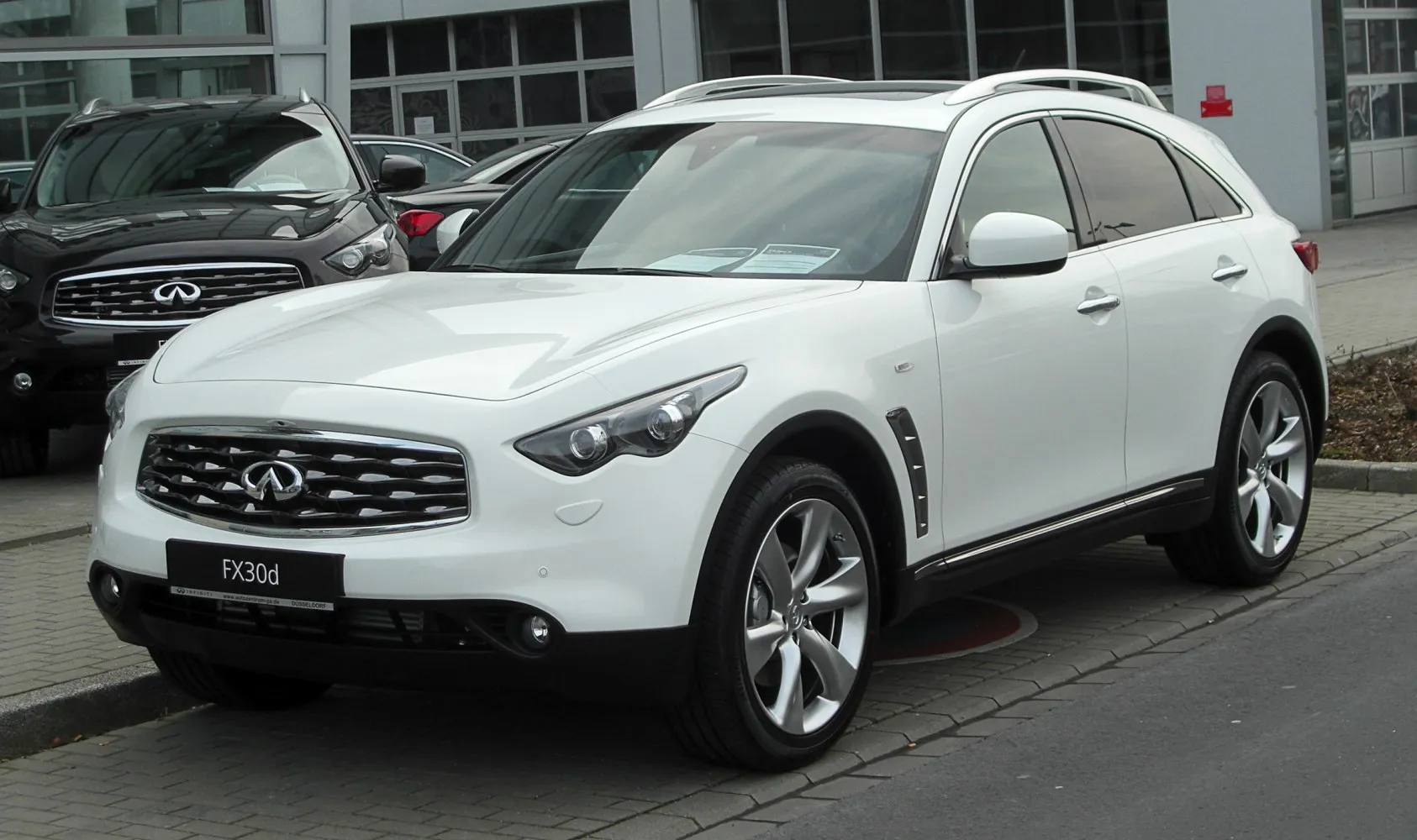
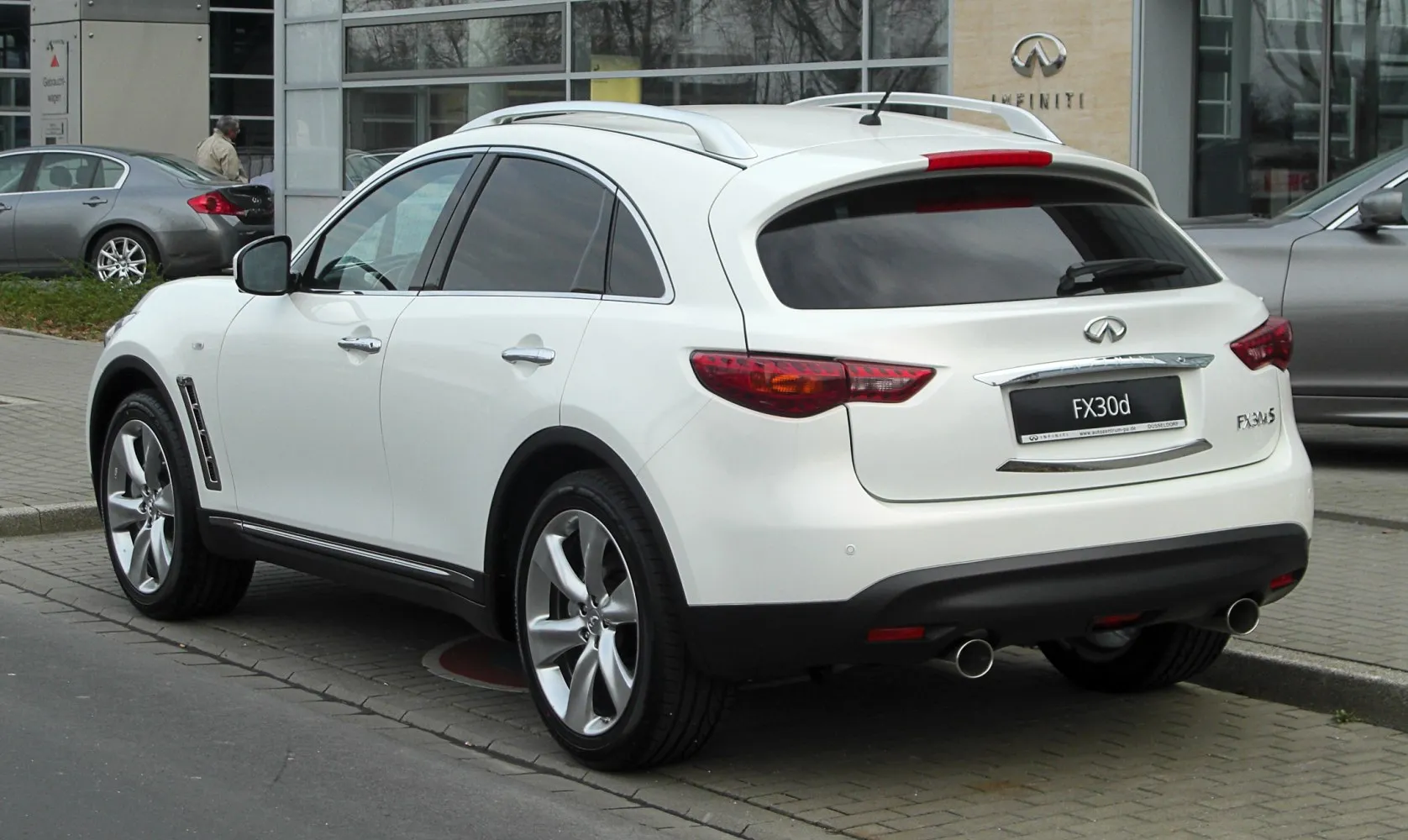
Infiniti FX II 30d (238 Hp) ATTESA E-TS AWD Automatic
Overall Rating
Infiniti FX:
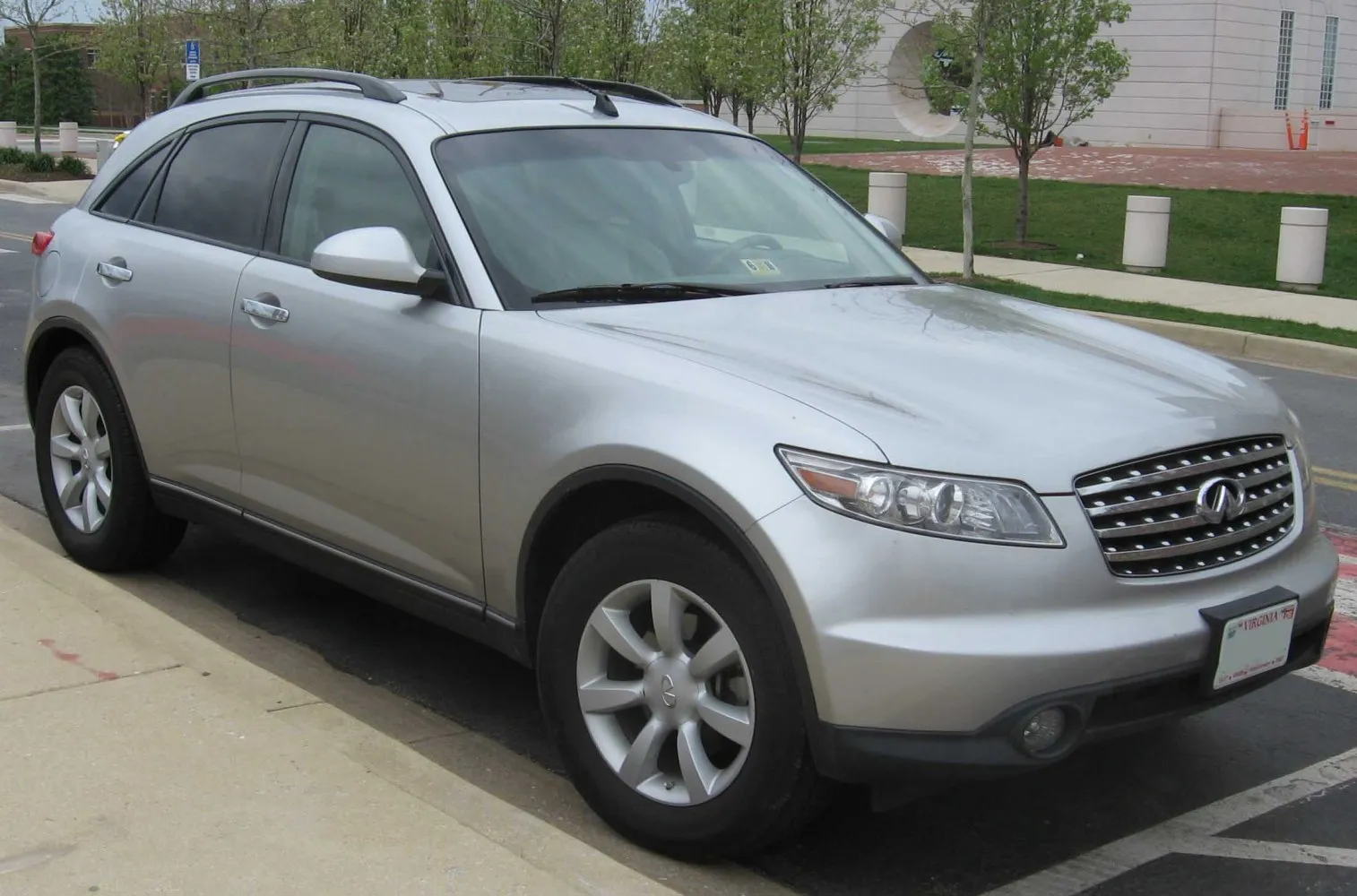
The Infiniti QX70, formerly the Infiniti FX until 2013, is a mid-size luxury crossover SUV marketed by Infiniti, Nissan's luxury division between 2002 and 2019 over two generations. The model replaced the QX4 as Infiniti's mid-size SUV. The model does not have a Nissan-branded equivalent, and was never sold in Japan.
The nameplates FX35 and FX45 refer to the two available engines. The FX35 is available in two drivetrains, the RWD and the AWD, which are both fitted to a dual overhead cam 3. 5-liter 24-valve V6 VQ35DE gasoline engine, with aluminum-alloy block and heads, electronically controlled throttle system, and low-friction molybdenum-coated pistons that makes use of the continuous variable valve timing which in part optimizes the opening of intake valves. This is also coupled with an electronically controlled super-wide ratio five-speed automatic with a manumatic shift mode that includes the option of sequentially selected manual gearshifts and downshift rev-matching....(Read more on Wikipedia)
II Overview:
Infiniti FX (II). With 550 Nm of torque, it offers ample pulling power. It has moderate fuel consumption (~11.2 l/100km). At around 2150 kg, it’s on the heavier side. All‑wheel drive provides excellent grip, ideal for off‑road use. Acceleration is good (0–100 km/h in 8.3 s). The top speed reaches 212 km/h. A vehicle that combines characteristics of SUVs and hatchbacks for versatility. Seating for 5 makes it ideal for daily use.
The Infiniti FX II generation was not officially tested by Euro NCAP. However, Infiniti vehicles typically feature a robust safety structure and comprehensive active/passive safety systems for their era.
30d (238 Hp) ATTESA E-TS AWD Automatic Verdict:

Performance Verdict
The diesel V6 offers strong torque, ensuring confident pulling power and relaxed cruising, though acceleration is more measured compared to the petrol V8.
Fuel Economy
Significantly better fuel efficiency than the petrol engines, making it the most economical choice for long journeys and daily driving, reducing running costs.
Pros and Cons:
Pros:
- • Striking and distinctive design
- • Strong engine performance, especially the V8
- • Engaging and sporty handling for an SUV
- • Luxurious and well-appointed interior
- • Good standard features for its class
Cons:
- • Poor fuel economy for petrol engines
- • Firm ride quality, especially on larger wheels
- • Limited rear visibility due to design
- • Relatively small cargo space for its exterior size
- • High running and maintenance costs
Specifications:
Specifications are compared to those of the previous generation(II: 2008 - 2011).
| General: | |
|---|---|
| Brand: | Infiniti |
| Model: | FX |
| Generation: | II |
| Modification (Engine): | 30d (238 Hp) ATTESA E-TS AWD Automatic |
| Start of production: | 2010 |
| End of production: | 2012 |
| Powertrain Architecture: | Internal Combustion engine |
| Body type: | Crossover |
| Seats: | 5 |
| Doors: | 5 |
| Engine: | |
|---|---|
| Engine systems: | Particulate filter |
| Power: | 238 Hp @ 3750 rpm. Same horsepower |
| Power per litre: | 79.5 Hp/l [5mm more] |
| Torque: | 550 Nm @ 1750 rpm. |
| Engine Model/Code: | V9X More details about the engine V9X |
| Engine displacement: | 2993 |
| Number of cylinders: | 6 |
| Engine configuration: | V-engine |
| Number of valves per cylinder: | 4 |
| Fuel injection system: | Diesel Commonrail |
| Engine aspiration: | Turbocharger, Intercooler |
| Valvetrain: | DOHC |
| Engine oil capacity: | 5.3 l |
| Coolant: | 13 l |
| Engine layout: | Front, Longitudinal |
| Cylinder Bore: | 84 mm mm |
| Piston Stroke: | 90 mm mm |
| Performance: | |
|---|---|
| Fuel Type: | Diesel |
| Fuel consumption (economy) - urban: | 11.2 l/100 km |
| Fuel consumption (economy) - extra urban: | 7.8 l/100 km |
| Fuel consumption (economy) - combined (NEDC): | 9 l/100 km |
| Fuel consumption (economy) - urban (NEDC): | 11.2 l/100 km |
| Fuel consumption (economy) - extra urban (NEDC): | 7.8 l/100 km |
| Fuel consumption (economy) - combined: | 9 l/100 km |
| Emission standard: | Euro 5 |
| Acceleration 0 - 100 km/h: | 8.3 sec |
| Acceleration 0 - 62 mph: | 8.3 sec |
| Maximum speed: | 212 km/h |
| Weight-to-power ratio: | 9 kg/Hp, 110.7 Hp/tonne |
| Weight-to-torque ratio: | 3.9 kg/Nm, 255.8 Nm/tonne |
| Acceleration 0 - 60 mph: | 7.9 sec |
| Space: | |
|---|---|
| Kerb Weight: | 2150 |
| Max. weight: | 2520 |
| Max load: | 370 |
| Trunk (boot) space - maximum: | 1305 l |
| Trunk (boot) space - minimum: | 410 l |
| Fuel tank capacity: | 90 l |
| Size: | |
|---|---|
| Length: | 4865 mm mm [5mm more] |
| Width: | 1925 mm mm [Same width.] |
| Height: | 1680 mm mm [Same height.] |
| Wheelbase: | 2885 mm mm [Same wheelbase.] |
| Width including mirrors: | 2134 mm |
| Minimum turning circle (turning diameter): | 11.2 m [above average] |
| Powertrain: | |
|---|---|
| Drivetrain Architecture | The Internal combustion engine (ICE) drives the rear wheels permanently, and the front wheels are driven through an electrically or mechanically operated clutch if necessary. |
| Drive wheel | All wheel drive (4x4) |
| Number of gears | 7 |
| Transmission type | Automatic |
| Front brakes | Ventilated discs, 355 mm [Best for performance and cooling.] |
| Rear brakes | Ventilated discs, 350 mm [Best for performance and cooling.] |
| Assisting systems | ABS (Anti-lock braking system) |
| Steering type | Steering rack and pinion |
| Power steering | Hydraulic Steering |
| Tires size | 265/50 R20 |
| Wheel rims size | 8J x 20 |
| Front suspension | Double wishbone, Transverse stabilizer |
| Rear suspension | Independent multi-link spring suspension with stabilizer |











The hidden gems or the annoying flaws? Expose the truth about the Infiniti FX!