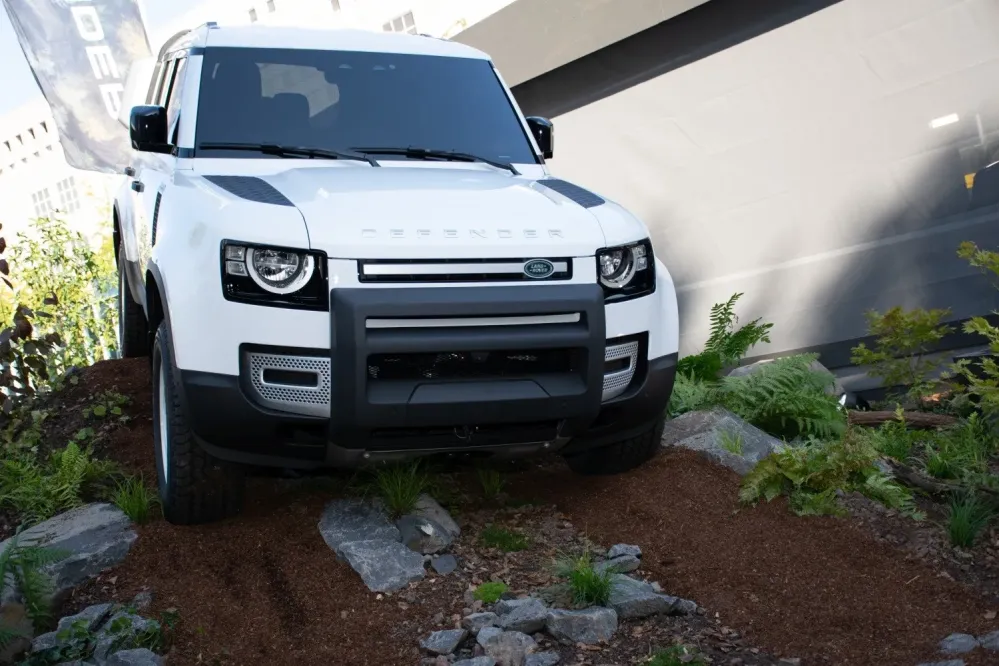
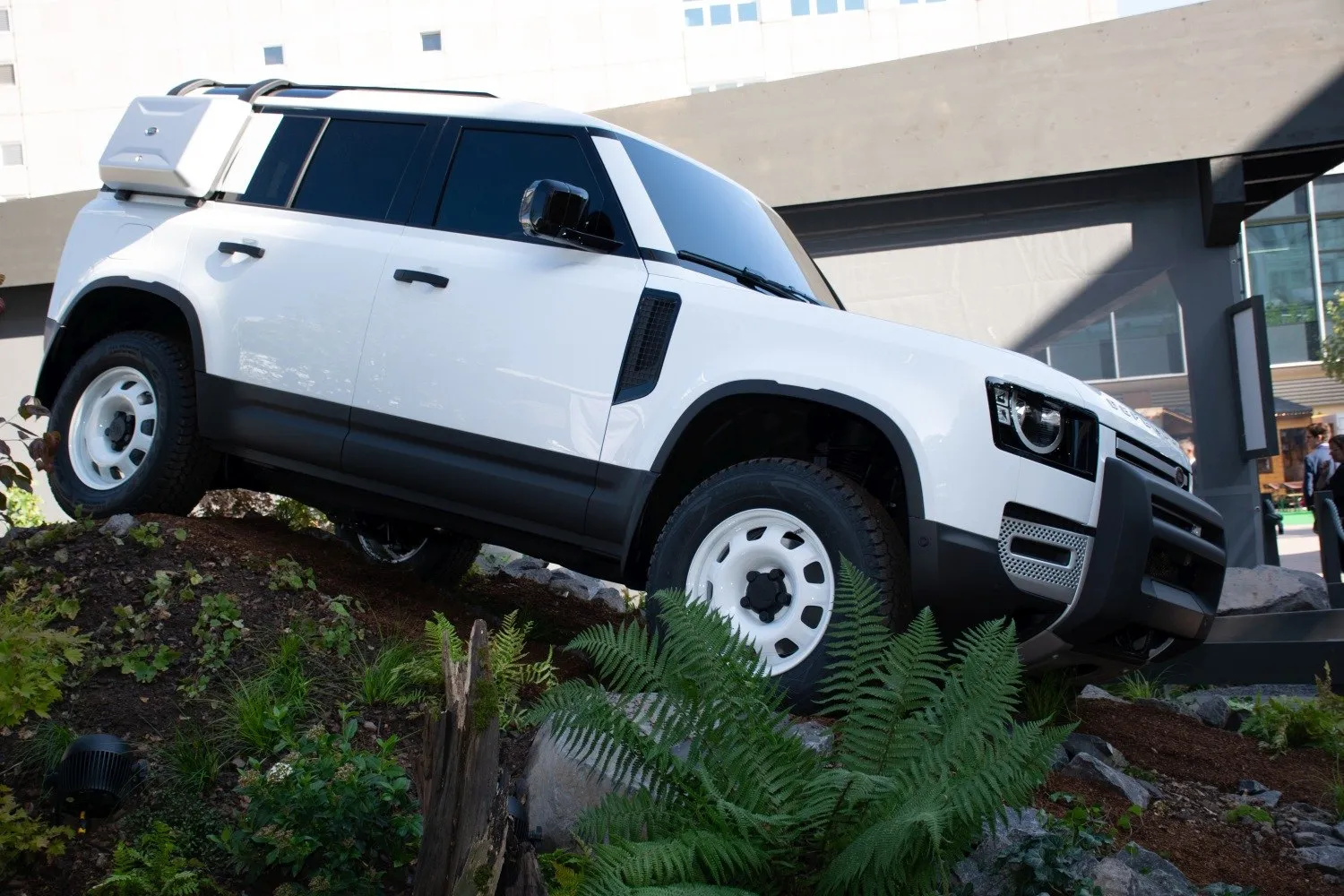
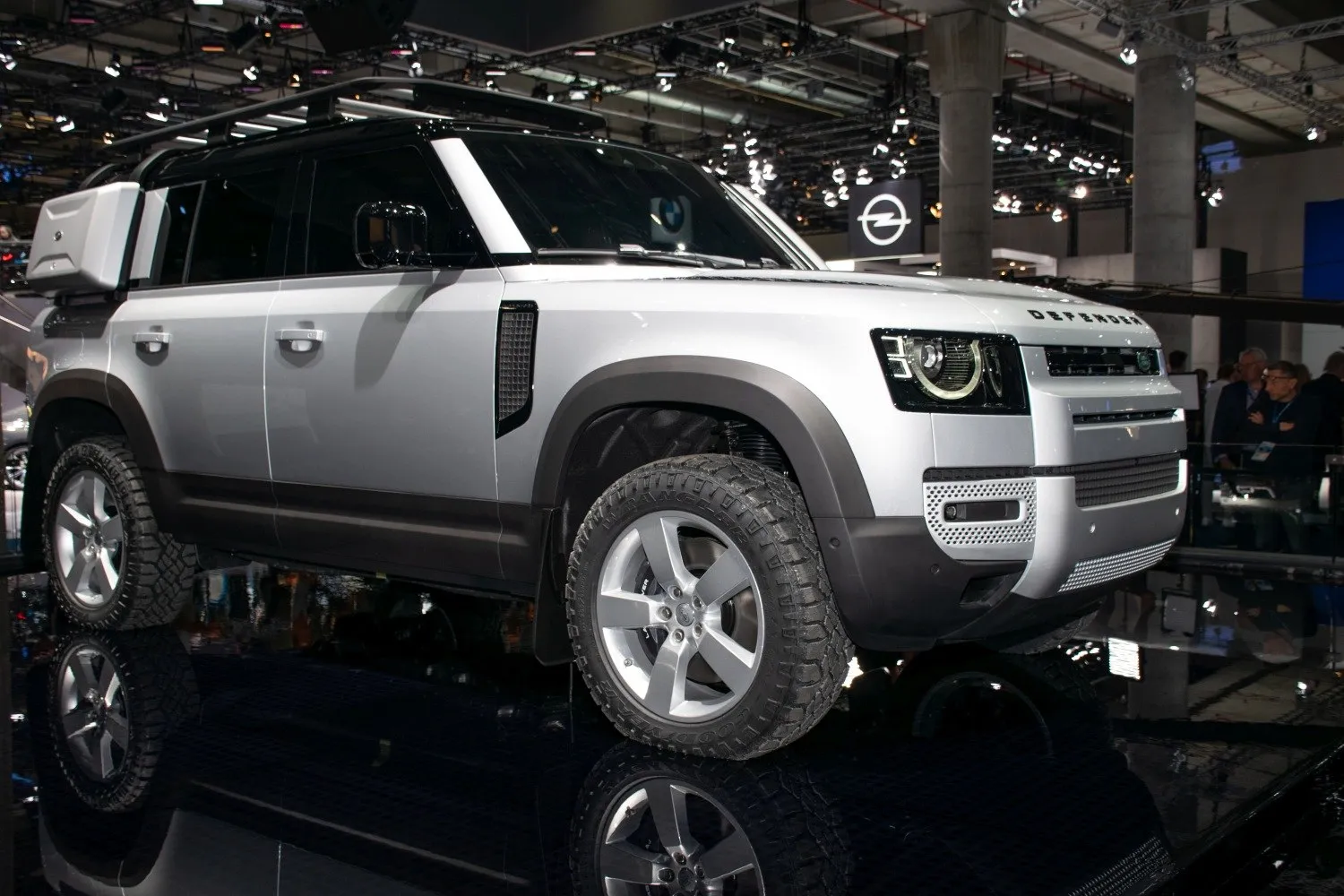
Click on image to view the full photo gallery
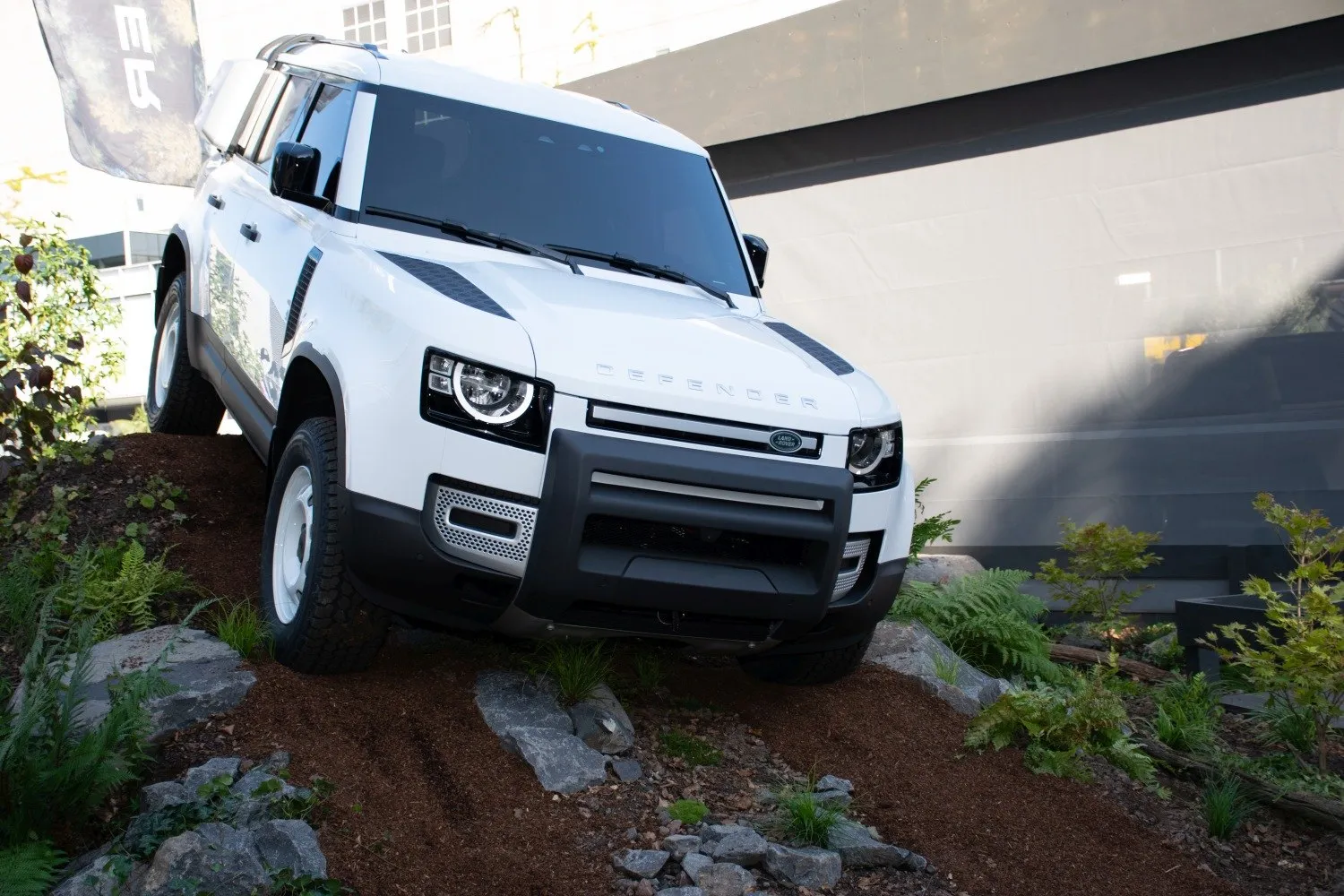
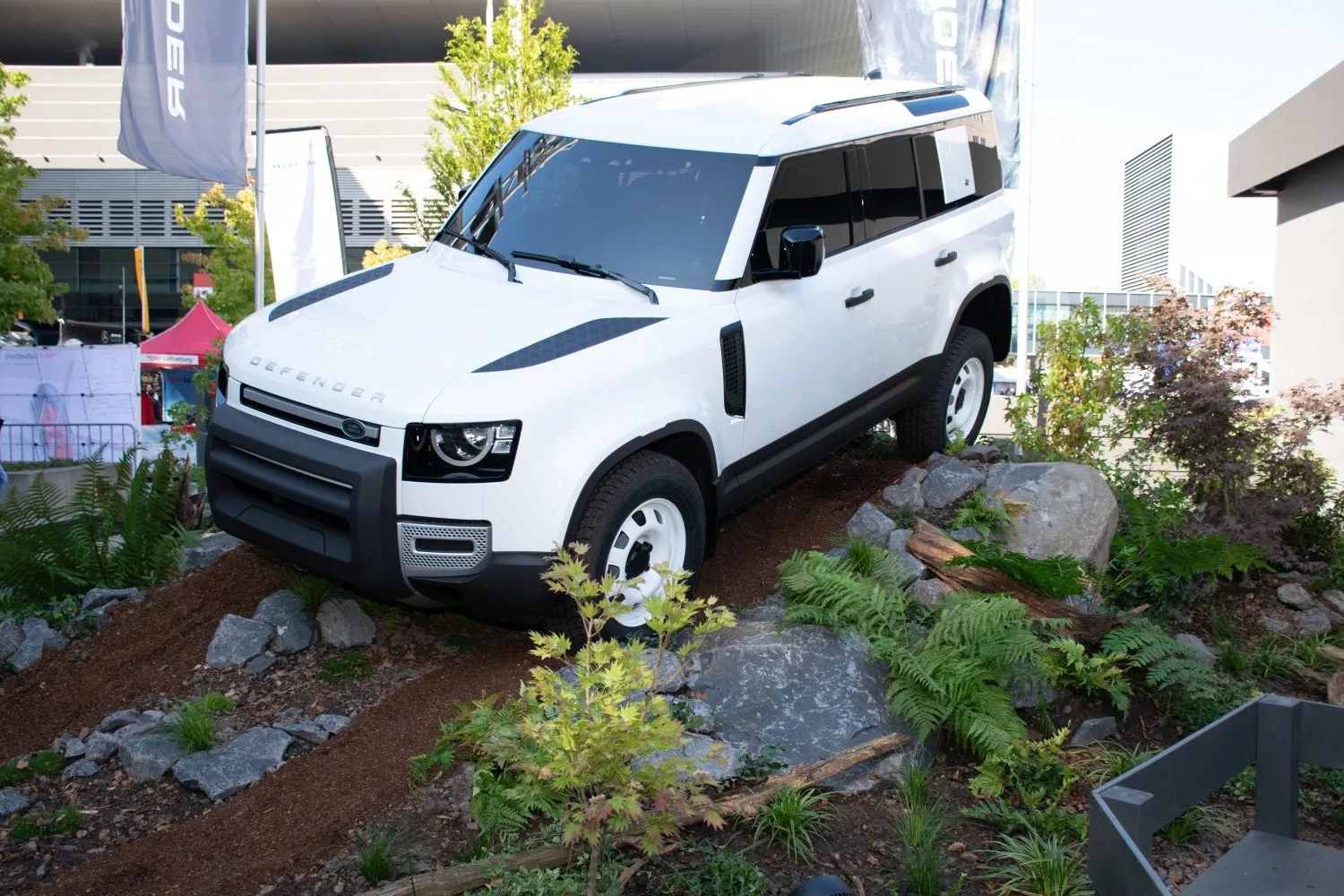
Land Rover Defender 110 (L663) 2.0 P300 (300 Hp) AWD Automatic 5+2 Seating
Overall Rating
Land Rover Defender:
The Land Rover Defender is a series of British off-road cars and pickup trucks. They have four-wheel drive, and were developed in the 1980s from the Land Rover series which was launched at the Amsterdam Motor Show in April 1948. Following the 1989 introduction of the Land Rover Discovery, "Land Rover" became the name of a broader marque, no longer the name of a specific model; thus, in 1990, Land Rover renamed them Defender 90, Defender 110 and Defender 130 respectively....(Read more on Wikipedia)
110 (L663) Overview:
Land Rover Defender (110 (L663)). With 400 Nm of torque, it offers ample pulling power. It has moderate fuel consumption (~11.75 l/100km). At around 2243 kg, it’s on the heavier side. All‑wheel drive provides excellent grip, ideal for off‑road use. Acceleration is good (0–100 km/h in 8.1 s). The top speed reaches 191 km/h. A rugged vehicle built to handle rough terrains and challenging driving conditions. With seating for 7, it’s perfect for larger families.
2.0 P300 (300 Hp) AWD Automatic 5+2 Seating Verdict:

Performance Verdict
Provides adequate power for daily driving with 300 Hp, but its 8.1-second acceleration is less brisk than diesel counterparts due to lower torque.
Fuel Economy
Fuel consumption is on the higher side for a 2.0L engine, ranging from 9.9-10.2 l/100 km, reflecting the vehicle's weight.
Pros and Cons:
Pros:
- • Exceptional off-road capability and wading depth
- • Distinctive, iconic, and modern design
- • Luxurious, practical, and highly configurable interior
- • Wide range of powerful and efficient engine options, including PHEV
- • Advanced technology, infotainment, and safety features
- • High towing capacity and robust build quality
Cons:
- • High purchase price and potentially high running costs for top trims
- • Fuel consumption can be significant for petrol variants, especially the V8
- • Large dimensions can make urban maneuvering and parking challenging
- • Perceived reliability concerns, though improving with newer models
- • Some interior materials might not feel as premium as direct luxury rivals
Specifications:
Specifications are compared to those of the previous generation(110 (L663): July, 2024 - ).
| General: | |
|---|---|
| Brand: | Land Rover |
| Model: | Defender |
| Generation: | 110 (L663) |
| Modification (Engine): | 2.0 P300 (300 Hp) AWD Automatic 5+2 Seating |
| Start of production: | September, 2019 |
| Powertrain Architecture: | Internal Combustion engine |
| Body type: | Off-road vehicle |
| Seats: | 7 |
| Doors: | 5 |
| Engine: | |
|---|---|
| Engine systems: | Start & Stop System |
| Power: | 300 Hp @ 5500 rpm. Same horsepower |
| Power per litre: | 150.2 Hp/l [15mm more] |
| Torque: | 400 Nm @ 1500-4000 rpm. |
| Engine Model/Code: | Ingenium / PT204 More details about the engine Ingenium / PT204 |
| Engine displacement: | 1997 |
| Number of cylinders: | 4 |
| Engine configuration: | Inline |
| Number of valves per cylinder: | 4 |
| Fuel injection system: | Direct injection |
| Engine aspiration: | Turbocharger, Intercooler |
| Engine oil capacity: | 7 l |
| Coolant: | 11.3 l |
| Engine layout: | Front, Longitudinal |
| Cylinder Bore: | 83 mm mm |
| Piston Stroke: | 92.29 mm mm |
| Compression ratio: | 9.5:1 |
| Performance: | |
|---|---|
| Fuel Type: | Petrol (Gasoline) |
| Fuel consumption (economy) - urban: | 11.6-11.9 l/100 km |
| Fuel consumption (economy) - extra urban: | 9.0-9.3 l/100 km |
| Combined fuel consumption (WLTP): | 11.6-12.5 l/100 km |
| Fuel consumption at Low speed (WLTP): | 14.5-15.3 l/100 km |
| Fuel consumption at Medium speed (WLTP): | 11.1-12.0 l/100 km |
| Fuel consumption at high speed (WLTP): | 10.0-10.8 l/100 km |
| Fuel consumption at very high speed (WLTP): | 12.1-13.1 l/100 km |
| Fuel consumption (economy) - urban (NEDC, WLTP equivalent): | 11.6-11.9 l/100 km |
| Fuel consumption (economy) - extra urban (NEDC, WLTP equivalent): | 9.0-9.3 l/100 km |
| Fuel consumption (economy) - combined (NEDC, WLTP equivalent): | 9.9-10.2 l/100 km |
| Fuel consumption (economy) - combined: | 9.9-10.2 l/100 km |
| Emission standard: | Euro 6d-TEMP-EVAP-ISC |
| Acceleration 0 - 100 km/h: | 8.1 sec |
| Acceleration 0 - 62 mph: | 8.1 sec |
| Maximum speed: | 191 km/h |
| Weight-to-power ratio: | 7.5 kg/Hp, 133.7 Hp/tonne |
| Weight-to-torque ratio: | 5.6 kg/Nm, 178.3 Nm/tonne |
| Acceleration 0 - 60 mph: | 7.7 sec |
| Space: | |
|---|---|
| Kerb Weight: | 2243 |
| Max. weight: | 3200 |
| Max. roof load: | 100-168 kg |
| Max load: | 957 |
| Trunk (boot) space - maximum: | 2233 l |
| Trunk (boot) space - minimum: | 231 l |
| Permitted trailer load with brakes (12%): | 3500 kg |
| Fuel tank capacity: | 90 l |
| Permitted trailer load without brakes: | 750 kg |
| Permitted towbar download: | 150 kg |
| Size: | |
|---|---|
| Ramp-over (brakeover) angle: | 22-28° |
| Wading depth: | 900 mm |
| Length: | 5018 mm mm [15mm more] |
| Width: | 1996 mm mm [68mm less] |
| Height: | 1967 mm mm [28mm less] |
| Wheelbase: | 3022 mm mm [1mm less] |
| Width with mirrors folded: | 2008 mm |
| Width including mirrors: | 2105 mm |
| Front track: | 1704 mm |
| Rear (Back) track: | 1700 mm |
| Front overhang: | 845 mm |
| Rear overhang: | 1151 mm |
| Ride height (ground clearance): | 218-291 mm |
| Minimum turning circle (turning diameter): | 13.12 m [above average] |
| Approach angle: | 30.1-38° |
| Departure angle: | 37.7-40° |
| Climb angle: | 45° |
| Powertrain: | |
|---|---|
| Drivetrain Architecture | The Internal combustion engine (ICE) drives permanently the four wheels of the vehicle. |
| Drive wheel | All wheel drive (4x4) |
| Number of gears | 8 |
| Transmission type | Automatic |
| Front brakes | Disc, 349 mm [above average] |
| Rear brakes | Disc, 325 mm [above average] |
| Assisting systems | ABS (Anti-lock braking system) |
| Steering type | Steering rack and pinion |
| Power steering | Electric Steering |
| Tires size | 255/70 R18; 255/65 R19; 255/60 R20 |
| Wheel rims size | 8J x 18; 8J x 19; 8.5J x 20 |
| Front suspension | Double wishbone |
| Rear suspension | Independent multi-link suspension |

















How many miles have you covered in your Land Rover Defender? Share your journey!