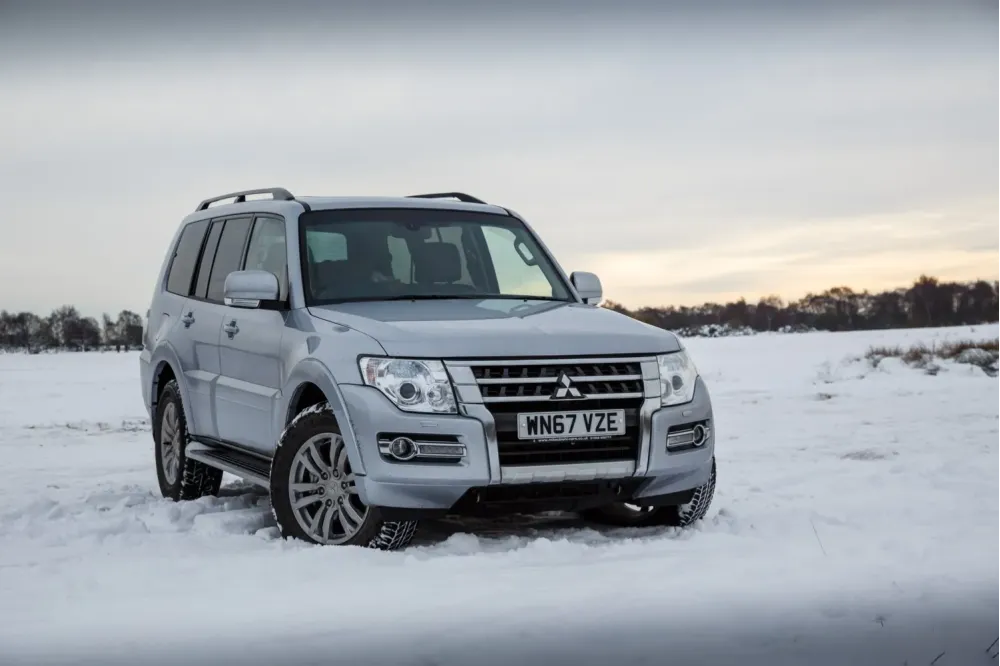
Click on image to view the full photo gallery
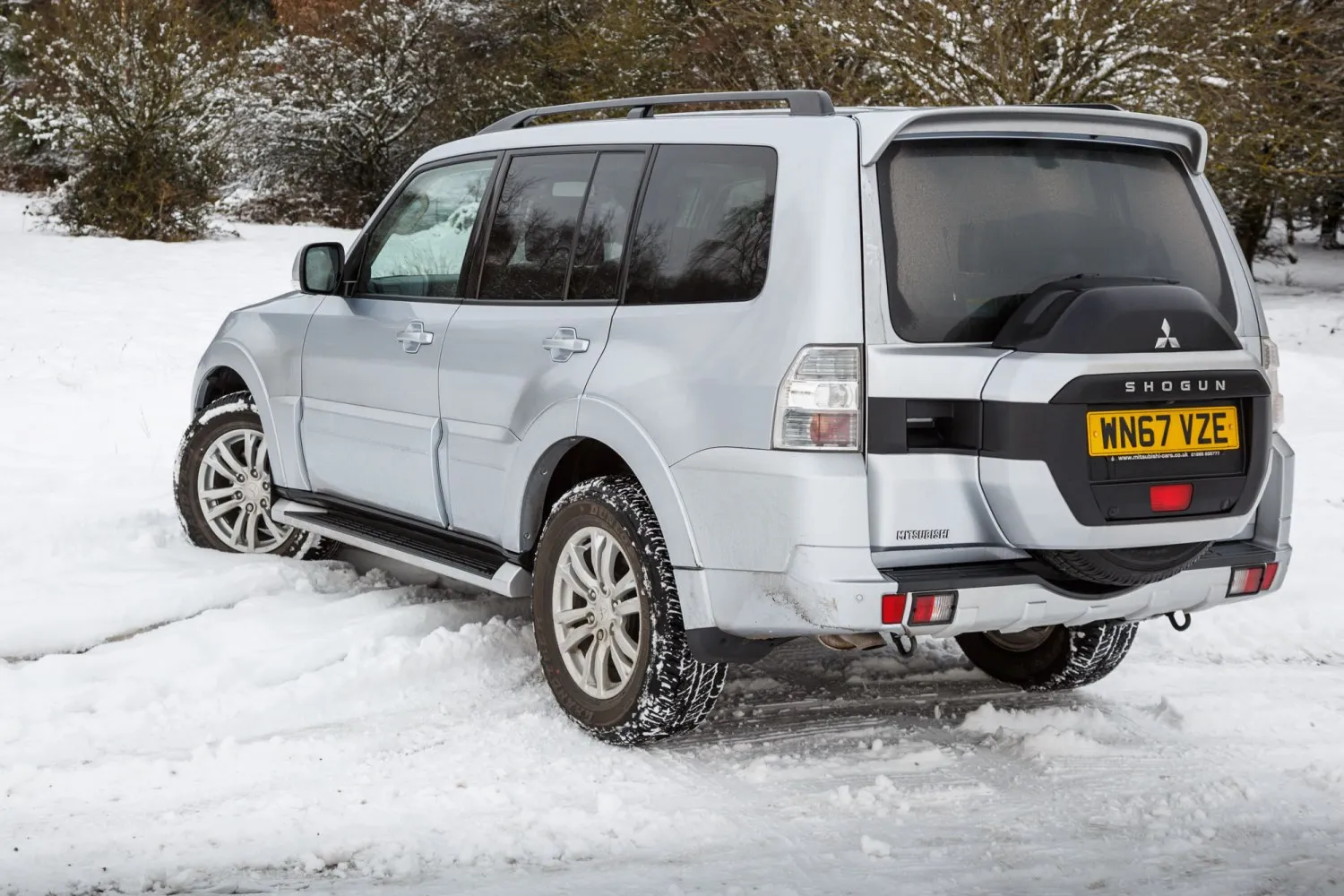
Mitsubishi Shogun IV (5-door, facelift 2014) 3.2 DI-D (187 Hp) Super Select 4WD INVECS-II
Overall Rating
Mitsubishi Shogun:
The Mitsubishi Pajero is a full-size SUV manufactured and marketed globally by Mitsubishi over four generations—introduced in 1981 and discontinued in 2021.
The Pajero nameplate derives from Leopardus pajeros, the Pampas cat. Mitsubishi marketed the SUV as the Montero in North America, Spain, and Latin America due to the term "pajero" being derogatory in Spanish. In the United Kingdom, it was known as the Shogun, named after the Japanese word for "General. " The model was discontinued in North America in 2006....(Read more on Wikipedia)
IV (5-door, facelift 2014) Overview:
Mitsubishi Shogun (IV (5-door, facelift 2014)). With 441 Nm of torque, it offers ample pulling power. It has moderate fuel consumption (~10.5 l/100km). At around 2375 kg, it’s on the heavier side. All‑wheel drive provides excellent grip, ideal for off‑road use. Acceleration is relatively slow (0–100 km/h in 11.1 s). The top speed reaches 180 km/h. A sport utility vehicle offering higher ground clearance and versatile cargo space. With seating for 7, it’s perfect for larger families.
3.2 DI-D (187 Hp) Super Select 4WD INVECS-II Verdict:

Performance Verdict
The 3.2 DI-D engine provides robust torque essential for off-road prowess and towing, though on-road acceleration is leisurely, reflecting its heavy-duty nature rather than sporty aspirations.
Fuel Economy
Fuel consumption of 9.3 l/100 km is acceptable for a large, capable 4x4 of this weight and era, but it's not a segment leader in efficiency compared to more modern rivals.
Pros and Cons:
Pros:
- • Exceptional off-road capability with Super Select 4WD
- • High towing capacity (3500 kg)
- • Robust and reliable 4M41 diesel engine
- • Spacious 7-seater interior
- • Durable construction built for tough conditions
- • Good value for money in the used market
Cons:
- • Dated interior design and technology
- • Leisurely on-road performance and acceleration
- • Higher fuel consumption compared to modern SUVs
- • Less refined ride quality on tarmac
- • Large turning circle affects maneuverability
- • Limited active safety features compared to newer vehicles
Specifications:
Specifications are compared to those of the previous generation(IV (3-door, facelift 2011): 2011 - 2014).
| General: | |
|---|---|
| Brand: | Mitsubishi |
| Model: | Shogun |
| Generation: | IV (5-door, facelift 2014) |
| Modification (Engine): | 3.2 DI-D (187 Hp) Super Select 4WD INVECS-II |
| Start of production: | 2014 |
| End of production: | 2019 |
| Powertrain Architecture: | Internal Combustion engine |
| Body type: | SUV |
| Seats: | 7 |
| Doors: | 5 |
| Engine: | |
|---|---|
| Engine systems: | Particulate filter |
| Power: | 187 Hp @ 3500 rpm. |
| Power per litre: | 58.4 Hp/l |
| Torque: | 441 Nm @ 2000 rpm. |
| Engine Model/Code: | 4M41 [Same engine] More details about the engine 4M41 |
| Engine displacement: | 3200 |
| Number of cylinders: | 4 |
| Engine configuration: | Inline |
| Number of valves per cylinder: | 4 |
| Fuel injection system: | Diesel Commonrail |
| Engine aspiration: | Turbocharger, Intercooler |
| Valvetrain: | DOHC |
| Engine oil capacity: | 9.8 l |
| Coolant: | 9 l |
| Engine layout: | Front, Longitudinal |
| Cylinder Bore: | 98.5 mm mm |
| Piston Stroke: | 105 mm mm |
| Compression ratio: | 16:1 |
| Performance: | |
|---|---|
| Fuel Type: | Diesel |
| Fuel consumption (economy) - urban: | 10.5 l/100 km |
| Fuel consumption (economy) - extra urban: | 8.6 l/100 km |
| Fuel consumption (economy) - combined (NEDC): | 9.3 l/100 km |
| Fuel consumption (economy) - urban (NEDC): | 10.5 l/100 km |
| Fuel consumption (economy) - extra urban (NEDC): | 8.6 l/100 km |
| Fuel consumption (economy) - combined: | 9.3 l/100 km |
| Emission standard: | Euro 6b |
| Acceleration 0 - 100 km/h: | 11.1 sec |
| Acceleration 0 - 62 mph: | 11.1 sec |
| Maximum speed: | 180 km/h |
| Weight-to-power ratio: | 12.7 kg/Hp, 78.7 Hp/tonne |
| Weight-to-torque ratio: | 5.4 kg/Nm, 185.7 Nm/tonne |
| Acceleration 0 - 60 mph: | 10.5 sec |
| Space: | |
|---|---|
| Kerb Weight: | 2375 |
| Max. weight: | 3030 |
| Max. roof load: | 100 kg |
| Max load: | 655 |
| Trunk (boot) space - maximum: | 1790 l |
| Permitted trailer load with brakes (12%): | 3500 kg |
| Fuel tank capacity: | 88 l |
| Permitted trailer load without brakes: | 750 kg |
| Permitted towbar download: | 140 kg |
| Size: | |
|---|---|
| Ramp-over (brakeover) angle: | 22.2° |
| Wading depth: | 700 mm |
| Length: | 4900 mm mm [515mm more] |
| Width: | 1875 mm mm [Same width.] |
| Height: | 1890 mm mm [20mm more] |
| Wheelbase: | 2780 mm mm [235mm more] |
| Front track: | 1570 mm |
| Rear (Back) track: | 1570 mm |
| Front overhang: | 765 mm |
| Rear overhang: | 1355 mm |
| Ride height (ground clearance): | 210 mm |
| Minimum turning circle (turning diameter): | 11.4 m [above average] |
| Approach angle: | 34.5° |
| Departure angle: | 24.5° |
| Climb angle: | 35° |
| Powertrain: | |
|---|---|
| Drivetrain Architecture | The Internal combustion engine (ICE) drives the rear wheels permanently, and the front wheels are driven through an electrically or mechanically operated clutch if necessary. |
| Drive wheel | All wheel drive (4x4) |
| Number of gears | 5 |
| Transmission type | Automatic |
| Gearbox type | INVECS-II |
| Front brakes | Ventilated discs, 332 mm [Best for performance and cooling.] |
| Rear brakes | Ventilated discs, 332 mm [Best for performance and cooling.] |
| Assisting systems | ABS (Anti-lock braking system) |
| Steering type | Steering rack and pinion |
| Power steering | Hydraulic Steering |
| Tires size | 265/50 R20 |
| Wheel rims size | 8.5J x 20 |
| Front suspension | Coil spring, Double wishbone, Transverse stabilizer |
| Rear suspension | Independent multi-link suspension, Transverse stabilizer, Coil spring |
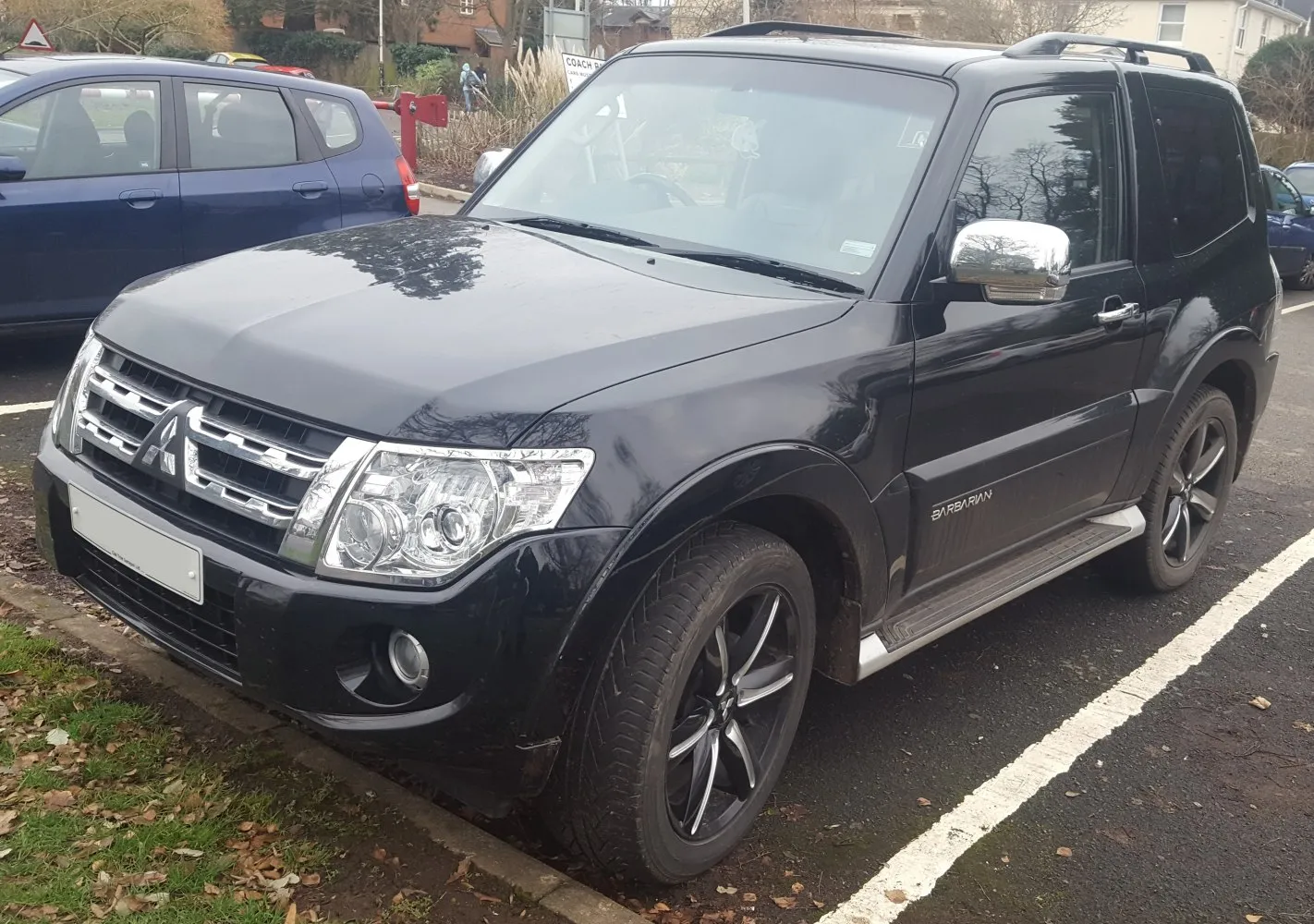

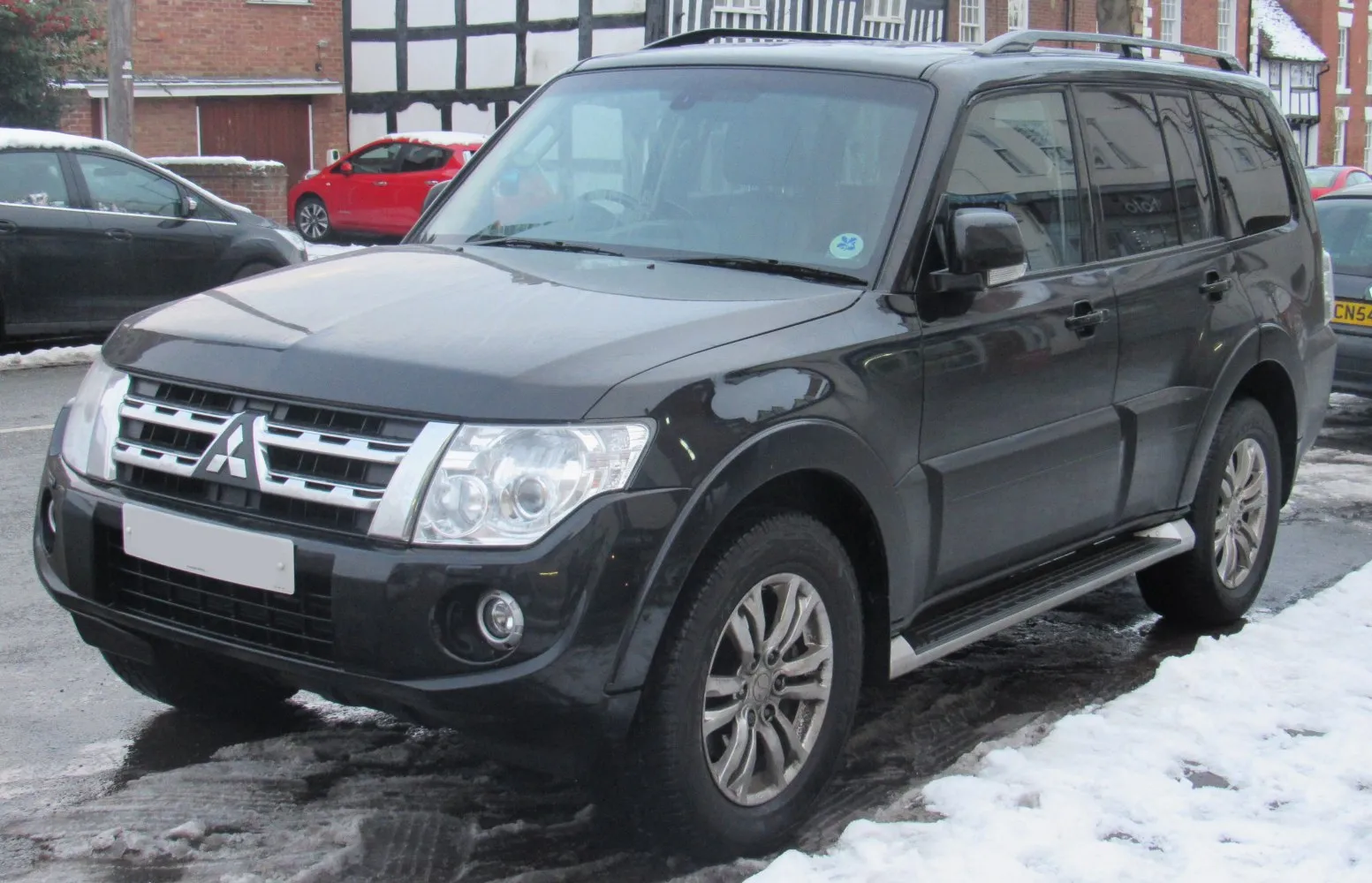







Your first impression of the Mitsubishi Shogun in one word? Go!