
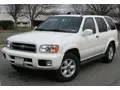
Click on image to view the full photo gallery
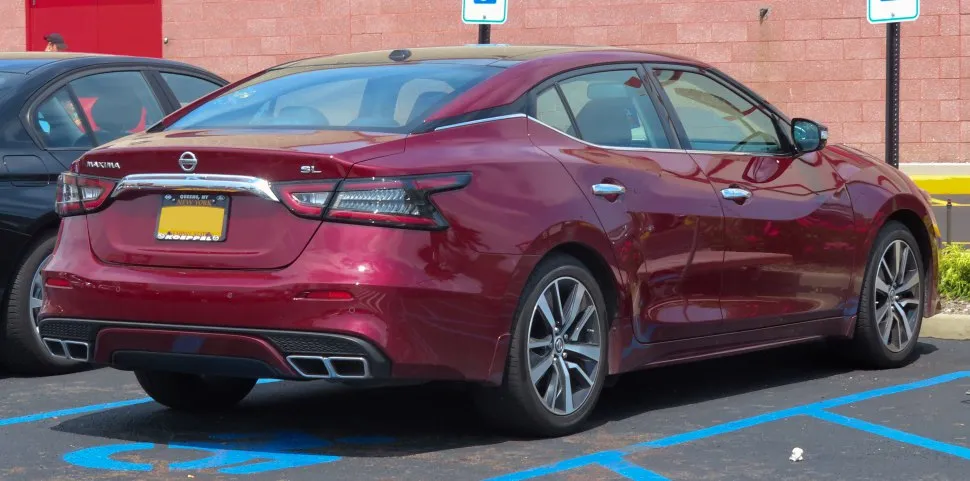
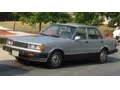
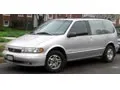
Nissan Maxima QX V (A33) 3.5 i V6 24V (255 Hp)
Overall Rating
Nissan Maxima:
The Nissan Maxima is a five-passenger, front-engine, full-size car that was manufactured and marketed by Nissan as Nissan's flagship sedan primarily in North America, the Middle East, South Korea, and China — across eight generations. The Maxima debuted for model year 1982 as the Datsun Maxima, replacing the Datsun 810.
The Maxima was marketed as an upscale alternative to the Altima and prior to 1993, the Stanza, distinguished by features such as a premium interior and V6 engine. Most Maximas were built in Oppama, Japan, until North American assembly began in Smyrna, Tennessee, for the 2004 model year....(Read more on Wikipedia)
QX V (A33) Overview:
Nissan Maxima (QX V (A33)). With 333 Nm of torque, it offers ample pulling power. It has moderate fuel consumption (~11.2 l/100km). With a weight of 1460 kg, it falls in the mid‑range. Front‑wheel drive delivers efficiency and easy handling. A four-door car with a separate trunk, ideal for families and daily commuting. Seating for 5 makes it ideal for daily use.
3.5 i V6 24V (255 Hp) Verdict:

Performance Verdict
Provides strong, exhilarating performance, transforming the Maxima into a genuinely quick and capable executive sedan.
Fuel Economy
Fuel economy will be higher than smaller engines, but acceptable given the significant power output.
Pros and Cons:
Pros:
- • Smooth and reliable VQ series V6 engines
- • Spacious and comfortable interior with quality materials
- • Refined ride quality, excellent for long journeys
- • Good value for money on the used market
- • Strong performance available with larger engine options
Cons:
- • Styling can be considered conservative or bland by some
- • Automatic transmissions can dull driving engagement
- • Fuel economy for larger V6 engines can be high
- • Some interior plastics may feel dated compared to rivals
- • Limited availability of manual transmission options
Specifications:
Specifications are compared to those of the previous generation(QX V (A33): 2000 - 2004).
| General: | |
|---|---|
| Brand: | Nissan |
| Model: | Maxima |
| Generation: | QX V (A33) |
| Modification (Engine): | 3.5 i V6 24V (255 Hp) |
| Start of production: | 2002 |
| End of production: | 2004 |
| Powertrain Architecture: | Internal Combustion engine |
| Body type: | Sedan |
| Seats: | 5 |
| Doors: | 4 |
| Engine: | |
|---|---|
| Power: | 255 Hp @ 5800 rpm. Same horsepower |
| Power per litre: | 72.9 Hp/l [Same length.] |
| Torque: | 333 Nm @ 4400 rpm. |
| Engine Model/Code: | VQ35DE More details about the engine VQ35DE |
| Engine displacement: | 3498 |
| Number of cylinders: | 6 |
| Engine configuration: | V-engine |
| Number of valves per cylinder: | 4 |
| Fuel injection system: | Multi-port manifold injection |
| Engine aspiration: | Naturally aspirated engine |
| Valvetrain: | DOHC |
| Engine oil capacity: | 4 l |
| Coolant: | 7.7 l |
| Engine layout: | Front, Transverse |
| Cylinder Bore: | 95.5 mm mm |
| Piston Stroke: | 81.4 mm mm |
| Compression ratio: | 10:1 |
| Performance: | |
|---|---|
| Fuel Type: | Petrol (Gasoline) |
| Fuel consumption (economy) - urban: | 11.2 l/100 km |
| Fuel consumption (economy) - extra urban: | 8.4 l/100 km |
| Weight-to-power ratio: | 5.7 kg/Hp, 174.7 Hp/tonne |
| Weight-to-torque ratio: | 4.4 kg/Nm, 228.1 Nm/tonne |
| Space: | |
|---|---|
| Kerb Weight: | 1460 |
| Trunk (boot) space - minimum: | 520 l |
| Fuel tank capacity: | 70 l |
| Size: | |
|---|---|
| Length: | 4920 mm mm [Same length.] |
| Width: | 1780 mm mm [Same width.] |
| Height: | 1435 mm mm [Same height.] |
| Wheelbase: | 2750 mm mm [Same wheelbase.] |
| Front track: | 1530 mm |
| Rear (Back) track: | 1510 mm |
| Powertrain: | |
|---|---|
| Drivetrain Architecture | The Internal combustion engine (ICE) drives the front wheels of the vehicle. |
| Drive wheel | Front wheel drive |
| Number of gears | 6 |
| Transmission type | Manual |
| Front brakes | Ventilated discs [Best for performance and cooling.] |
| Rear brakes | Disc |
| Assisting systems | ABS (Anti-lock braking system) |
| Steering type | Steering rack and pinion |
| Power steering | Hydraulic Steering |
| Tires size | 205/65 R15 |
| Front suspension | Independent type McPherson |
| Rear suspension | Spring Strut |

















Would you recommend the Nissan Maxima ? Tell us why or why not!