
Click on image to view the full photo gallery
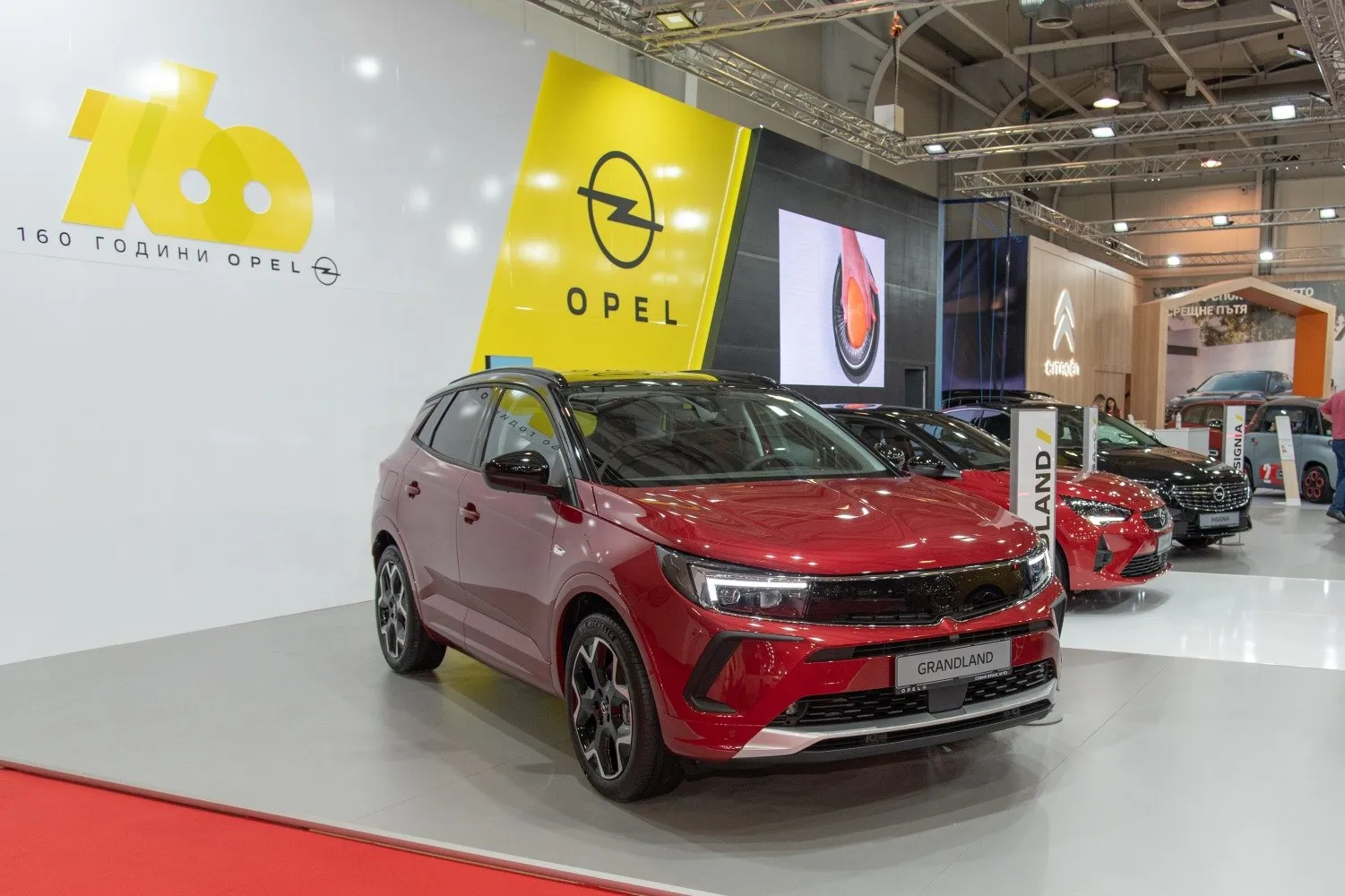
Opel Grandland X 1.6 Turbo (224 Hp) Plug-in Hybrid Automatic
Overall Rating
Opel Grandland:
The Opel Grandland is a compact crossover SUV produced by the German manufacturer Opel. It was originally known as the Opel and Vauxhall Grandland X, until the facelift of the first generation model when it dropped the X suffix in the nameplate. It was introduced as a replacement for the Opel Antara, and also replaced the Opel Zafira in 2019.
The second generation model was released in April 2024, it is based on the Stellantis' STLA Medium platform, shared with a wider range of other Stellantis vehicles....(Read more on Wikipedia)
X Overview:
Opel Grandland (X). With 300 Nm of torque, it offers ample pulling power. With a weight of 1800 kg, it falls in the mid‑range. Front‑wheel drive delivers efficiency and easy handling. Acceleration is good (0–100 km/h in 8.9 s). The top speed reaches 225 km/h. A sport utility vehicle offering higher ground clearance and versatile cargo space. Seating for 5 makes it ideal for daily use.
The Opel Grandland X achieved an excellent 5-star Euro NCAP rating, demonstrating strong adult and child occupant protection, making it a very safe choice in its segment.
1.6 Turbo (224 Hp) Plug-in Hybrid Automatic Verdict:

Performance Verdict
Combines strong petrol power with electric boost for brisk acceleration and a responsive driving experience.
Fuel Economy
Exceptional fuel economy if regularly charged, with significant electric-only range for urban commutes.
Pros and Cons:
Pros:
- • Wide range of efficient engines including PHEV options
- • Comfortable and spacious interior
- • Good ride quality
- • Practical boot space
- • High Euro NCAP safety rating
Cons:
- • Some interior plastics feel cheap
- • Base engines can be sluggish
- • Infotainment system can be dated on early models
- • Not as engaging to drive as some rivals
Specifications:
Specifications are compared to those of the previous generation(X: April, 2018 - July, 2021).
| General: | |
|---|---|
| Brand: | Opel |
| Model: | Grandland |
| Generation: | X |
| Modification (Engine): | 1.6 Turbo (224 Hp) Plug-in Hybrid Automatic |
| Start of production: | December, 2019 |
| End of production: | July, 2021 |
| Powertrain Architecture: | PHEV (Plug-in Hybrid Electric Vehicle) |
| Body type: | SUV |
| Seats: | 5 |
| Doors: | 5 |
| Engine: | |
|---|---|
| Engine systems: | Start & Stop System |
| Power: | 180 Hp @ 6000 rpm. Same horsepower |
| Power per litre: | 112.6 Hp/l [Same length.] |
| Torque: | 300 Nm @ 3000 rpm. |
| Engine Model/Code: | D16XHT, F16XHR More details about the engine D16XHT, F16XHR |
| Engine displacement: | 1598 |
| Number of cylinders: | 4 |
| Engine configuration: | Inline |
| Number of valves per cylinder: | 4 |
| Fuel injection system: | Direct injection |
| Engine aspiration: | Turbocharger, Intercooler |
| Valvetrain: | DOHC |
| Engine oil capacity: | 4.3 l |
| Engine layout: | Front, Transverse |
| Cylinder Bore: | 77 mm mm |
| Piston Stroke: | 85.8 mm mm |
| Compression ratio: | 10.2:1 |
| Performance: | |
|---|---|
| Fuel Type: | Petrol / electricity |
| Combined fuel consumption (WLTP): | 1.4-1.5 l/100 km |
| Fuel consumption (economy) - combined: | 1.5-1.7 l/100 km |
| Emission standard: | Euro 6d |
| Acceleration 0 - 100 km/h: | 8.9 sec |
| Acceleration 0 - 62 mph: | 8.9 sec |
| Maximum speed: | 225 km/h |
| Weight-to-power ratio: | 8 kg/Hp, 124.4 Hp/tonne |
| Weight-to-torque ratio: | 5 kg/Nm, 200 Nm/tonne |
| Max speed (electric): | 135 km/h |
| Acceleration 0 - 60 mph: | 8.5 sec |
| Space: | |
|---|---|
| Kerb Weight: | 1800 |
| Max. weight: | 2350 |
| Max. roof load: | 85 kg |
| Max load: | 550 |
| Trunk (boot) space - maximum: | 1528 l |
| Trunk (boot) space - minimum: | 390 l |
| Permitted trailer load with brakes (12%): | 1250 kg |
| Fuel tank capacity: | 43 l |
| Permitted trailer load without brakes: | 600 kg |
| Permitted towbar download: | 70 kg |
| Size: | |
|---|---|
| Ramp-over (brakeover) angle: | 14.4° |
| Length: | 4477 mm mm [Same length.] |
| Width: | 1856 mm mm [Same width.] |
| Height: | 1609 mm mm [Same height.] |
| Wheelbase: | 2675 mm mm [Same wheelbase.] |
| Width including mirrors: | 2098 mm |
| Front track: | 1595 mm |
| Rear (Back) track: | 1610 mm |
| Front overhang: | 933 mm |
| Rear overhang: | 869 mm |
| Ride height (ground clearance): | 188 mm |
| Minimum turning circle (turning diameter): | 11.05 m [above average] |
| Powertrain: | |
|---|---|
| Drivetrain Architecture | The Internal combustion engine (ICE) and electric motor drive the front wheels of the car with the ability to work in full electric or mixed mode. |
| Drive wheel | Front wheel drive |
| Number of gears | 8 |
| Transmission type | Automatic |
| Assisting systems | ABS (Anti-lock braking system) |
| Steering type | Steering rack and pinion |
| Power steering | Electric Steering |
| Tires size | 225/55 R18; 205/55 R19 |
| Wheel rims size | 7.5J x 18; 7J x 19 |
| Electric: | |
|---|---|
| Net (usable) battery capacity: | 11.5 kWh |
| Gross battery capacity: | 13.2 kWh |
| Battery technology: | Lithium-ion (Li-Ion) |
| Battery location: | Under the rear seats |
| System power: | 224 Hp |
| System torque: | 360 Nm |
| All-electric range: | 55-57 km |
| Electric motor power: | 110 Hp @ 2500 rpm. |
| Electric motor Torque: | 320 Nm @ 500-2500 rpm. |
| Average Energy consumption: | 15.6-16.1 kWh/100 km |
| Electric motor location: | Between the combustion engine and the transmission |
| Average Energy consumption (WLTP): | 15.6-16.1 kWh/100 km |
| All-electric range (WLTP): | 55-57 km |








Behind the wheel of the Opel Grandland. How does it handle on the road?