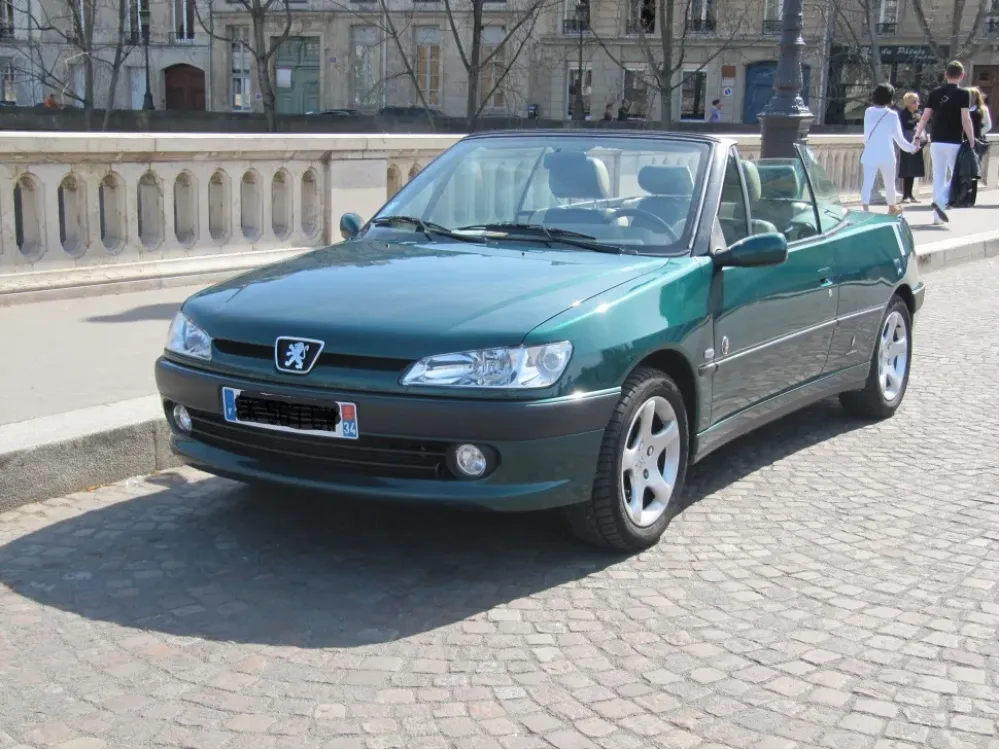
Click on image to view the full photo gallery
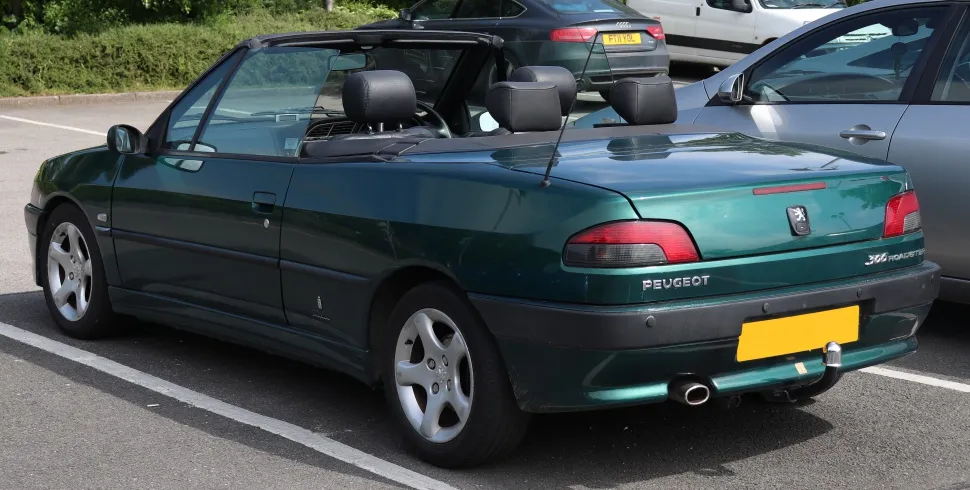
Peugeot 306 Cabrio (facelift 1997) 1.6i (88 Hp)
Overall Rating
Peugeot 306:
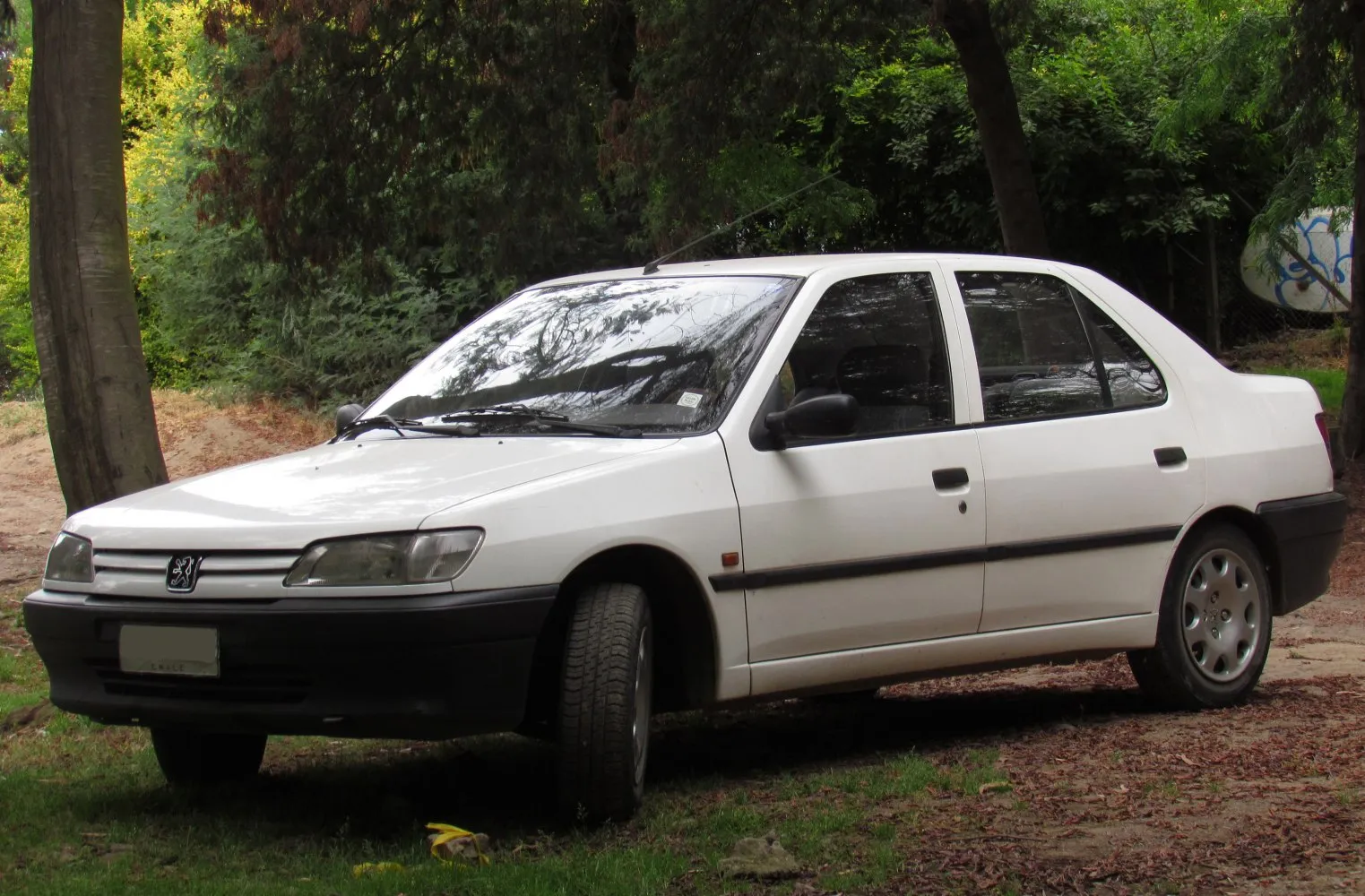
The Peugeot 306 is a small family car built by the French car manufacturer Peugeot from 1993 to 2002. It replaced the 309. Peugeot gave the 306 many updates and aesthetic changes to keep up with the competition, and it was replaced by the 307 in 2001. Cabriolet and estate versions continued until 2002. Versions were built in Argentina by Sevel from 1996 to 2002.
The 306 was developed between 1990 and 1992 for a launch in February 1993. It was a replacement for the Peugeot 309....(Read more on Wikipedia)
Cabrio (facelift 1997) Overview:
Peugeot 306 (Cabrio (facelift 1997)). With 135 Nm of torque, it offers ample pulling power. It has moderate fuel consumption (~10.6 l/100km). Weighing only 1210 kg, it’s quite light. Front‑wheel drive delivers efficiency and easy handling. Acceleration is relatively slow (0–100 km/h in 15 s). The top speed reaches 178 km/h. A convertible car with a retractable roof, offering open-air driving experiences. Seating for 4 makes it ideal for daily use.
1.6i (88 Hp) Verdict:

Performance Verdict
Adequate for city driving and leisurely cruises, but can feel strained on highways or with a full load.
Fuel Economy
The most fuel-efficient petrol engine in the lineup, ideal for budget-conscious owners and urban commutes.
Pros and Cons:
Pros:
- • Timeless Pininfarina design
- • Enjoyable open-top driving experience
- • Good handling characteristics for its class
- • Range of engines to suit different needs
- • Affordable classic convertible status
Cons:
- • Noticeable scuttle shake over rough surfaces
- • Limited rear passenger space and boot access
- • Older automatic transmissions can be sluggish
- • Some engines lack power for spirited driving
- • Potential for electrical issues common in older French cars
Specifications:
Specifications are compared to those of the previous generation(Hatchback (7A/C): 1996 - 1997).
| General: | |
|---|---|
| Brand: | Peugeot |
| Model: | 306 |
| Generation: | Cabrio (facelift 1997) |
| Modification (Engine): | 1.6i (88 Hp) |
| Start of production: | 1997 |
| End of production: | 2002 |
| Powertrain Architecture: | Internal Combustion engine |
| Body type: | Cabriolet |
| Seats: | 4 |
| Doors: | 2 |
| Engine: | |
|---|---|
| Power: | 88 Hp @ 5600 rpm. Same horsepower |
| Power per litre: | 55.5 Hp/l [184mm more] |
| Torque: | 135 Nm @ 3000 rpm. |
| Engine Model/Code: | NFZ TU5JP More details about the engine NFZ TU5JP |
| Engine displacement: | 1587 |
| Number of cylinders: | 4 |
| Engine configuration: | Inline |
| Number of valves per cylinder: | 2 |
| Fuel injection system: | Multi-port manifold injection |
| Engine aspiration: | Naturally aspirated engine |
| Valvetrain: | SOHC |
| Engine oil capacity: | 3.2 l |
| Coolant: | 7 l |
| Engine layout: | Front, Transverse |
| Cylinder Bore: | 78.5 mm |
| Piston Stroke: | 82 mm |
| Compression ratio: | 9.6:1 |
| Performance: | |
|---|---|
| Fuel Type: | Petrol (Gasoline) |
| Fuel consumption (economy) - urban: | 10.6 l/100 km |
| Fuel consumption (economy) - extra urban: | 6.4 l/100 km |
| Fuel consumption (economy) - combined: | 7.9 l/100 km |
| Acceleration 0 - 100 km/h: | 15 sec |
| Acceleration 0 - 62 mph: | 15 sec |
| Maximum speed: | 178 km/h |
| Weight-to-power ratio: | 13.8 kg/Hp, 72.7 Hp/tonne |
| Weight-to-torque ratio: | 9 kg/Nm, 111.6 Nm/tonne |
| Acceleration 0 - 60 mph: | 14.3 sec |
| Space: | |
|---|---|
| Kerb Weight: | 1210 |
| Max. weight: | 1640 |
| Max load: | 430 |
| Trunk (boot) space - minimum: | 274 l |
| Permitted trailer load with brakes (12%): | 1000 kg |
| Fuel tank capacity: | 60 l |
| Permitted trailer load without brakes: | 640 kg |
| Size: | |
|---|---|
| Length: | 4179 mm [184mm more] |
| Width: | 1680 mm [15mm less] |
| Height: | 1356 mm [9mm less] |
| Wheelbase: | 2540 mm [40mm less] |
| Front track: | 1454-1465 mm |
| Rear (Back) track: | 1420-1439 mm |
| Front overhang: | 815 mm |
| Rear overhang: | 824 mm |
| Ride height (ground clearance): | 120 mm |
| Minimum turning circle (turning diameter): | 11.0 m [above average] |
| Powertrain: | |
|---|---|
| Drivetrain Architecture | The Internal combustion engine (ICE) drives the front wheels of the vehicle. |
| Drive wheel | Front wheel drive |
| Number of gears | 5 |
| Transmission type | Manual |
| Front brakes | Ventilated discs [Best for performance and cooling.] |
| Rear brakes | Drum [bad for performance and cooling.] |
| Assisting systems | ABS (Anti-lock braking system) |
| Steering type | Steering rack and pinion |
| Power steering | Hydraulic Steering |
| Tires size | 185/65 R14 H |
| Wheel rims size | 14 |
| Front suspension | Wishbone |
| Rear suspension | Trailing arm |








Show off your Peugeot 306 knowledge – drop a review below!