
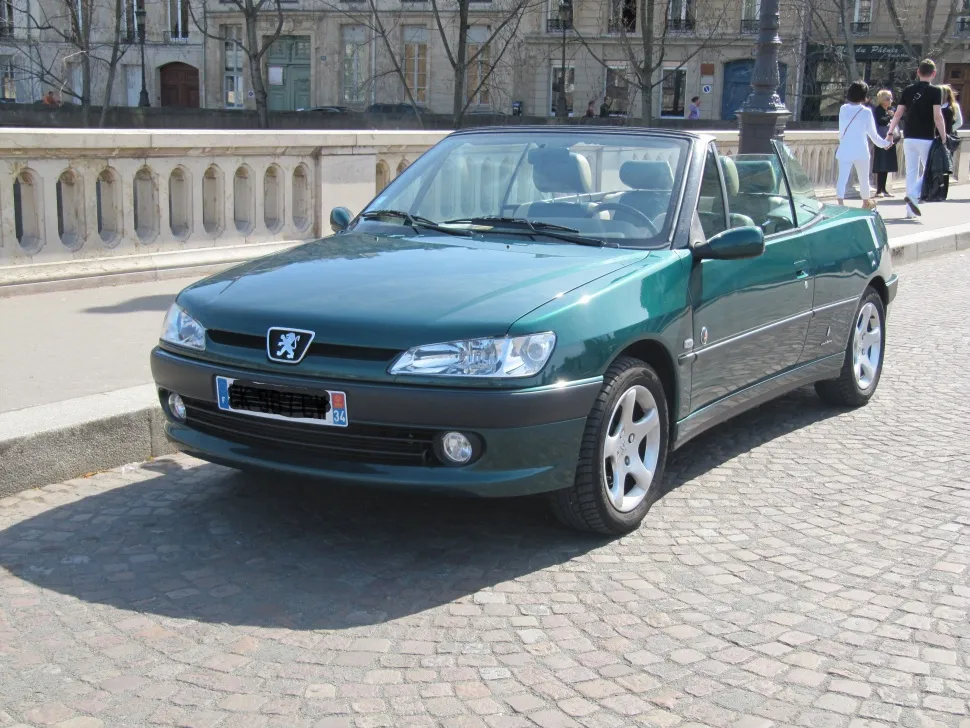
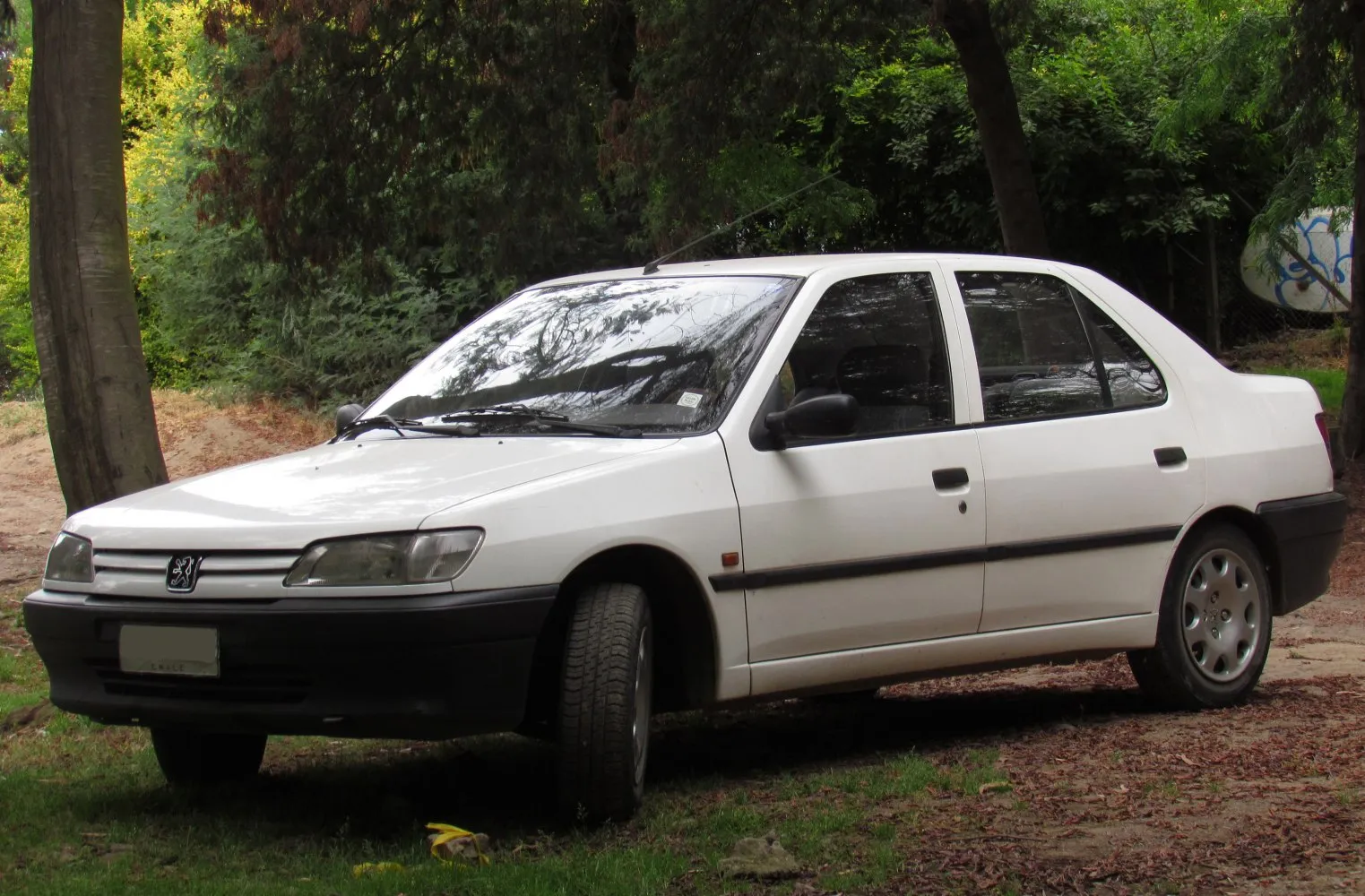
Click on image to view the full photo gallery
Peugeot 306 Hatchback (facelift 1997) 2.0i 16V (133 Hp) Automatic
Overall Rating
Peugeot 306:
The Peugeot 306 is a small family car built by the French car manufacturer Peugeot from 1993 to 2002. It replaced the 309. Peugeot gave the 306 many updates and aesthetic changes to keep up with the competition, and it was replaced by the 307 in 2001. Cabriolet and estate versions continued until 2002. Versions were built in Argentina by Sevel from 1996 to 2002.
The 306 was developed between 1990 and 1992 for a launch in February 1993. It was a replacement for the Peugeot 309....(Read more on Wikipedia)
Hatchback (facelift 1997) Overview:
Peugeot 306 (Hatchback (facelift 1997)). With 180 Nm of torque, it offers ample pulling power. Weighing only 1206 kg, it’s quite light. Front‑wheel drive delivers efficiency and easy handling. Acceleration is relatively slow (0–100 km/h in 11.4 s). The top speed reaches 199 km/h. A compact car with a rear door that swings upward to provide access to the cargo area. Seating for 5 makes it ideal for daily use.
2.0i 16V (133 Hp) Automatic Verdict:

Performance Verdict
Performance is noticeably dulled by the automatic gearbox compared to the manual, but still adequate for most.
Fuel Economy
Higher fuel consumption than the manual version, making it less economical for those prioritizing efficiency.
Pros and Cons:
Pros:
- • Engaging handling and comfortable ride quality for its class
- • Wide range of engines from economical diesels to powerful petrols
- • Practical and stylish design that aged well
- • Excellent value on the used market
- • Spacious interior for a compact hatchback
Cons:
- • Some entry-level engines can be underpowered, especially older diesels
- • Interior plastics and build quality can feel dated compared to rivals
- • Rear trailing arm suspension can be prone to wear and costly repairs
- • Older models may suffer from electrical gremlins and rust issues
- • Safety features are basic by modern standards, reflecting its age
Specifications:
Specifications are compared to those of the previous generation(Hatchback (7A/C): 1996 - 1997).
| General: | |
|---|---|
| Brand: | Peugeot |
| Model: | 306 |
| Generation: | Hatchback (facelift 1997) |
| Modification (Engine): | 2.0i 16V (133 Hp) Automatic |
| Start of production: | 1997 |
| End of production: | 2002 |
| Powertrain Architecture: | Internal Combustion engine |
| Body type: | Hatchback |
| Seats: | 5 |
| Doors: | 3-5 |
| Engine: | |
|---|---|
| Power: | 133 Hp @ 5500 rpm. Same horsepower |
| Power per litre: | 66.6 Hp/l [35mm more] |
| Torque: | 180 Nm @ 4200 rpm. |
| Engine Model/Code: | RFV XU10J4R More details about the engine RFV XU10J4R |
| Engine displacement: | 1998 |
| Number of cylinders: | 4 |
| Engine configuration: | Inline |
| Number of valves per cylinder: | 4 |
| Fuel injection system: | Multi-port manifold injection |
| Engine aspiration: | Naturally aspirated engine |
| Valvetrain: | DOHC |
| Engine oil capacity: | 4.5 l |
| Coolant: | 7.5 l |
| Engine layout: | Front, Transverse |
| Cylinder Bore: | 86 mm mm |
| Piston Stroke: | 86 mm mm |
| Compression ratio: | 10.4:1 |
| Performance: | |
|---|---|
| Fuel Type: | Petrol (Gasoline) |
| Fuel consumption (economy) - urban: | 13.7 l/100 km |
| Fuel consumption (economy) - extra urban: | 6.5 l/100 km |
| Fuel consumption (economy) - combined: | 9.2 l/100 km |
| Acceleration 0 - 100 km/h: | 11.4 sec |
| Acceleration 0 - 62 mph: | 11.4 sec |
| Maximum speed: | 199 km/h |
| Weight-to-power ratio: | 9.1 kg/Hp, 110.3 Hp/tonne |
| Weight-to-torque ratio: | 6.7 kg/Nm, 149.3 Nm/tonne |
| Acceleration 0 - 60 mph: | 10.8 sec |
| Space: | |
|---|---|
| Kerb Weight: | 1206 |
| Trunk (boot) space - maximum: | 1146 l |
| Trunk (boot) space - minimum: | 338 l |
| Fuel tank capacity: | 60 l |
| Size: | |
|---|---|
| Length: | 4030 mm mm [35mm more] |
| Width: | 1689 mm mm [6mm less] |
| Height: | 1380 mm mm [15mm more] |
| Wheelbase: | 2580 mm mm [Same wheelbase.] |
| Front track: | 1454 mm |
| Rear (Back) track: | 1423 mm |
| Ride height (ground clearance): | 120 mm |
| Minimum turning circle (turning diameter): | 11.0 m [above average] |
| Powertrain: | |
|---|---|
| Drivetrain Architecture | The Internal combustion engine (ICE) drives the front wheels of the vehicle. |
| Drive wheel | Front wheel drive |
| Number of gears | 4 |
| Transmission type | Automatic |
| Front brakes | Ventilated discs [Best for performance and cooling.] |
| Rear brakes | Disc [above average] |
| Assisting systems | ABS (Anti-lock braking system) |
| Steering type | Steering rack and pinion |
| Tires size | 185/65 R14 H |
| Wheel rims size | 14 |
| Front suspension | Trailing arm |
| Rear suspension | Trailing arm |









Help others decide – share your experience!