
Click on image to view the full photo gallery
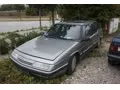
Peugeot 406 Break (Phase I, 1996) 2.0 16V (132 Hp)
Overall Rating
Peugeot 406:
The Peugeot 406 is a large family car that was produced by French automaker Peugeot between 1995 and 2004. Available in saloon, estate and coupé bodystyles with a choice of petrol or turbodiesel engines, the 406 replaced the Peugeot 405 in Peugeot's lineup, and was itself replaced by the Peugeot 407.
The styling of the 406 is heavily influenced by its predecessor, the 405, which began to be phased out from the 406's launch in September 1995, and eventually finished production in Europe in 1997, when the last estate models were discontinued. United Kingdom sales of the 406 began in February 1996....(Read more on Wikipedia)
Break (Phase I, 1996) Overview:
Peugeot 406 (Break (Phase I, 1996)). With 180 Nm of torque, it offers ample pulling power. With a weight of 1378 kg, it falls in the mid‑range. Front‑wheel drive delivers efficiency and easy handling. Acceleration is relatively slow (0–100 km/h in 11.2 s). The top speed reaches 197 km/h. A car with an extended rear cargo area, combining passenger comfort with increased storage. Seating for 5 makes it ideal for daily use.
2.0 16V (132 Hp) Verdict:

Performance Verdict
Strong and flexible engine, providing a good balance of power and responsiveness for most situations.
Fuel Economy
Reasonable fuel economy for a petrol engine of its size and power, but not outstanding.
Pros and Cons:
Pros:
- • Exceptional ride comfort and refinement
- • Spacious interior and large, practical boot
- • Elegant and timeless design
- • Good handling for a family estate
- • Range of efficient diesel engines
Cons:
- • Poor early Euro NCAP safety rating
- • Can suffer from electrical gremlins
- • Suspension components prone to wear
- • Petrol engines can be thirsty, especially V6
- • Interior plastics feel dated compared to rivals
Specifications:
Specifications are compared to those of the previous generation(Phase I, 1995: 1995 - 1999).
| General: | |
|---|---|
| Brand: | Peugeot |
| Model: | 406 |
| Generation: | Break (Phase I, 1996) |
| Modification (Engine): | 2.0 16V (132 Hp) |
| Start of production: | 1996 |
| End of production: | 1999 |
| Powertrain Architecture: | Internal Combustion engine |
| Body type: | Station wagon (estate) |
| Seats: | 5 |
| Doors: | 5 |
| Engine: | |
|---|---|
| Power: | 132 Hp @ 5500 rpm. |
| Power per litre: | 66.1 Hp/l |
| Torque: | 180 Nm @ 4200 rpm. |
| Engine Model/Code: | RFV XU10J4R [Same engine] More details about the engine RFV XU10J4R |
| Engine displacement: | 1998 |
| Number of cylinders: | 4 |
| Engine configuration: | Inline |
| Number of valves per cylinder: | 4 |
| Fuel injection system: | Multi-port manifold injection |
| Engine aspiration: | Naturally aspirated engine |
| Valvetrain: | DOHC |
| Engine oil capacity: | 4.25 l |
| Coolant: | 7.5 l |
| Engine layout: | Front, Transverse |
| Cylinder Bore: | 86 mm mm |
| Piston Stroke: | 86 mm mm |
| Compression ratio: | 11:1 |
| Performance: | |
|---|---|
| Fuel Type: | Petrol (Gasoline) |
| Acceleration 0 - 100 km/h: | 11.2 sec |
| Acceleration 0 - 62 mph: | 11.2 sec |
| Maximum speed: | 197 km/h |
| Weight-to-power ratio: | 10.4 kg/Hp, 95.8 Hp/tonne |
| Weight-to-torque ratio: | 7.7 kg/Nm, 130.6 Nm/tonne |
| Acceleration 0 - 60 mph: | 10.6 sec |
| Space: | |
|---|---|
| Kerb Weight: | 1378 |
| Max. weight: | 1932 |
| Max load: | 554 |
| Trunk (boot) space - maximum: | 1740 l |
| Trunk (boot) space - minimum: | 525 l |
| Fuel tank capacity: | 70 l |
| Size: | |
|---|---|
| Length: | 4725 mm mm [125mm more] |
| Width: | 1765 mm mm [Same width.] |
| Height: | 1500 mm mm [104mm more] |
| Wheelbase: | 2700 mm mm [Same wheelbase.] |
| Front track: | 1500 mm |
| Rear (Back) track: | 1480 mm |
| Powertrain: | |
|---|---|
| Drivetrain Architecture | The Internal combustion engine (ICE) drives the front wheels of the vehicle. |
| Drive wheel | Front wheel drive |
| Number of gears | 5 |
| Transmission type | Manual |
| Front brakes | Disc |
| Rear brakes | Disc |
| Assisting systems | ABS (Anti-lock braking system) |
| Steering type | Steering rack and pinion |
| Power steering | Hydraulic Steering |
| Tires size | 195/65 R15 |
| Front suspension | Wishbone |
| Rear suspension | Several levers and rods |




Help others decide – share your experience!