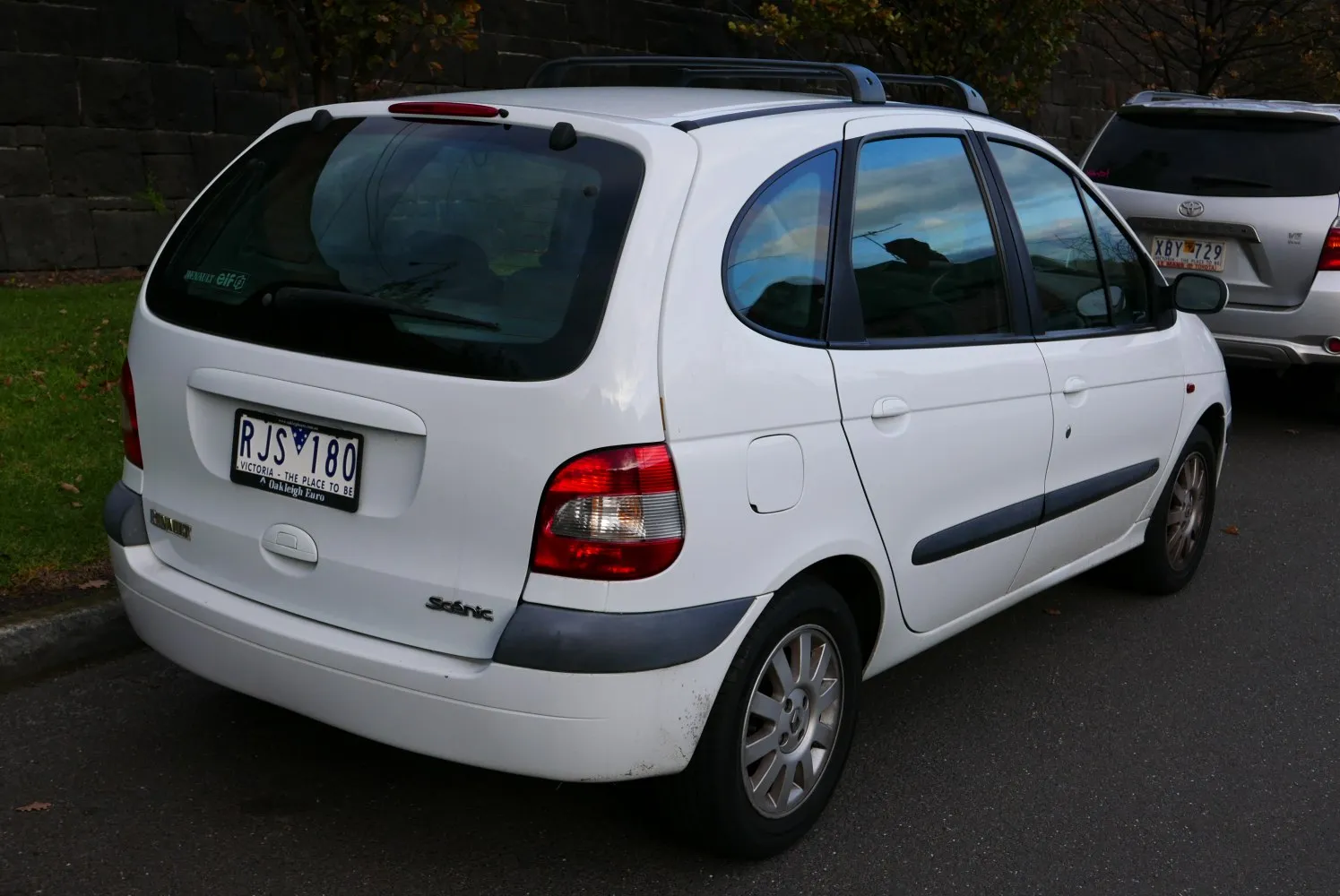
Renault Scenic I (Phase II) 1.4 (75 Hp)
People\'s Opinion
N/A / 5
Renault Scenic:
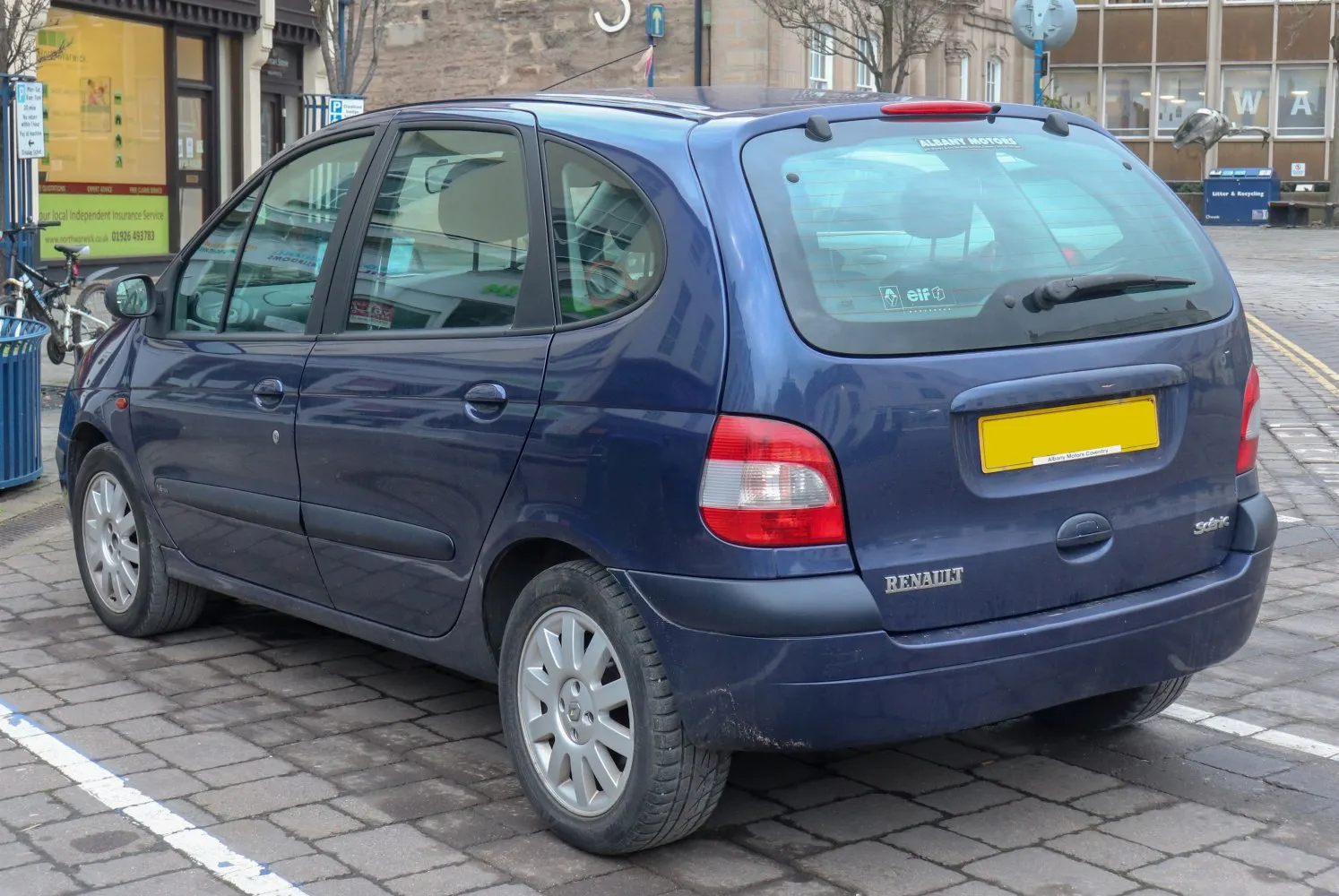
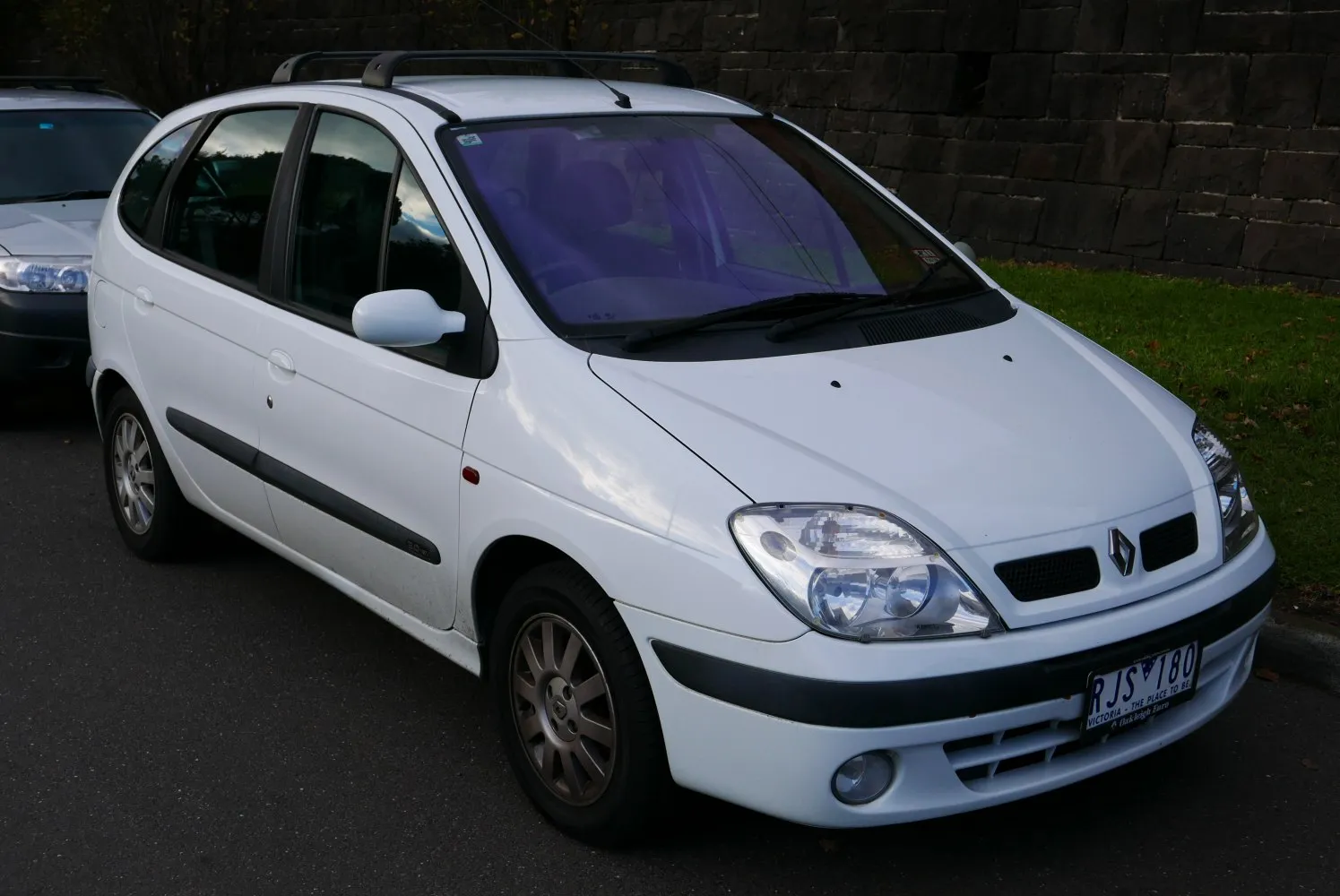
The Renault Scénic , also spelled without the acute accent as Scenic, especially in languages other than French, is a car which was produced by French car manufacturer Renault, the first to be labelled as a small multi-purpose vehicle in Europe. The first generation was based on the chassis of the Mégane, a small family car. It became the 1997 European Car of the Year on its launch in November 1996. In May 2022 Renault announced it was discontinuing the standard Scénic with the Grand Scénic following shortly after. It was relaunched in 2024 as a fully electric vehicle called the Renault Scénic E-Tech which is the production version of the Renault Scénic Vision concept unveiled in 2022, with the production version to be unveiled at the 2023 Munich Motor Show on September 4....(Read more on Wikipedia)
I (Phase II) Overview:
Renault Scenic (I (Phase II)). With 112 Nm of torque, it offers ample pulling power. Weighing only 1105 kg, it’s quite light. Front‑wheel drive delivers efficiency and easy handling. A spacious vehicle designed to transport passengers comfortably, often with sliding doors. Seating for 5 makes it ideal for daily use.
Performance Verdict
A very basic engine, offering minimal power. Best for light city use, struggles significantly elsewhere.
Fuel Economy
Likely to be reasonably economical in light city use, but will be inefficient when pushed.
Best Use Case:
Strictly urban environments or for drivers with very low performance expectations.
Pros and Cons:
Pros:
- • Spacious and versatile interior with removable rear seats
- • Comfortable ride quality, ideal for families
- • Good visibility from the driver's seat
- • Practical storage solutions throughout the cabin
- • Wide range of engine options to suit different needs
Cons:
- • Mixed reliability, particularly with electrical components
- • Some petrol engines can be thirsty, especially the larger ones
- • Underpowered base engines struggle with full loads
- • Uninspiring driving dynamics compared to some rivals
- • Dated interior design by the end of its production run
Specifications:
| General: |
| Brand: | Renault |
|---|
| Model: | Scenic |
|---|
| Generation: | I (Phase II) |
|---|
| Modification (Engine): | 1.4 (75 Hp) |
|---|
| Start of production: | 1999 |
|---|
| End of production: | 2000 |
|---|
| Powertrain Architecture: | Internal Combustion engine |
|---|
| Body type: | Minivan |
|---|
| Seats: | 5 |
|---|
| Doors: | 5 |
|---|
| Engine: |
| Power: | 75 Hp @ 5500 rpm. |
|---|
| Power per litre: | 54 Hp/l |
|---|
| Torque: | 112 Nm @ 3000 rpm. |
|---|
| Engine Model/Code: | E7J |
|---|
| Engine displacement: | 1390 |
|---|
| Number of cylinders: | 4 |
|---|
| Engine configuration: | Inline |
|---|
| Number of valves per cylinder: | 2 |
|---|
| Fuel injection system: | Multi-port manifold injection |
|---|
| Engine aspiration: | Naturally aspirated engine |
|---|
| Engine oil capacity: | 4.5 l |
|---|
| Coolant: | 6 l |
|---|
| Engine layout: | Front, Transverse |
|---|
| Cylinder Bore: | 79.5 mm |
|---|
| Piston Stroke: | 70 mm |
|---|
| Compression ratio: | 9.5:1 |
|---|
| Performance: |
| Fuel Type: | Petrol (Gasoline) |
|---|
| Weight-to-power ratio: | 14.7 kg/Hp, 67.9 Hp/tonne |
|---|
| Weight-to-torque ratio: | 9.9 kg/Nm, 101.4 Nm/tonne |
|---|
| Space: |
| Kerb Weight: | 1105 |
|---|
| Max. weight: | 1585 |
|---|
| Max load: | 480 |
|---|
| Trunk (boot) space - maximum: | 1800 l |
|---|
| Trunk (boot) space - minimum: | 410 l |
|---|
| Fuel tank capacity: | 60 l |
|---|
| Size: |
| Length: | 4168 mm |
|---|
| Width: | 1719 mm |
|---|
| Height: | 1609 mm |
|---|
| Wheelbase: | 2580 mm |
|---|
| Front track: | 1446 mm |
|---|
| Rear (Back) track: | 1458 mm |
|---|
| Powertrain: |
| Drivetrain Architecture | The Internal combustion engine (ICE) drives the front wheels of the vehicle. |
|---|
| Drive wheel | Front wheel drive |
|---|
| Number of gears | 5 |
|---|
| Transmission type | Manual |
|---|
| Front brakes | Ventilated discs |
|---|
| Rear brakes | Drum |
|---|
| Assisting systems | ABS (Anti-lock braking system) |
|---|
| Steering type | Steering rack and pinion |
|---|
| Power steering | Hydraulic Steering |
|---|
| Tires size | 175/70 R14 H |
|---|
| Wheel rims size | 14 |
|---|
| Front suspension | Spring Strut |
|---|
| Rear suspension | Torsion |
|---|






Describe your experience with the Renault Scenic using only emojis!