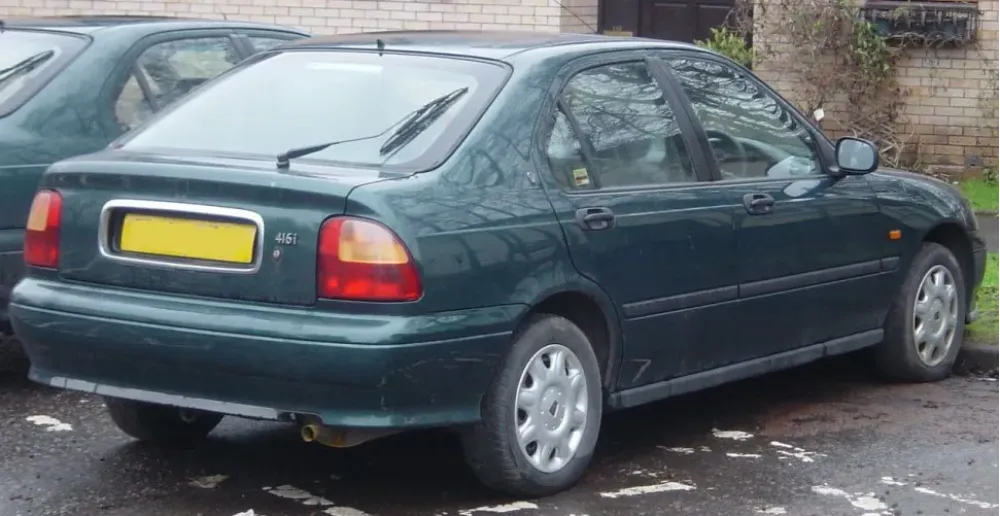
Click on image to view the full photo gallery
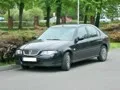
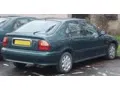
Rover 400 Hatchback (RT) 420 D (86 Hp)
Overall Rating
Rover 400:
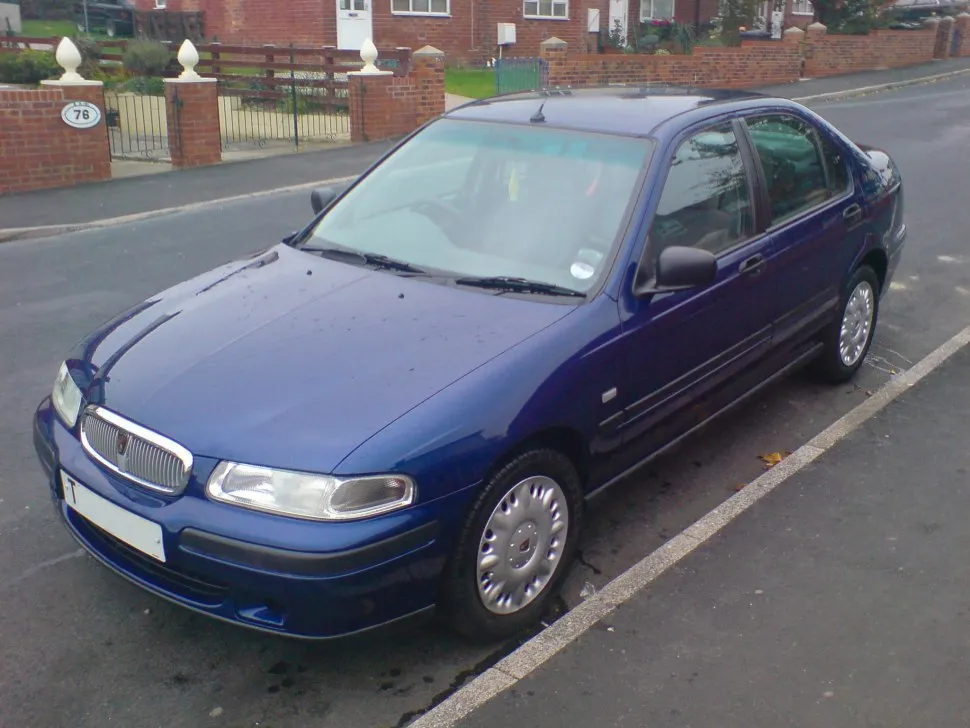
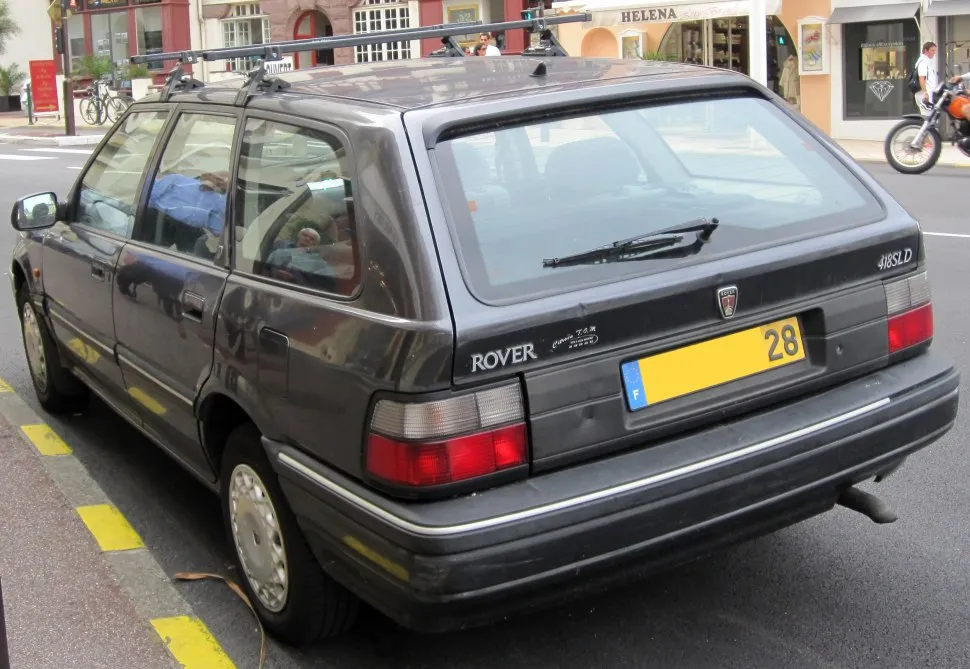
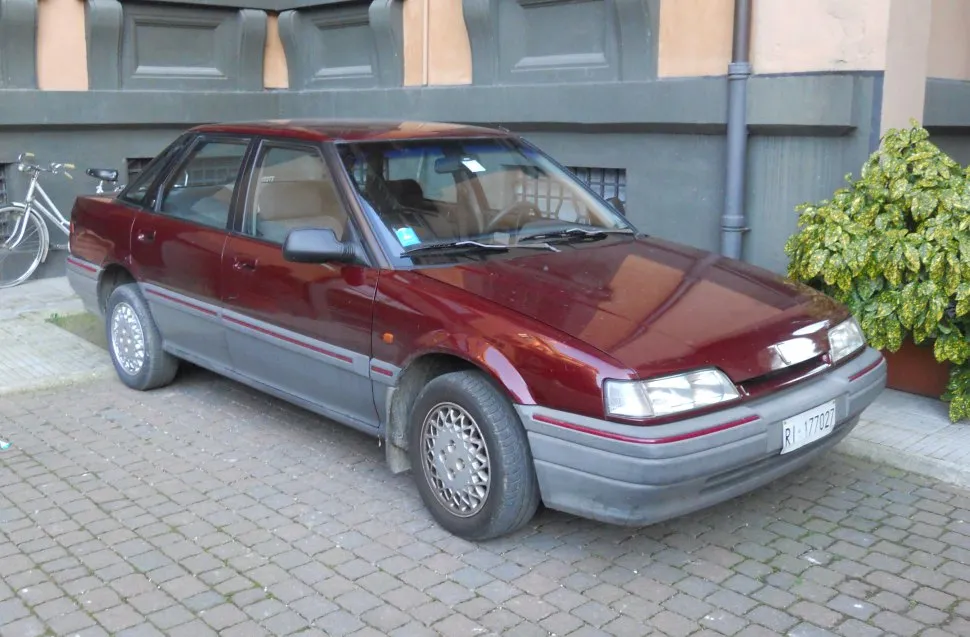
The Rover 400 Series, and later the Rover 45, are a series of small family cars that were produced by the British manufacturer Rover from 1990 to 2005. The cars were co-developed as part of Rover's collaboration with Honda. The first-generation 400 was based on the Honda Concerto, and the Mark II 400 was based on the Honda Domani/Civic.
Honda petrol engines were used in some Rover models, while the market competitive Rover L-series diesel engine was used from the mid-1990s in Hondas, before they designed their own diesel engine....(Read more on Wikipedia)
Hatchback (RT) Overview:
Rover 400 (Hatchback (RT)). With 170 Nm of torque, it offers ample pulling power. Weighing only 1295 kg, it’s quite light. Front‑wheel drive delivers efficiency and easy handling. Acceleration is relatively slow (0–100 km/h in 14 s). The top speed reaches 170 km/h. A compact car with a rear door that swings upward to provide access to the cargo area. Seating for 5 makes it ideal for daily use.
420 D (86 Hp) Verdict:

Performance Verdict
Leisurely acceleration, but offers robust low-end torque, making it suitable for relaxed cruising and carrying loads.
Fuel Economy
Excellent fuel economy, making it a highly cost-effective choice for drivers covering long distances.
Pros and Cons:
Pros:
- • Comfortable and refined ride quality for its class
- • Spacious interior, especially for rear passengers
- • Good range of engines, including economical diesels and punchy petrols
- • Traditional British styling appealed to many
- • Generally good value on the used car market
Cons:
- • Notorious K-series head gasket issues on petrol engines
- • Below-average Euro NCAP safety rating (2 stars)
- • Build quality could be inconsistent in some areas
- • Dated styling and interior by the end of its production run
- • Steering lacked feedback compared to some rivals
Specifications:
Specifications are compared to those of the previous generation(Tourer (XW): 1994 - 1998).
| General: | |
|---|---|
| Brand: | Rover |
| Model: | 400 |
| Generation: | Hatchback (RT) |
| Modification (Engine): | 420 D (86 Hp) |
| Start of production: | 1995 |
| End of production: | 2000 |
| Powertrain Architecture: | Internal Combustion engine |
| Body type: | Hatchback |
| Seats: | 5 |
| Doors: | 5 |
| Engine: | |
|---|---|
| Power: | 86 Hp @ 4500 rpm. Same horsepower |
| Power per litre: | 43.1 Hp/l [45mm less] |
| Torque: | 170 Nm @ 2000 rpm. |
| Engine Model/Code: | L More details about the engine L |
| Engine displacement: | 1994 |
| Number of cylinders: | 4 |
| Engine configuration: | Inline |
| Number of valves per cylinder: | 2 |
| Fuel injection system: | Diesel Commonrail |
| Engine aspiration: | Turbocharger |
| Valvetrain: | OHC |
| Engine oil capacity: | 4.5 l |
| Coolant: | 7 l |
| Engine layout: | Front, Transverse |
| Cylinder Bore: | 84.5 mm mm |
| Piston Stroke: | 88.9 mm mm |
| Compression ratio: | 19.5:1 |
| Performance: | |
|---|---|
| Fuel Type: | Diesel |
| Fuel consumption (economy) - combined: | 5.1 l/100 km |
| Acceleration 0 - 100 km/h: | 14 sec |
| Acceleration 0 - 62 mph: | 14 sec |
| Maximum speed: | 170 km/h |
| Weight-to-power ratio: | 15.1 kg/Hp, 66.4 Hp/tonne |
| Weight-to-torque ratio: | 7.6 kg/Nm, 131.3 Nm/tonne |
| Acceleration 0 - 60 mph: | 13.3 sec |
| Space: | |
|---|---|
| Kerb Weight: | 1295 |
| Max. weight: | 1720 |
| Max load: | 425 |
| Trunk (boot) space - maximum: | 720 l |
| Trunk (boot) space - minimum: | 370 l |
| Fuel tank capacity: | 55 l |
| Size: | |
|---|---|
| Length: | 4320 mm mm [45mm less] |
| Width: | 1700 mm mm [20mm more] |
| Height: | 1390 mm mm [Same height.] |
| Wheelbase: | 2620 mm mm [70mm more] |
| Front track: | 1480 mm |
| Rear (Back) track: | 1470 mm |
| Powertrain: | |
|---|---|
| Drivetrain Architecture | The Internal combustion engine (ICE) drives the front wheels of the vehicle. |
| Drive wheel | Front wheel drive |
| Number of gears | 5 |
| Transmission type | Manual |
| Front brakes | Disc |
| Rear brakes | Disc |
| Assisting systems | ABS (Anti-lock braking system) |
| Steering type | Steering rack and pinion |
| Power steering | Hydraulic Steering |
| Tires size | 185/65 R14 T |
| Front suspension | Spring Strut |
| Rear suspension | Spring Strut |




Driven it? Loved it? Hated it? Share your honest review!