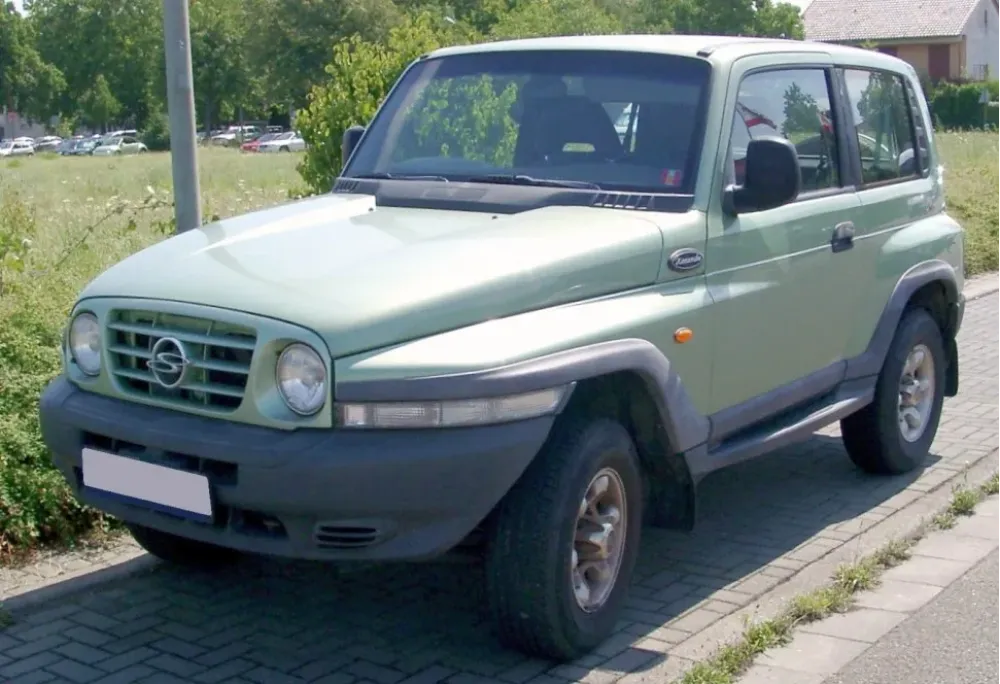
Click on image to view the full photo gallery
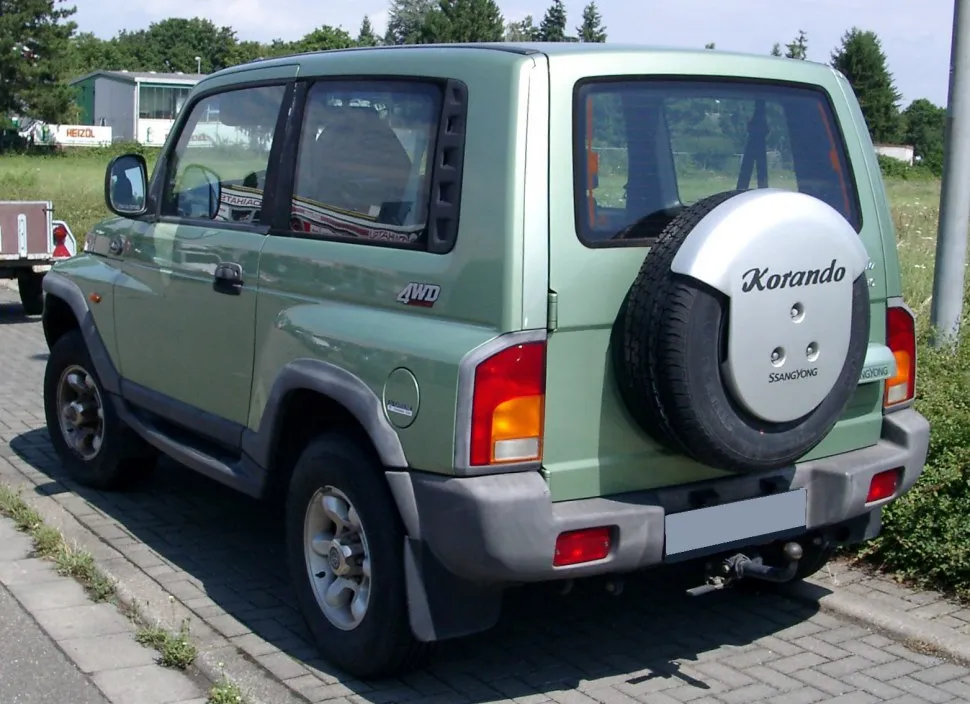
SsangYong Korando II (KJ) 2.3 TD (101 Hp)
Overall Rating
SsangYong Korando:
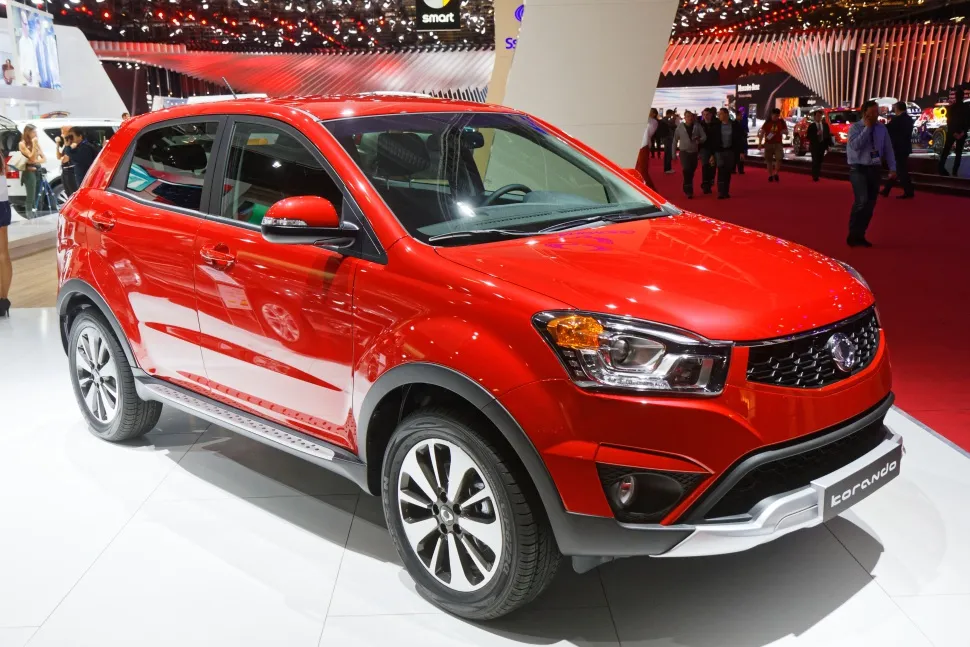
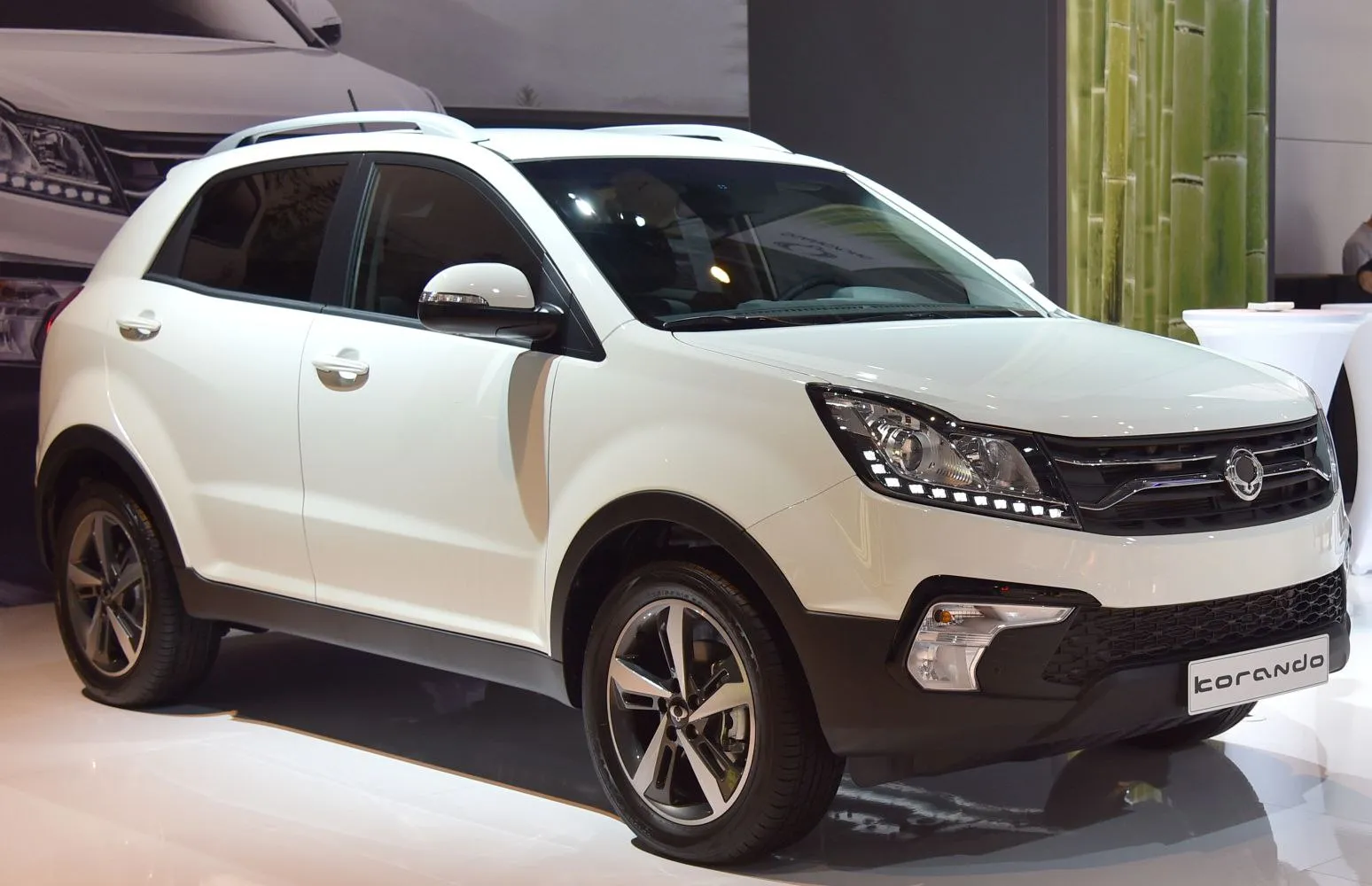
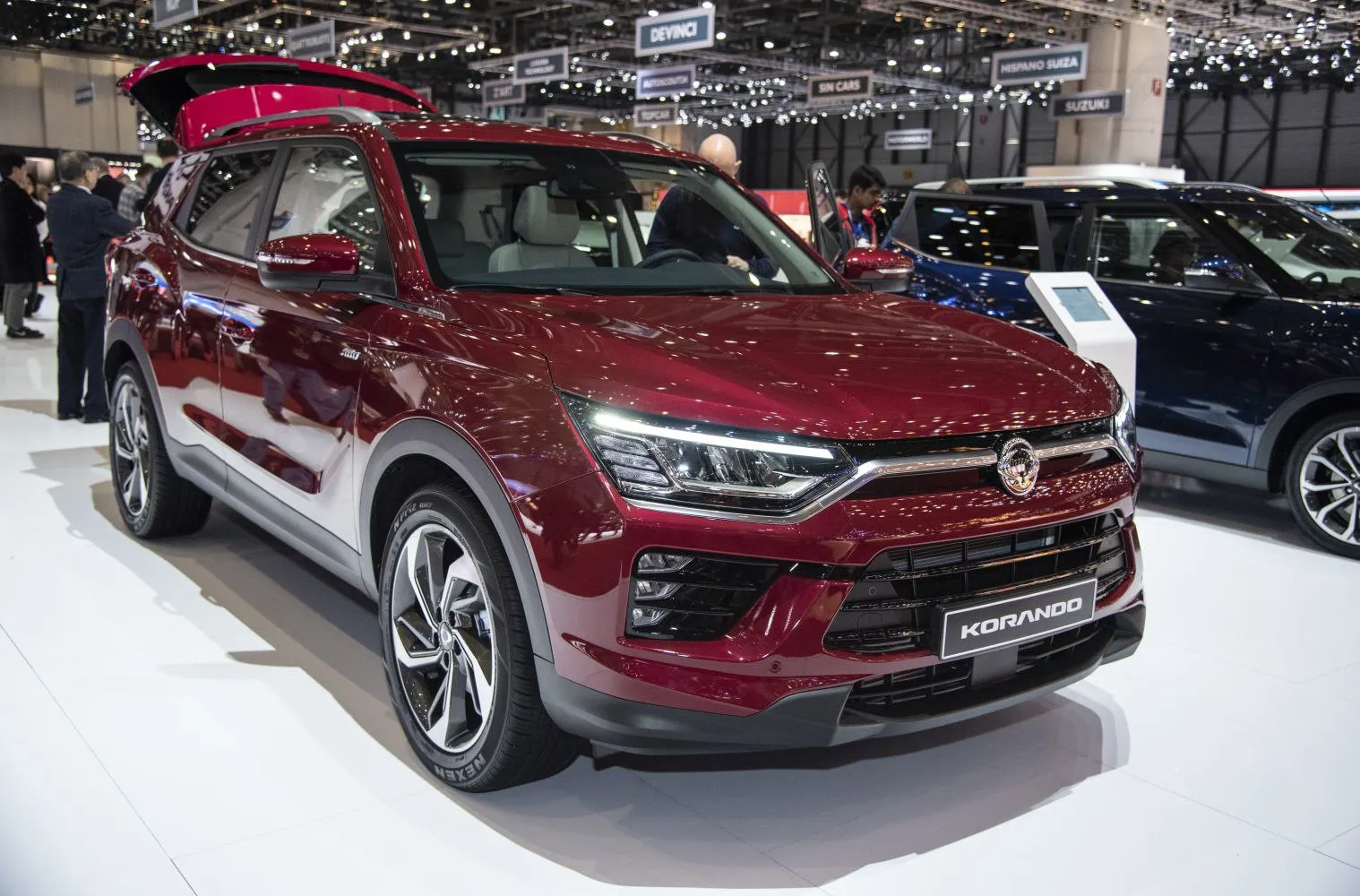
The KGM Korando, formerly SsangYong Korando is a mini SUV or compact crossover SUV built by the South Korean automobile manufacturer SsangYong from 1983 to 2006 and from 2010 onwards. The name Korando is a contraction of "Korea Can Do". The Korando brand is listed in the Guinness Book of Records as Korea’s longest surviving name plate.
In 1964, Ha Dong-hwan Motor Company began to assemble Jeeps, trucks, and buses for the US armed forces and for the United Nations Command.
In November 1969, the CJ-5 entered production with the 75 hp Willys Hurricane inline-four engine and in 1971, a ten-seater version and a pickup model were introduced. In April 1974, American Motors and Shinjin Motors formed a joint venture, Shinjin Jeep Motors, to build local Jeeps. These originally had a locally built AMC 258 ci straight-six engine with 110 hp SAE, but after the oil crises of the seventies Isuzu's 2. 8-liter 4BA1 diesel engine with 85 hp SAE was introduced in July 1979....(Read more on Wikipedia)
II (KJ) Overview:
SsangYong Korando (II (KJ)). With 205 Nm of torque, it offers ample pulling power. It has moderate fuel consumption (~10.1 l/100km). With a weight of 1750 kg, it falls in the mid‑range. All‑wheel drive provides excellent grip, ideal for off‑road use. Acceleration is relatively slow (0–100 km/h in 20 s). The top speed reaches 140 km/h. A sport utility vehicle offering higher ground clearance and versatile cargo space. Seating for 5 makes it ideal for daily use.
2.3 TD (101 Hp) Verdict:

Performance Verdict
Adequate performance for daily driving, with the turbocharger providing better torque than the naturally aspirated diesel. Still not quick, but more usable.
Fuel Economy
Expected to offer reasonable fuel economy for a turbo diesel of its size, providing a better balance of power and efficiency compared to the petrol V6s.
Pros and Cons:
Pros:
- • Robust, body-on-frame construction for durability
- • Excellent off-road capability with proper 4x4 system
- • Mercedes-Benz derived engines (for some variants) known for reliability
- • Distinctive and unique styling
- • Good value for money on the used market
Cons:
- • High fuel consumption, especially for petrol V6 models
- • Sluggish performance in lower-powered diesel variants
- • Dated interior design and materials
- • Rough ride quality compared to more modern SUVs
- • Limited safety features by modern standards
Specifications:
Specifications are compared to those of the previous generation(II (KJ): 1997 - 2006).
| General: | |
|---|---|
| Brand: | SsangYong |
| Model: | Korando |
| Generation: | II (KJ) |
| Modification (Engine): | 2.3 TD (101 Hp) |
| Start of production: | 1998 |
| End of production: | 2006 |
| Powertrain Architecture: | Internal Combustion engine |
| Body type: | SUV |
| Seats: | 5 |
| Doors: | 3 |
| Engine: | |
|---|---|
| Power: | 101 Hp @ 4000 rpm. Same horsepower |
| Power per litre: | 43.9 Hp/l [70mm less] |
| Torque: | 205 Nm @ 2400 rpm. |
| Engine Model/Code: | OM 661 More details about the engine OM 661 |
| Engine displacement: | 2299 |
| Number of cylinders: | 4 |
| Engine configuration: | Inline |
| Number of valves per cylinder: | 2 |
| Fuel injection system: | Precombustion chamber injection |
| Engine aspiration: | Turbocharger |
| Engine oil capacity: | 6.5 l |
| Coolant: | 9.5 l |
| Engine layout: | Front, Longitudinal |
| Cylinder Bore: | 89 mm mm |
| Piston Stroke: | 92.4 mm mm |
| Compression ratio: | 22:1 |
| Performance: | |
|---|---|
| Fuel Type: | Diesel |
| Fuel consumption (economy) - urban: | 10.1 l/100 km |
| Fuel consumption (economy) - extra urban: | 6.7 l/100 km |
| Acceleration 0 - 100 km/h: | 20 sec |
| Acceleration 0 - 62 mph: | 20 sec |
| Maximum speed: | 140 km/h |
| Weight-to-power ratio: | 17.3 kg/Hp, 57.7 Hp/tonne |
| Weight-to-torque ratio: | 8.5 kg/Nm, 117.1 Nm/tonne |
| Acceleration 0 - 60 mph: | 19 sec |
| Space: | |
|---|---|
| Kerb Weight: | 1750 |
| Max. weight: | 2515 |
| Max load: | 765 |
| Trunk (boot) space - maximum: | 1200 l |
| Trunk (boot) space - minimum: | 350 l |
| Fuel tank capacity: | 70 l |
| Size: | |
|---|---|
| Length: | 4260 mm mm [70mm less] |
| Width: | 1841 mm mm [Same width.] |
| Height: | 1840 mm mm [100mm less] |
| Wheelbase: | 2480 mm mm [Same wheelbase.] |
| Front track: | 1510 mm |
| Rear (Back) track: | 1520 mm |
| Powertrain: | |
|---|---|
| Drive wheel | All wheel drive (4x4) |
| Number of gears | 5 |
| Transmission type | Manual |
| Front brakes | Ventilated discs [Best for performance and cooling.] |
| Rear brakes | Disc |
| Assisting systems | ABS (Anti-lock braking system) |
| Steering type | Steering rack and pinion |
| Power steering | Hydraulic Steering |
| Tires size | 235/75 R15 |
| Front suspension | Torsion |
| Rear suspension | Rigid axle suspension |
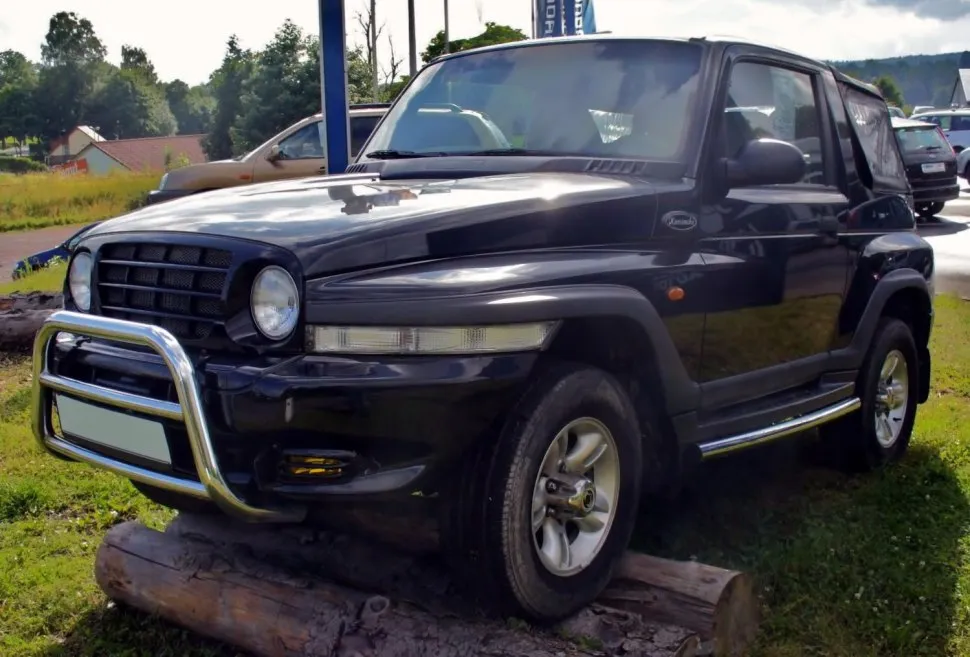
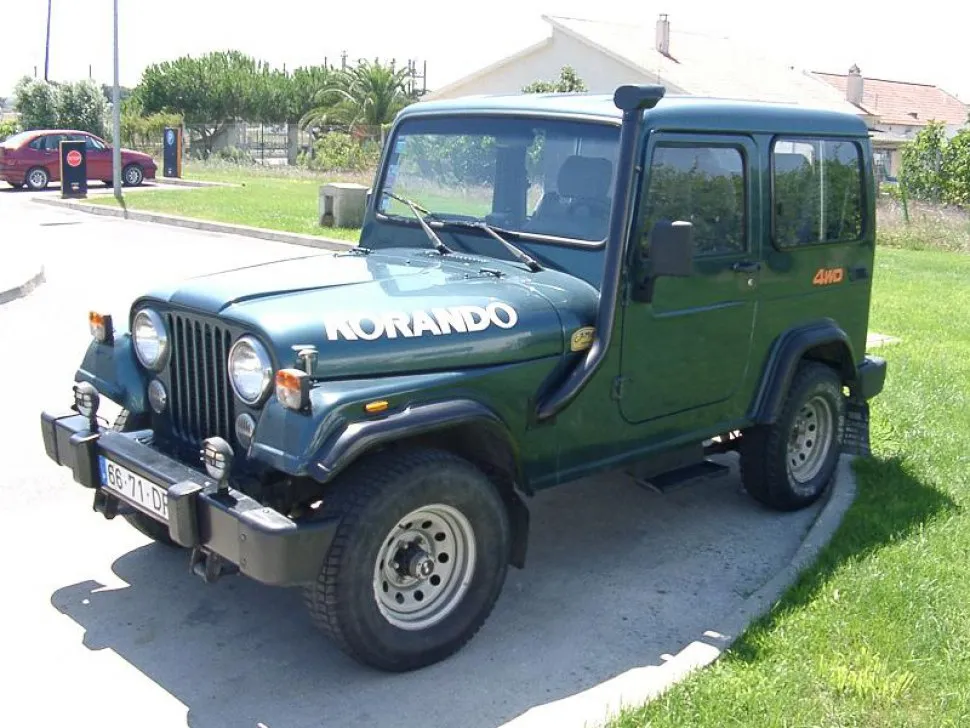
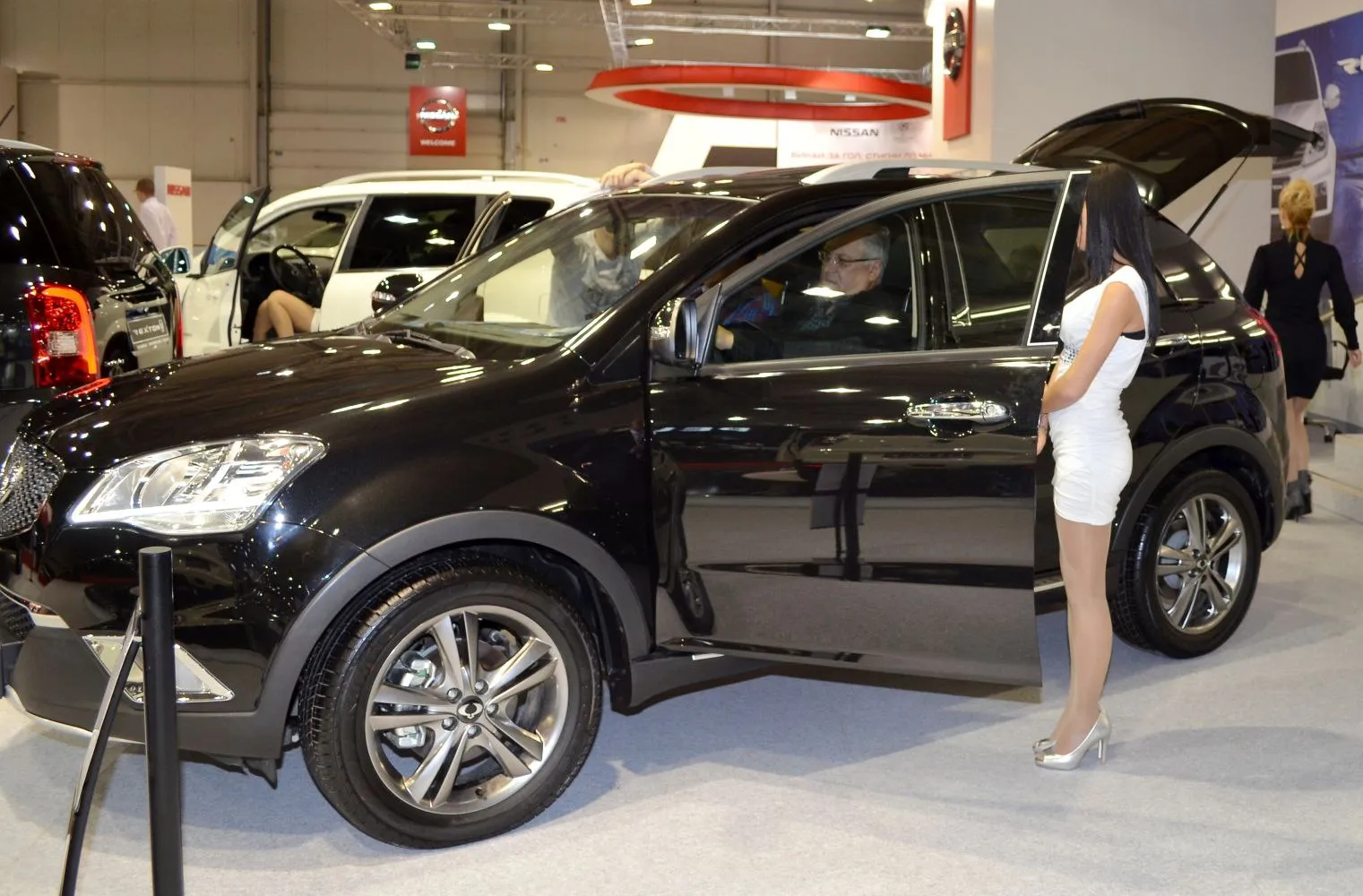





Behind the wheel of the SsangYong Korando. How does it handle on the road?