
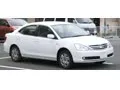
Click on image to view the full photo gallery
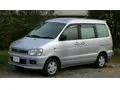
Toyota Nadia SXN10 2.0 i 16V D-4 (152 Hp)
Overall Rating
Toyota Nadia:
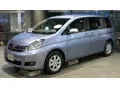
The Toyota Nadia is a compact MPV produced by the Japanese automaker Toyota from 1998 to 2003. It was sold only at Japanese dealerships called Toyota Corolla Store next to the Corolla and popular in the Russian Far East.
The name "Nadia" comes from Nadezhda, which means "Надежда" in Russian. It is also known as a female name.
The Nadia is a minivan-style tall wagon with a two-row seat developed based on the Ipsum. Although the total length is shorter than Ipsum, the wheelbase is the same, and it was divided into five-seater with no third row seat, so the seat space where the seat can be slid is not limited to the brother car. It is wider than the first-class car Century. A wide range of seat arrangements was possible depending on the grade....(Read more on Wikipedia)
SXN10 Overview:
Toyota Nadia (SXN10). With 200 Nm of torque, it offers ample pulling power. With a weight of 1320 kg, it falls in the mid‑range. Front‑wheel drive delivers efficiency and easy handling. A spacious vehicle designed to transport passengers comfortably, often with sliding doors. Seating for 5 makes it ideal for daily use.
The Toyota Nadia SXN10 was primarily a JDM model and was not officially tested by Euro NCAP. Safety features are typical for its era, including ABS.
2.0 i 16V D-4 (152 Hp) Verdict:

Performance Verdict
The D-4 direct injection engine provides a slight boost in power and improved throttle response, making it feel more lively than the standard variant.
Fuel Economy
Potentially offers better fuel efficiency due to direct injection technology, though real-world gains can vary. Requires specific fuel and maintenance.
Pros and Cons:
Pros:
- • Reliable Toyota engineering, especially for non-D4 variants.
- • Spacious and practical interior, ideal for families.
- • Comfortable ride quality for its class.
- • Good fuel tank capacity for longer trips.
Cons:
- • Uninspired driving dynamics and handling.
- • D-4 engine can be prone to carbon buildup and requires specific maintenance.
- • Interior design is dated by modern standards.
- • Limited availability and parts outside of Japan.
Specifications:
Specifications are compared to those of the previous generation(SXN10: 1998 - 2003).
| General: | |
|---|---|
| Brand: | Toyota |
| Model: | Nadia |
| Generation: | SXN10 |
| Modification (Engine): | 2.0 i 16V D-4 (152 Hp) |
| Start of production: | 2001 |
| End of production: | 2003 |
| Powertrain Architecture: | Internal Combustion engine |
| Body type: | Minivan |
| Seats: | 5 |
| Doors: | 5 |
| Engine: | |
|---|---|
| Power: | 152 Hp @ 6000 rpm. Same horsepower |
| Power per litre: | 76.1 Hp/l [Same length.] |
| Torque: | 200 Nm @ 4000 rpm. |
| Engine Model/Code: | 1AZ-FSE More details about the engine 1AZ-FSE |
| Engine displacement: | 1998 |
| Number of cylinders: | 4 |
| Engine configuration: | Inline |
| Number of valves per cylinder: | 4 |
| Fuel injection system: | Direct injection |
| Engine aspiration: | Naturally aspirated engine |
| Valvetrain: | DOHC |
| Engine oil capacity: | 4.2 l |
| Coolant: | 5.9 l |
| Engine layout: | Front, Transverse |
| Cylinder Bore: | 86 mm mm |
| Piston Stroke: | 86 mm mm |
| Compression ratio: | 9.8:1 |
| Performance: | |
|---|---|
| Fuel Type: | Petrol (Gasoline) |
| Weight-to-power ratio: | 8.7 kg/Hp, 115.2 Hp/tonne |
| Weight-to-torque ratio: | 6.6 kg/Nm, 151.5 Nm/tonne |
| Space: | |
|---|---|
| Kerb Weight: | 1320 |
| Max. weight: | 1595 |
| Max load: | 275 |
| Trunk (boot) space - minimum: | 810 l |
| Fuel tank capacity: | 60 l |
| Size: | |
|---|---|
| Length: | 4435 mm mm [Same length.] |
| Width: | 1695 mm mm [Same width.] |
| Height: | 1625 mm mm [Same height.] |
| Wheelbase: | 2735 mm mm [Same wheelbase.] |
| Front track: | 1470 mm |
| Rear (Back) track: | 1450 mm |
| Powertrain: | |
|---|---|
| Drivetrain Architecture | The Internal combustion engine (ICE) drives the front wheels of the vehicle. |
| Drive wheel | Front wheel drive |
| Number of gears | 4 |
| Transmission type | Automatic |
| Front brakes | Ventilated discs [Best for performance and cooling.] |
| Rear brakes | Drum [bad for performance and cooling.] |
| Assisting systems | ABS (Anti-lock braking system) |
| Steering type | Steering rack and pinion |
| Power steering | Hydraulic Steering |
| Tires size | 195/60 R15 H |
| Front suspension | Wishbone |
| Rear suspension | Coil spring |








Describe your experience with the Toyota Nadia using only emojis!