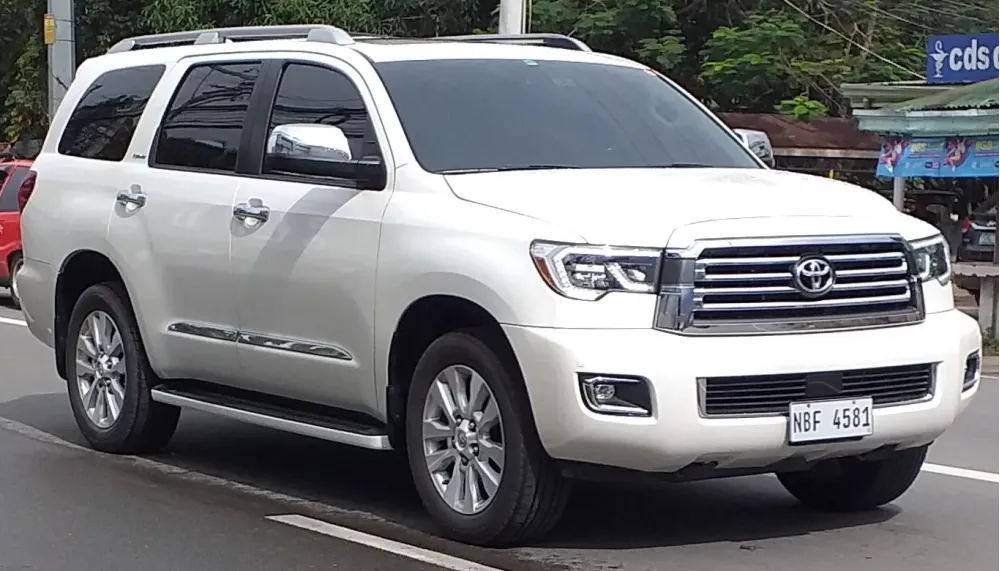
Click on image to view the full photo gallery
Toyota Sequoia II (facelift 2017) 5.7 V8 VVT-i (381 Hp) 4WD ECT-i
Overall Rating
Toyota Sequoia:
The Toyota Sequoia is a full-size SUV manufactured by Toyota mainly for the North American market since 2000 for the 2001 model year, being derived from the Tundra pickup truck. It is the second largest SUV ever produced under the Toyota brand, after the Japan-exclusive, military-focused Mega Cruiser.
Previously manufactured at Toyota Motor Manufacturing Indiana in Princeton, Indiana between 2000 and 2021, and then in Toyota Motor Manufacturing Texas in San Antonio, Texas since 2022, the Sequoia is the first vehicle from a Japanese marque in the popular mainstream full-sized SUV class in North America, and initial planning done by first-generation Sequoia chief engineer Kaoru Hosokawa aimed the Sequoia directly at the Ford Expedition, Chevrolet Tahoe/GMC Yukon, and other full-size SUVs....(Read more on Wikipedia)
II (facelift 2017) Overview:
Toyota Sequoia (II (facelift 2017)). With 544 Nm of torque, it offers ample pulling power. At around 2718 kg, it’s on the heavier side. All‑wheel drive provides excellent grip, ideal for off‑road use. A sport utility vehicle offering higher ground clearance and versatile cargo space. With seating for 7, it’s perfect for larger families.
5.7 V8 VVT-i (381 Hp) 4WD ECT-i Verdict:

Performance Verdict
Excellent power and torque for a large SUV, providing strong acceleration and effortless towing, especially with the capable 4WD system.
Fuel Economy
High fuel consumption, typical for a large V8 SUV with 4WD, making it less economical for daily city driving.
Pros and Cons:
Pros:
- • Exceptional reliability and durability from the 3UR-FE V8 engine
- • Spacious interior with seating for up to 8 passengers
- • Strong towing capacity (up to 3221 kg)
- • Proven 5.7L V8 engine performance and longevity
- • Good off-road capability, especially with 4WD models
Cons:
- • Very poor fuel economy across all trims
- • Dated interior design and technology compared to rivals
- • Large turning radius makes city maneuvering challenging
- • Truck-like ride quality can be less refined than competitors
- • High running costs due to fuel consumption and vehicle size
Specifications:
Specifications are compared to those of the previous generation(II: 2009 - 2012).
| General: | |
|---|---|
| Brand: | Toyota |
| Model: | Sequoia |
| Generation: | II (facelift 2017) |
| Modification (Engine): | 5.7 V8 VVT-i (381 Hp) 4WD ECT-i |
| Start of production: | February, 2017 |
| End of production: | June, 2022 |
| Powertrain Architecture: | Internal Combustion engine |
| Body type: | SUV |
| Seats: | 7-8 |
| Doors: | 5 |
| Engine: | |
|---|---|
| Power: | 381 Hp @ 5600 rpm. Same horsepower |
| Power per litre: | 67.3 Hp/l [Same length.] |
| Torque: | 544 Nm @ 3600 rpm. |
| Engine Model/Code: | 3UR-FE More details about the engine 3UR-FE |
| Engine displacement: | 5663 |
| Number of cylinders: | 8 |
| Engine configuration: | V-engine |
| Number of valves per cylinder: | 4 |
| Fuel injection system: | Direct injection |
| Engine aspiration: | Naturally aspirated engine |
| Valvetrain: | DOHC, VVT-i |
| Engine oil capacity: | 7.5 l |
| Coolant: | 12.4 l |
| Engine layout: | Front, Longitudinal |
| Cylinder Bore: | 94 mm mm |
| Piston Stroke: | 102 mm mm |
| Performance: | |
|---|---|
| Fuel Type: | Petrol (Gasoline) |
| Fuel consumption (economy) - urban: | 18.1 l/100 km |
| Fuel consumption (economy) - extra urban: | 13.8 l/100 km |
| Fuel consumption (economy) - combined: | 16.8 l/100 km |
| Emission standard: | ULEV-II |
| Weight-to-power ratio: | 7.1 kg/Hp, 140.3 Hp/tonne |
| Weight-to-torque ratio: | 5 kg/Nm, 200.4 Nm/tonne |
| Space: | |
|---|---|
| Kerb Weight: | 2715-2722 |
| Max. weight: | 3311 |
| Max load: | 589-596 |
| Trunk (boot) space - maximum: | 3401 l |
| Trunk (boot) space - minimum: | 535 l |
| Permitted trailer load with brakes (12%): | 3221 kg |
| Fuel tank capacity: | 100 l |
| Size: | |
|---|---|
| Length: | 5210 mm mm [Same length.] |
| Width: | 2029 mm mm [1mm less] |
| Height: | 1956 mm mm [1mm more] |
| Wheelbase: | 3099 mm mm [1mm less] |
| Front track: | 1725 mm |
| Rear (Back) track: | 1755 mm |
| Ride height (ground clearance): | 254 mm |
| Minimum turning circle (turning diameter): | 11.6 m [above average] |
| Approach angle: | 27° |
| Departure angle: | 21° |
| Powertrain: | |
|---|---|
| Drivetrain Architecture | The Internal combustion engine (ICE) drives the rear wheels permanently, and the front wheels are driven through an electrically or mechanically operated clutch if necessary. |
| Drive wheel | All wheel drive (4x4) |
| Number of gears | 6 |
| Transmission type | Automatic |
| Gearbox type | ECT-i |
| Assisting systems | ABS (Anti-lock braking system) |
| Steering type | Steering rack and pinion |
| Power steering | Hydraulic Steering |
| Tires size | 275/65 R18; 275/55 R20 |
| Wheel rims size | 8J x 18; 8J x 20 |
| Front suspension | Coil spring, Double wishbone, Transverse stabilizer |
| Rear suspension | Double wishbone, Transverse stabilizer, Coil spring |
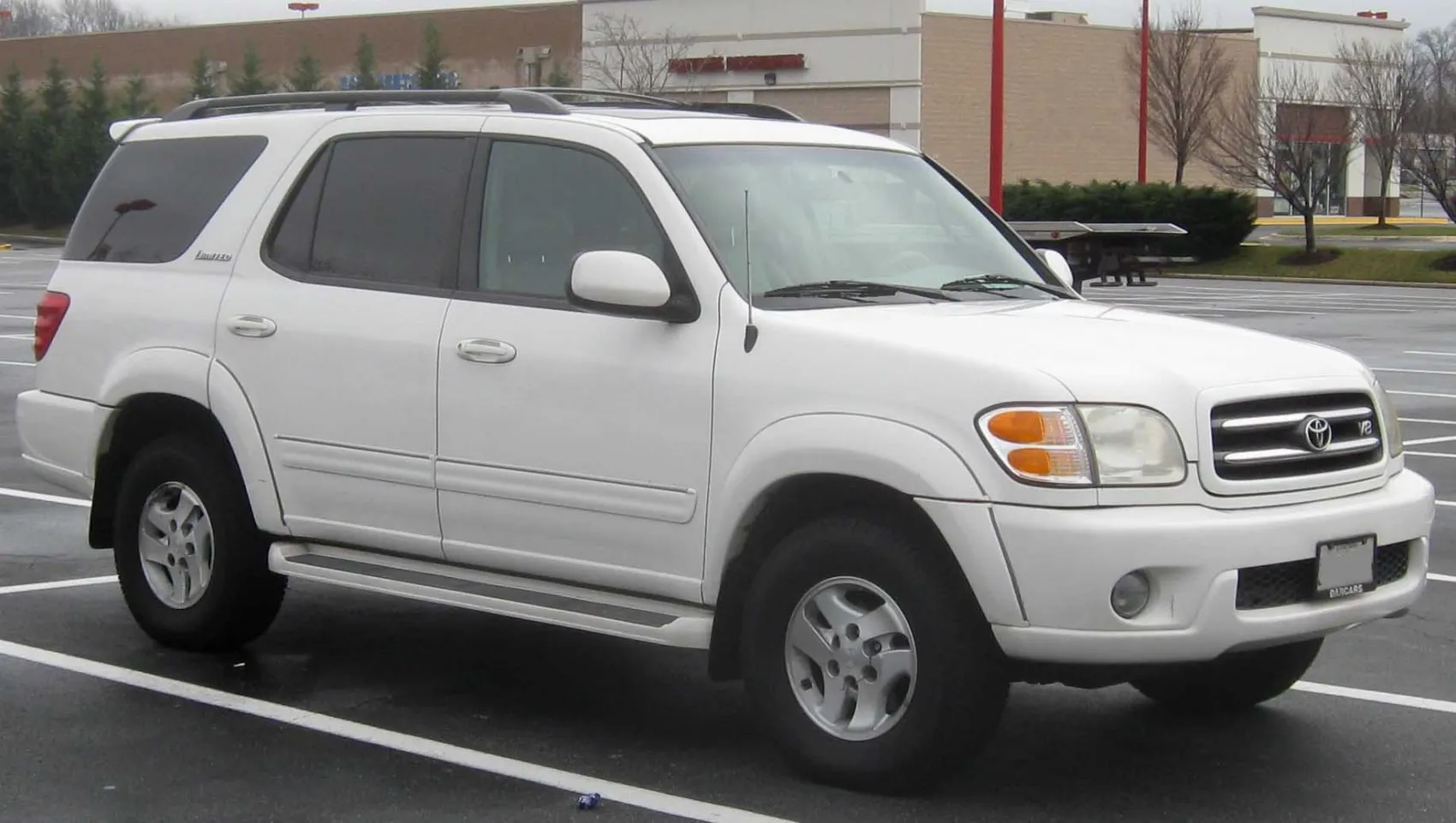
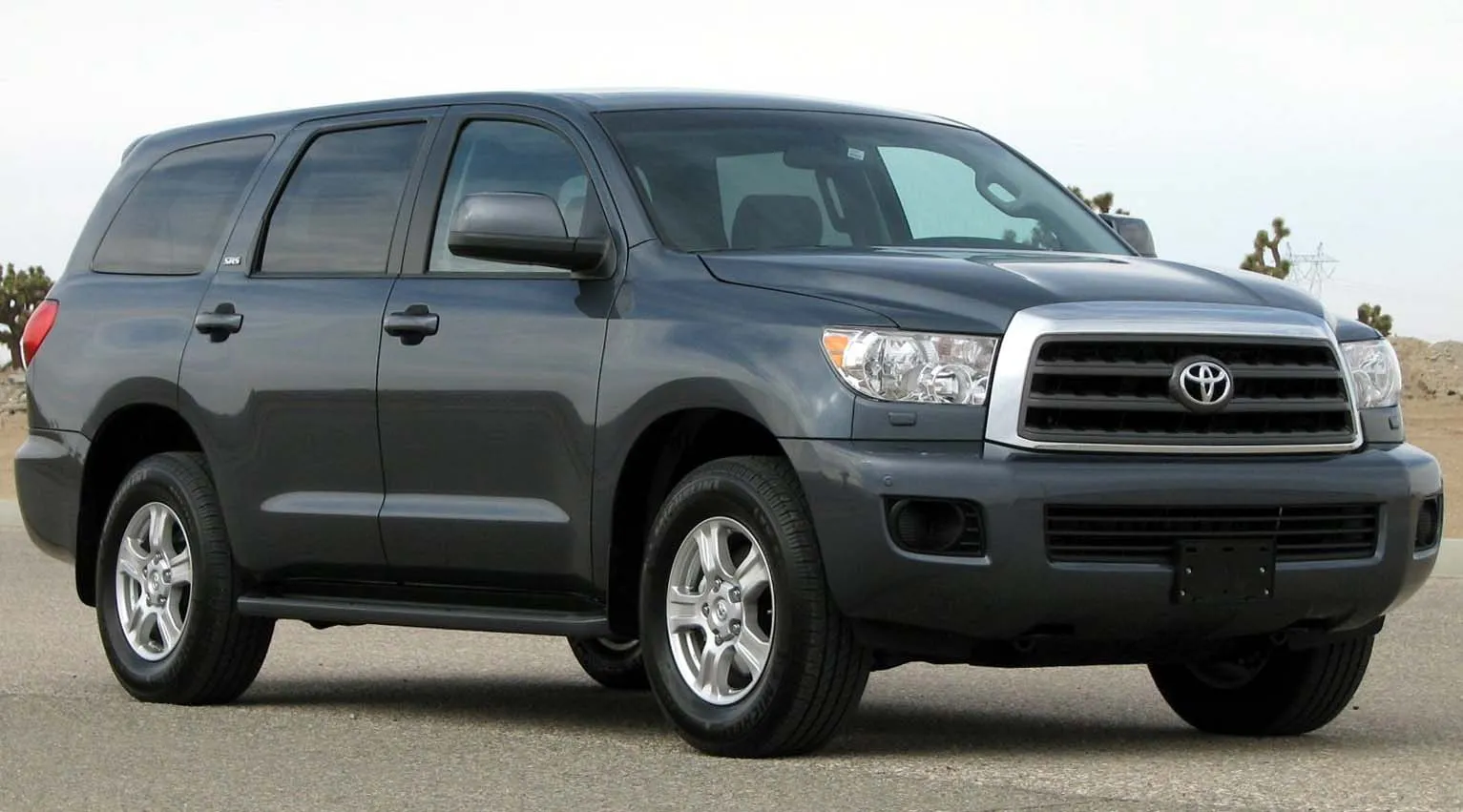







Have you ever driven an Toyota Sequoia?
How was your experience with it? Share with us: