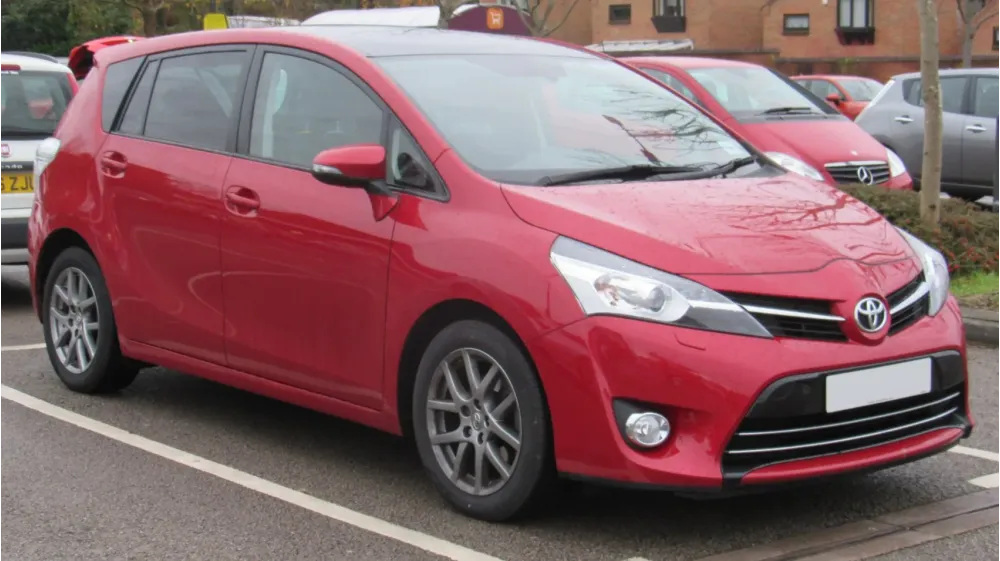
Click on image to view the full photo gallery
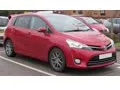
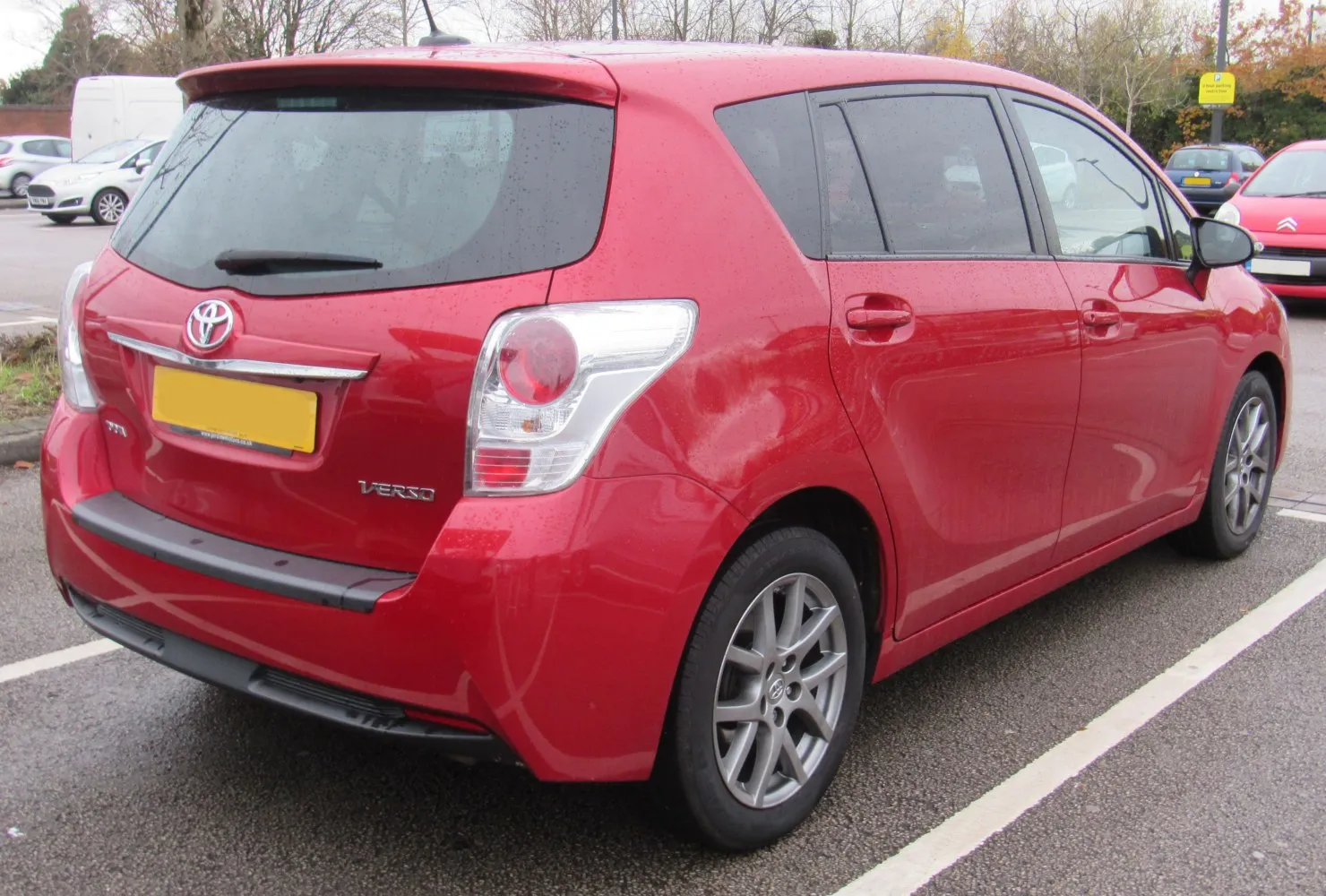
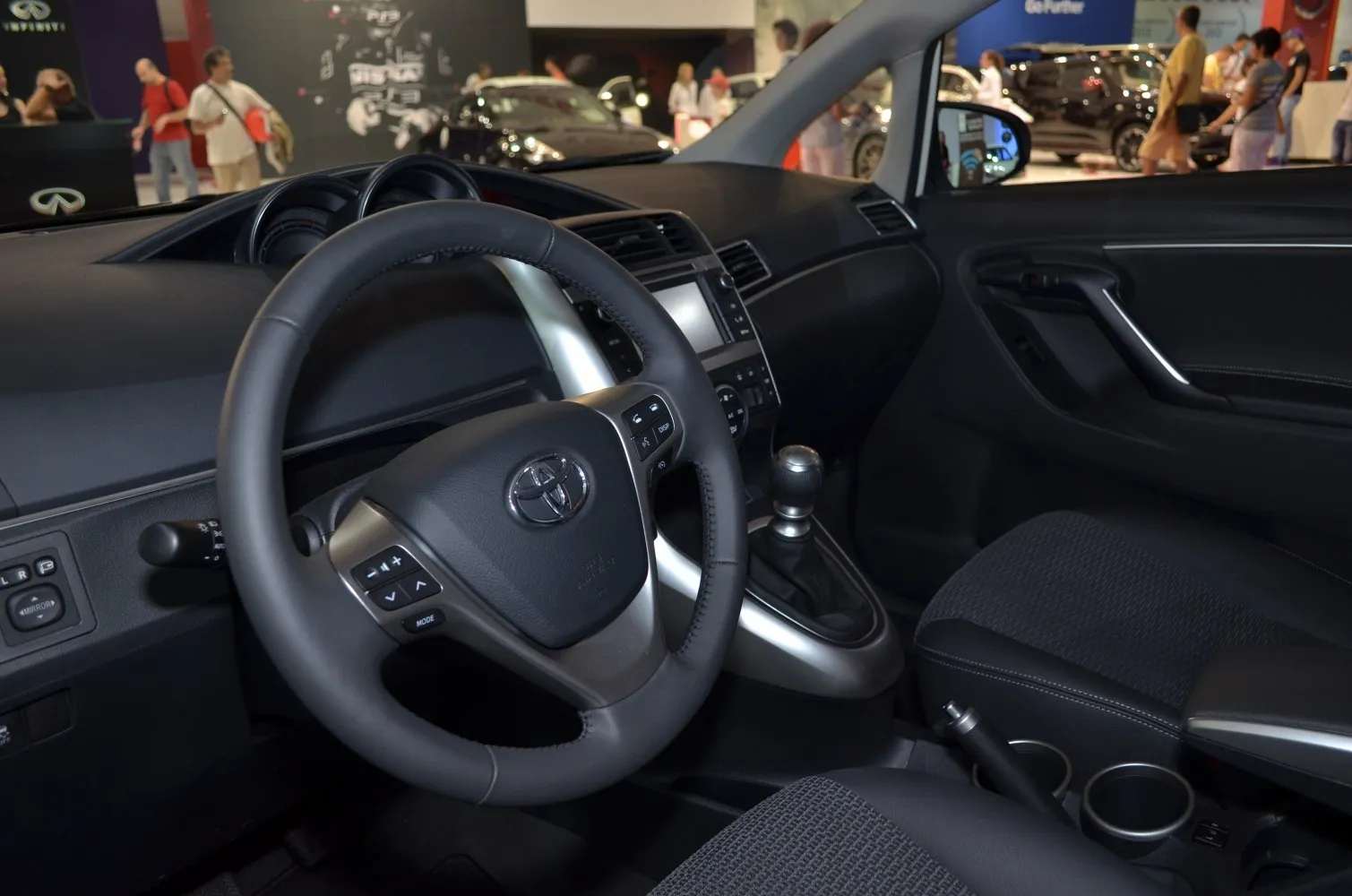
Toyota Verso facelift 2013 2.2 DCAT (150 Hp) Automatic
Overall Rating
Toyota Verso:
The Toyota Verso is a compact MPV produced by the Japanese carmaker Toyota between 2009 and 2018 as the direct successor to the Corolla Verso and was available in five- or seven-seat configurations. It was positioned above the Verso-S/Space Verso in Toyota's European catalogue.
The "Verso" name is taken from the English word "versatility".
The Verso was revealed at the 2009 Geneva Motor Show in March 2009. The Verso was marketed in Europe, Morocco, South Africa, China and Israel. It was not marketed in Japan, and not marketed in North America where the similar Matrix was offered instead. In South Africa, the only available diesel engine for the Verso range in South Africa is the 2. 0L D-4D....(Read more on Wikipedia)
facelift 2013 Overview:
Toyota Verso (facelift 2013). It has moderate fuel consumption (~8 l/100km). Front‑wheel drive delivers efficiency and easy handling. Acceleration is relatively slow (0–100 km/h in 10.1 s). The top speed reaches 195 km/h. A multi-purpose vehicle designed to transport passengers with ample interior space. Seating for 5 makes it ideal for daily use.
2.2 DCAT (150 Hp) Automatic Verdict:

Performance Verdict
The most powerful and refined engine, offering excellent acceleration and effortless cruising, especially with the automatic transmission.
Fuel Economy
Good fuel economy for a powerful diesel automatic, providing a strong balance between performance and running costs.
Pros and Cons:
Pros:
- • Excellent reliability and build quality
- • Versatile and spacious interior, especially 7-seat options
- • Comfortable ride quality, good for long journeys
- • Efficient diesel engine options
- • Strong safety record (5-star Euro NCAP)
Cons:
- • Styling can be considered bland by some
- • Petrol engines can be less economical than diesels
- • CVT gearbox can feel unengaging
- • Not the most dynamic handling in its class
- • Third-row seats best suited for children
Specifications:
Specifications are compared to those of the previous generation(facelift 2013: February, 2014 - June, 2018).
| General: | |
|---|---|
| Brand: | Toyota |
| Model: | Verso |
| Generation: | facelift 2013 |
| Modification (Engine): | 2.2 DCAT (150 Hp) Automatic |
| Start of production: | January, 2013 |
| End of production: | May, 2015 |
| Powertrain Architecture: | Internal Combustion engine |
| Body type: | MPV |
| Seats: | 5 |
| Doors: | 5 |
| Engine: | |
|---|---|
| Engine systems: | Particulate filter |
| Power: | 150 Hp Same horsepower |
| Engine Model/Code: | 2AD-FHV More details about the engine 2AD-FHV |
| Number of cylinders: | 4 |
| Engine configuration: | Inline |
| Number of valves per cylinder: | 4 |
| Fuel injection system: | Diesel Commonrail |
| Engine aspiration: | Turbocharger, Intercooler |
| Valvetrain: | DOHC |
| Engine oil capacity: | 5.9 l |
| Coolant: | 7.4 l |
| Engine layout: | Front, Transverse |
| Performance: | |
|---|---|
| Fuel Type: | Diesel |
| Fuel consumption (economy) - urban: | 8 l/100 km |
| Fuel consumption (economy) - extra urban: | 5.5 l/100 km |
| Fuel consumption (economy) - combined: | 6.4 l/100 km |
| Emission standard: | Euro 5 |
| Acceleration 0 - 100 km/h: | 10.1 sec |
| Acceleration 0 - 62 mph: | 10.1 sec |
| Maximum speed: | 195 km/h |
| Acceleration 0 - 60 mph: | 9.6 sec |
| Space: | |
|---|---|
| Trunk (boot) space - maximum: | 1740 l |
| Trunk (boot) space - minimum: | 484 l |
| Size: | |
|---|---|
| Length: | 4460 mm mm [Same length.] |
| Width: | 1790 mm mm [Same width.] |
| Height: | 1620 mm mm [Same height.] |
| Wheelbase: | 2780 mm mm [Same wheelbase.] |
| Minimum turning circle (turning diameter): | 12 m [above average] |
| Powertrain: | |
|---|---|
| Drivetrain Architecture | The Internal combustion engine (ICE) drives the front wheels of the vehicle. |
| Drive wheel | Front wheel drive |
| Number of gears | 6 |
| Transmission type | Automatic |
| Front brakes | Ventilated discs [Best for performance and cooling.] |
| Rear brakes | Drum [bad for performance and cooling.] |
| Assisting systems | ABS (Anti-lock braking system) |
| Steering type | Steering rack and pinion |







Describe your experience with the Toyota Verso using only emojis!