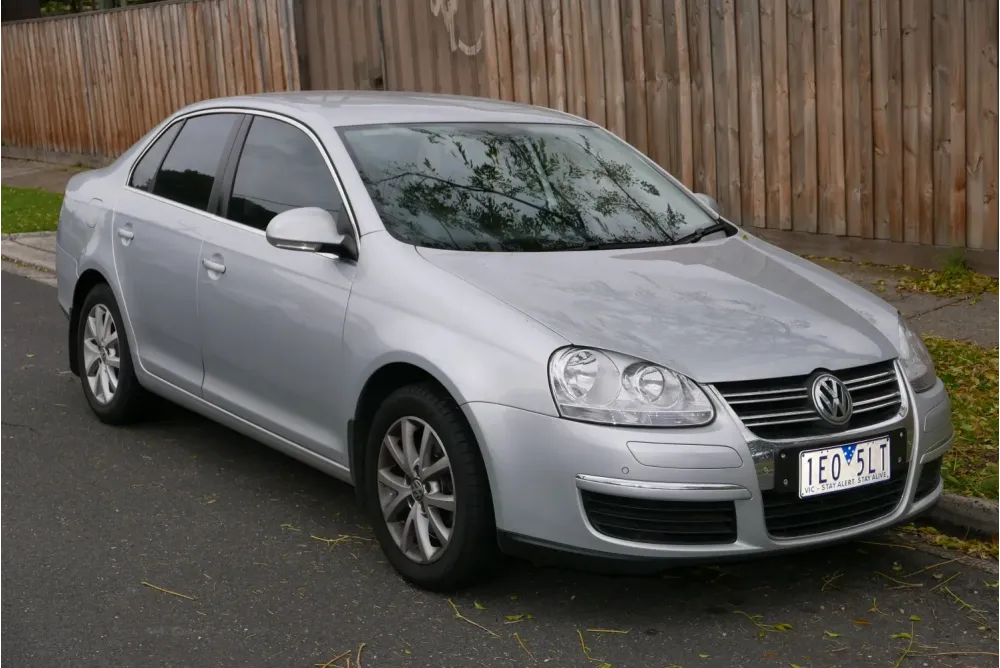
Click on image to view the full photo gallery
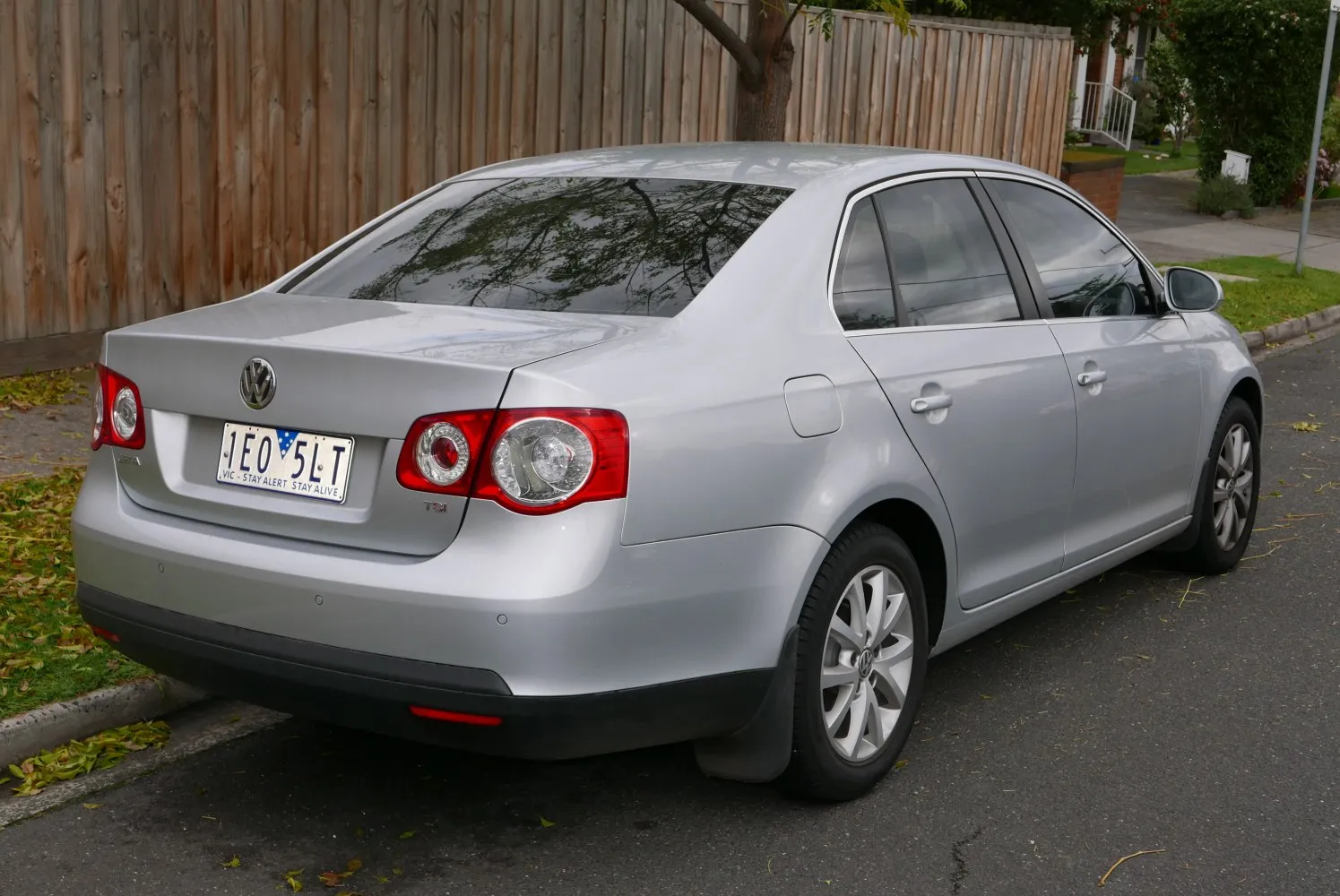
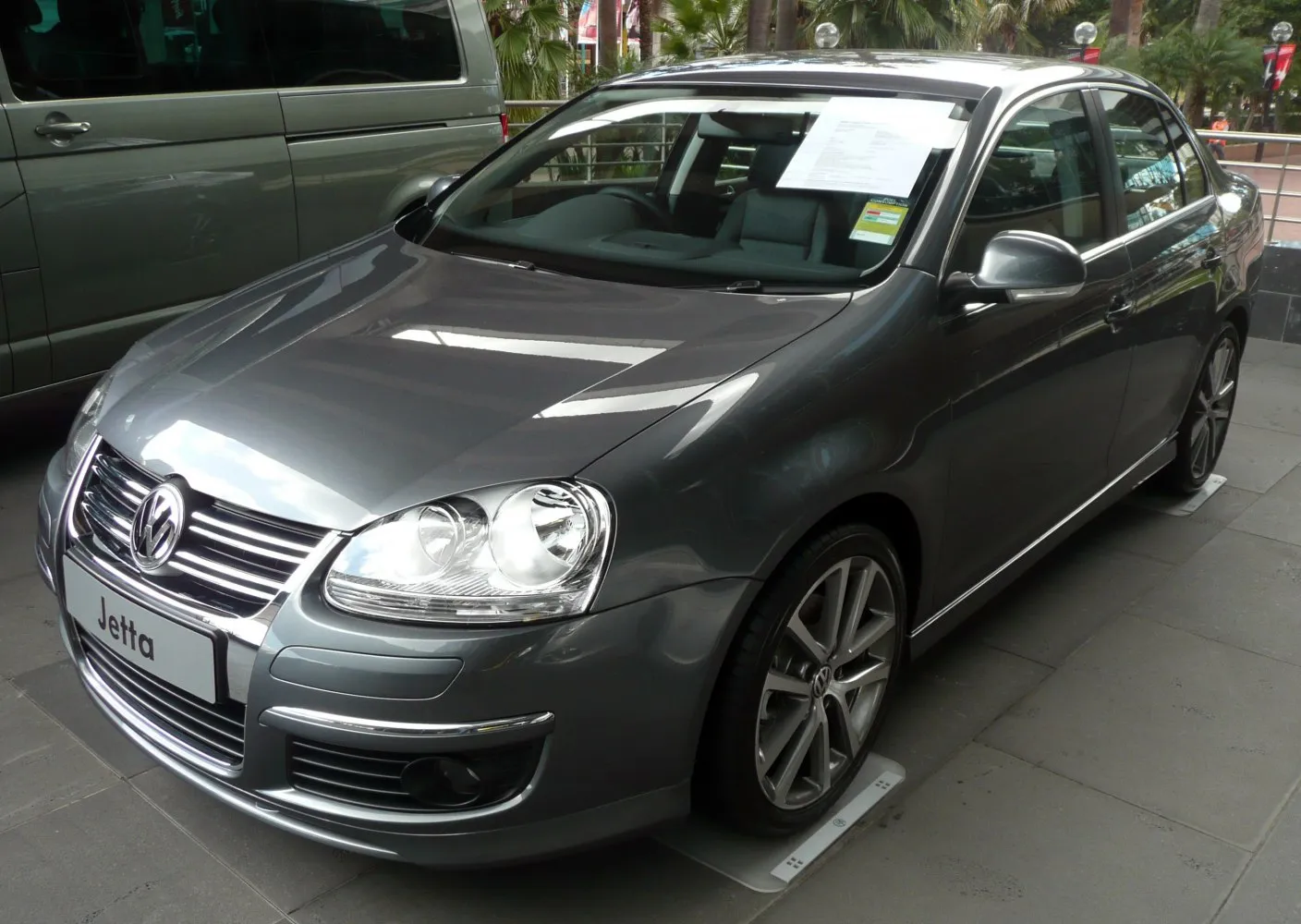
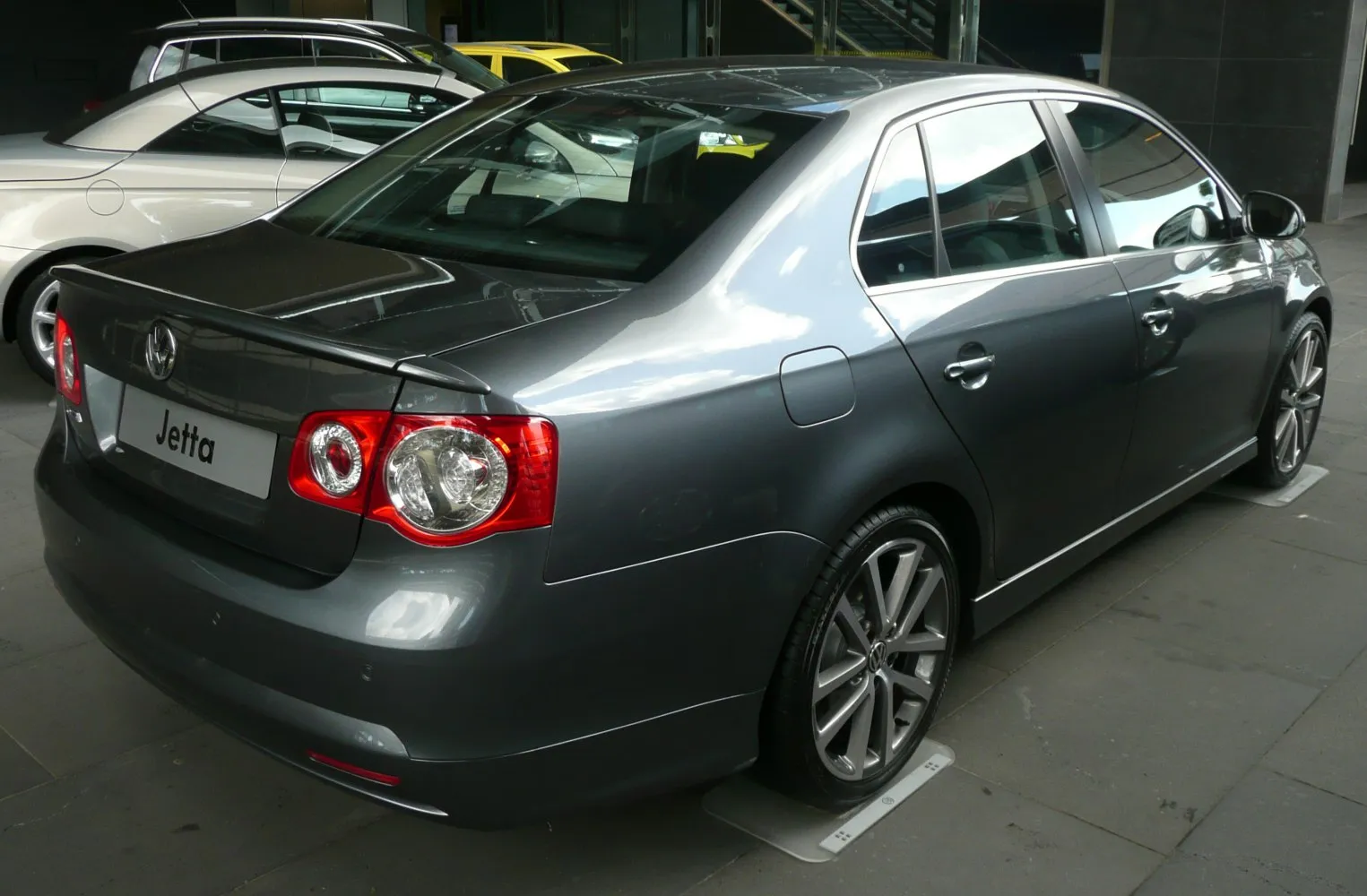
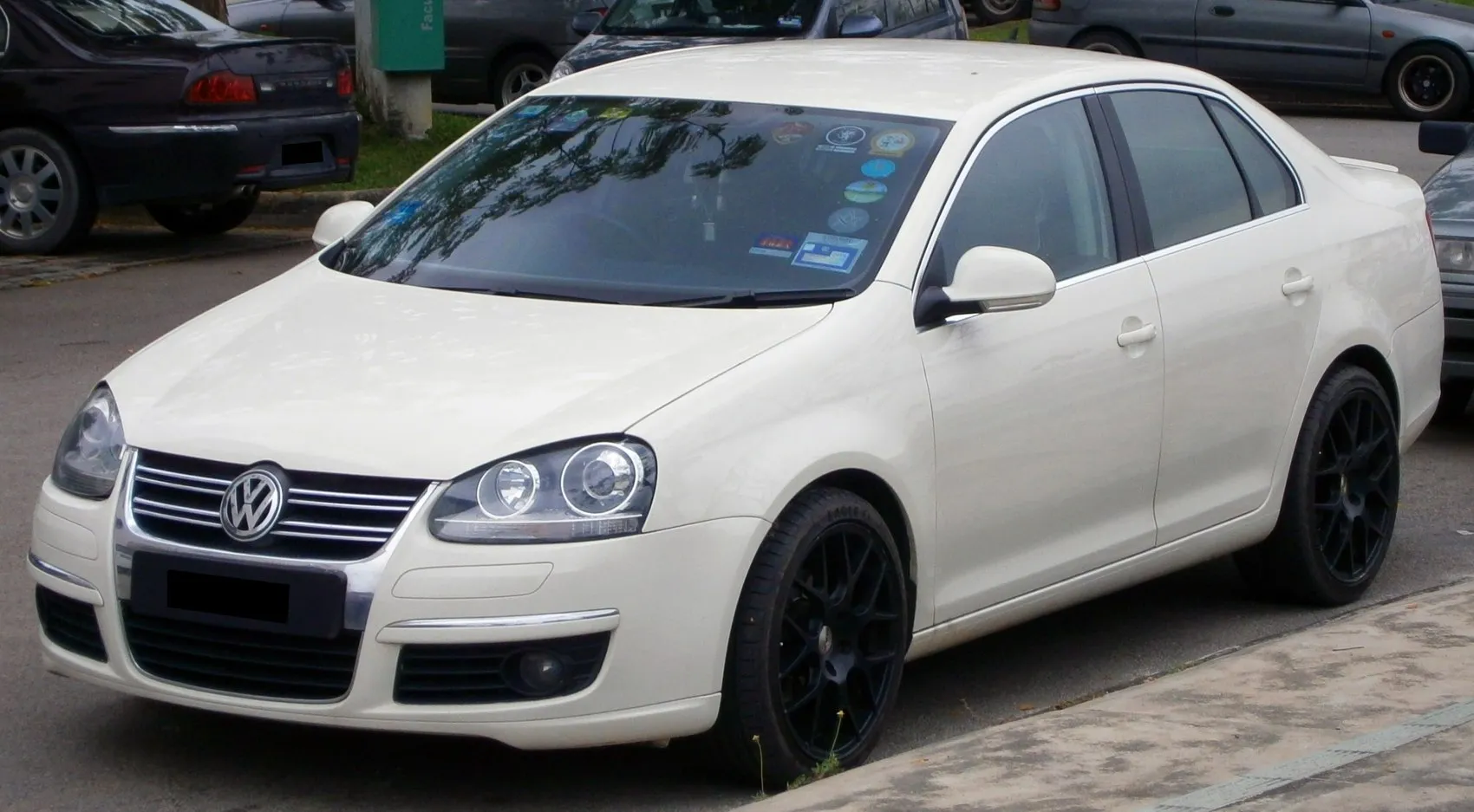
Volkswagen Jetta V 2.0 TDI CR (140 Hp)
Overall Rating
Volkswagen Jetta:
The Volkswagen Jetta is a compact car/small family car manufactured and marketed by Volkswagen since 1979. Positioned to fill a sedan niche slightly above the firm's Golf hatchback, it has been marketed over seven generations, variously as the Atlantic, Vento, Bora, City Jetta, Jetta City, GLI, Jetta, Clasico, and Sagitar.
The Jetta has been offered in two- and four-door saloon / sedan and sometimes as five-door wagon / estate versions. Since the original version in 1980, the car has grown in size and power with each generation. By mid-2011, almost 10 million Jettas have been produced and sold all over the world. As of April 2014, Volkswagen marketed over 14 million, becoming its top selling model....(Read more on Wikipedia)
V Overview:
Volkswagen Jetta (V). With 320 Nm of torque, it offers ample pulling power. It has moderate fuel consumption (~7.1 l/100km). With a weight of 1411 kg, it falls in the mid‑range. Front‑wheel drive delivers efficiency and easy handling. Acceleration is relatively slow (0–100 km/h in 9.7 s). The top speed reaches 207 km/h. A four-door car with a separate trunk, ideal for families and daily commuting. Seating for 5 makes it ideal for daily use.
While the Jetta V itself was not directly tested by Euro NCAP, its platform-mate, the Volkswagen Golf V, achieved an excellent 5-star rating for adult occupant protection in 2004, indicating strong underlying safety credentials for the Jetta V.
2.0 TDI CR (140 Hp) Verdict:

Performance Verdict
Strong and flexible performance, providing ample power for all driving scenarios, with the direct engagement of a manual gearbox.
Fuel Economy
Excellent fuel economy, making it a highly practical and cost-effective choice for daily use and long trips.
 Community Verdict
This rating is based on comments found on Reddit, scanned using artificial intelligence, and may not accurately reflect reality.

2.9 / 5
Based on AI analysis of 21 discussions
Read What Owners Say
Pros and Cons:
Pros:
- • Wide range of efficient and powerful engines (TSI/TDI)
- • Refined ride quality and comfortable interior
- • Spacious trunk for a sedan
- • Solid build quality and premium feel for its class
- • Good safety ratings (based on Golf V platform)
Cons:
- • Some older petrol engines (1.6i, 2.0 FSI) can be underpowered or less efficient
- • Certain early TSI/TFSI engines had known reliability issues (e.g., timing chains, carbon buildup)
- • Interior design can be perceived as conservative by some
- • Rear legroom is adequate but not class-leading
- • Older automatic transmissions (Tiptronic) are less refined than DSG
Specifications:
Specifications are compared to those of the previous generation(V: 2007 - 2010).
| General: | |
|---|---|
| Brand: | Volkswagen |
| Model: | Jetta |
| Generation: | V |
| Modification (Engine): | 2.0 TDI CR (140 Hp) |
| Start of production: | 2008 |
| End of production: | 2010 |
| Powertrain Architecture: | Internal Combustion engine |
| Body type: | Sedan |
| Seats: | 5 |
| Doors: | 4 |
| Engine: | |
|---|---|
| Engine systems: | Particulate filter |
| Power: | 140 Hp @ 4200 rpm. Same horsepower |
| Power per litre: | 71.1 Hp/l [Same length.] |
| Torque: | 320 Nm @ 1750-2500 rpm. |
| Engine Model/Code: | CBDB More details about the engine CBDB |
| Engine displacement: | 1968 |
| Number of cylinders: | 4 |
| Engine configuration: | Inline |
| Number of valves per cylinder: | 4 |
| Fuel injection system: | Diesel Commonrail |
| Engine aspiration: | Turbocharger, Intercooler |
| Valvetrain: | DOHC |
| Engine oil capacity: | 4.3 l |
| Coolant: | 5.6 l |
| Engine layout: | Front, Transverse |
| Cylinder Bore: | 81 mm mm |
| Piston Stroke: | 95.5 mm mm |
| Compression ratio: | 18:1 |
| Performance: | |
|---|---|
| Fuel Type: | Diesel |
| Fuel consumption (economy) - urban: | 7.1 l/100 km |
| Fuel consumption (economy) - extra urban: | 4.5 l/100 km |
| Fuel consumption (economy) - combined (NEDC): | 5.5 l/100 km |
| Fuel consumption (economy) - urban (NEDC): | 7.1 l/100 km |
| Fuel consumption (economy) - extra urban (NEDC): | 4.5 l/100 km |
| Fuel consumption (economy) - combined: | 5.5 l/100 km |
| Emission standard: | Euro 4 |
| Acceleration 0 - 100 km/h: | 9.7 sec |
| Acceleration 0 - 62 mph: | 9.7 sec |
| Maximum speed: | 207 km/h |
| Weight-to-power ratio: | 10.1 kg/Hp, 99.2 Hp/tonne |
| Weight-to-torque ratio: | 4.4 kg/Nm, 226.8 Nm/tonne |
| Acceleration 0 - 60 mph: | 9.2 sec |
| Space: | |
|---|---|
| Kerb Weight: | 1411 |
| Max. weight: | 2000 |
| Max. roof load: | 75 kg |
| Max load: | 589 |
| Trunk (boot) space - minimum: | 527 l |
| Permitted trailer load with brakes (12%): | 1500 kg |
| Fuel tank capacity: | 55 l |
| Permitted trailer load without brakes: | 730 kg |
| Permitted towbar download: | 75 kg |
| Permitted trailer load with brakes (8%): | 1700 kg |
| Size: | |
|---|---|
| Ramp-over (brakeover) angle: | 9.9° |
| Length: | 4554 mm mm [Same length.] |
| Width: | 1781 mm mm [Same width.] |
| Height: | 1459 mm mm [Same height.] |
| Wheelbase: | 2578 mm mm [Same wheelbase.] |
| Width including mirrors: | 2010 mm |
| Front track: | 1534 mm |
| Rear (Back) track: | 1512 mm |
| Minimum turning circle (turning diameter): | 10.9 m [above average] |
| Approach angle: | 14.6° |
| Departure angle: | 12.4° |
| Powertrain: | |
|---|---|
| Drivetrain Architecture | The Internal combustion engine (ICE) drives the front wheels of the vehicle. |
| Drive wheel | Front wheel drive |
| Number of gears | 6 |
| Transmission type | Manual |
| Front brakes | Ventilated discs [Best for performance and cooling.] |
| Rear brakes | Disc [above average] |
| Assisting systems | ABS (Anti-lock braking system) |
| Steering type | Steering rack and pinion |
| Power steering | Electric Steering |
| Tires size | 205/55 R16 |
| Wheel rims size | 6.5J x 16 |
| Front suspension | Coil spring, Wishbone, Transverse stabilizer |
| Rear suspension | Independent multi-link suspension, Transverse stabilizer |









Driven it? Loved it? Hated it? Share your honest review!