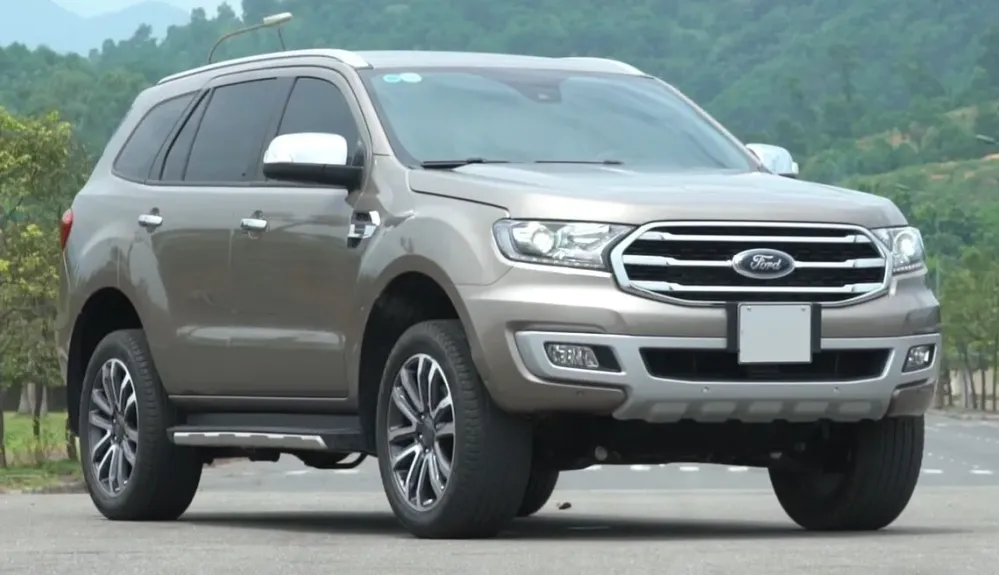
Click on image to view the full photo gallery
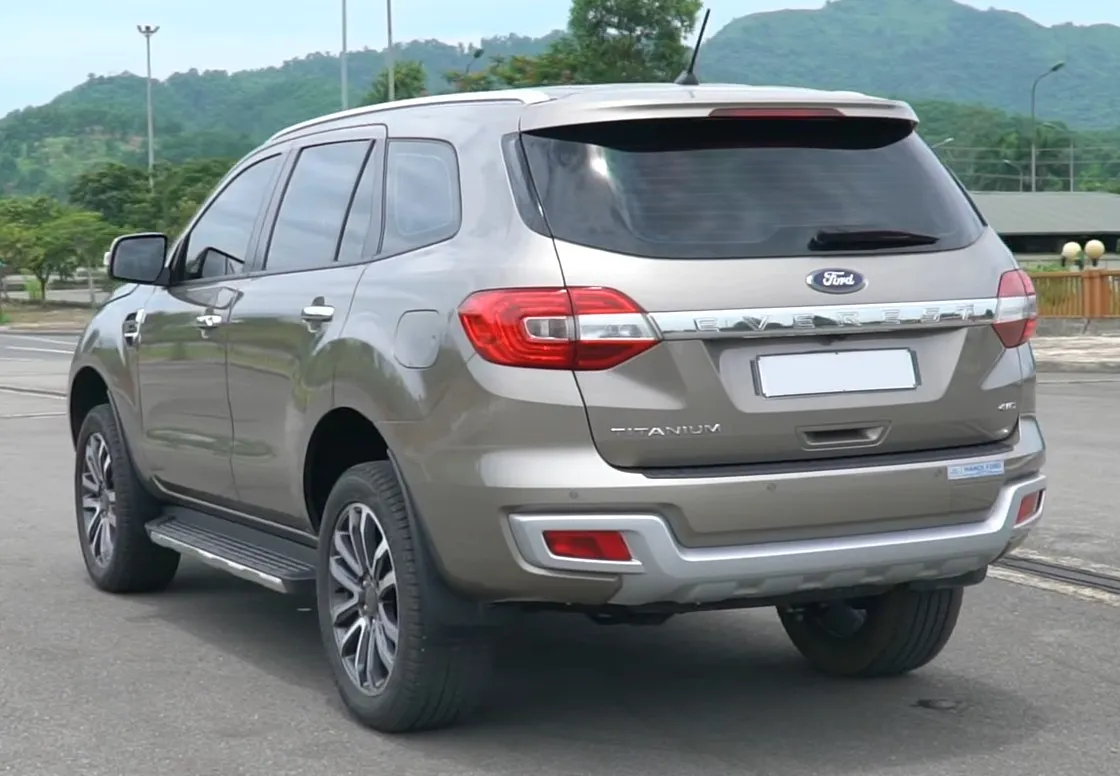
Ford Everest II (U375/UA, facelift 2018) 2.0 (214 Hp) Automatic
Overall Rating
Ford Everest:
The Ford Everest is a mid-size SUV produced by the Ford Motor Company since 2003. Developed and destined mainly for the Asia-Pacific region with production centered in Thailand, the first-generation Everest is derived from the Mazda-based Ford Ranger pickup truck, while the following generations are based on the globally-marketed T6 Ranger. Unlike the Ranger which was paralleled with the Mazda B series or BT-50 until 2020, the Everest has no Mazda equivalent, as it was seen as unfitting for the brand....(Read more on Wikipedia)
II (U375/UA, facelift 2018) Overview:
Ford Everest (II (U375/UA, facelift 2018)). With 500 Nm of torque, it offers ample pulling power. At around 2312 kg, it’s on the heavier side. Rear‑wheel drive offers dynamic handling and sporty feedback. A sport utility vehicle offering higher ground clearance and versatile cargo space. Seating for 5 makes it ideal for daily use.
2.0 (214 Hp) Automatic Verdict:

Performance Verdict
Offers strong, refined performance with excellent acceleration, making it feel more agile than its size suggests.
Fuel Economy
Outstanding fuel economy at 6.9 l/100 km, making it the most efficient option for urban and highway driving.
Pros and Cons:
Pros:
- • Strong towing capacity across all engine options.
- • Excellent off-road capability (especially 4WD models).
- • Spacious 7-seat interior with good cargo flexibility.
- • Refined ride quality for a body-on-frame SUV.
- • Modern 2.0L EcoBlue engine offers great power and efficiency.
Cons:
- • 3.2L Duratorq can be less refined and thirstier than newer engines.
- • Interior design, while practical, can feel less premium than some rivals.
- • Large turning circle can make urban maneuvering tricky.
- • Some reports of DPF issues with diesel engines.
Specifications:
Specifications are compared to those of the previous generation(II (U375/UA): 2015 - 2018).
| General: | |
|---|---|
| Brand: | Ford |
| Model: | Everest |
| Generation: | II (U375/UA, facelift 2018) |
| Modification (Engine): | 2.0 (214 Hp) Automatic |
| Start of production: | May, 2018 |
| End of production: | September, 2022 |
| Powertrain Architecture: | Internal Combustion engine |
| Body type: | SUV |
| Seats: | 5-7 |
| Doors: | 5 |
| Engine: | |
|---|---|
| Power: | 214 Hp @ 3750 rpm. Same horsepower |
| Power per litre: | 107.2 Hp/l [11mm more] |
| Torque: | 500 Nm @ 1750-2000 rpm. |
| Engine displacement: | 1996 |
| Number of cylinders: | 4 |
| Engine configuration: | Inline |
| Number of valves per cylinder: | 4 |
| Fuel injection system: | Diesel Commonrail |
| Engine aspiration: | BiTurbo, Intercooler |
| Engine oil capacity: | 7.1 l |
| Coolant: | 11.2 l |
| Cylinder Bore: | 84.01 mm mm |
| Piston Stroke: | 90 mm mm |
| Performance: | |
|---|---|
| Fuel Type: | Diesel |
| Fuel consumption (economy) - combined: | 6.9 l/100 km |
| Weight-to-power ratio: | 10.8 kg/Hp, 92.6 Hp/tonne |
| Weight-to-torque ratio: | 4.6 kg/Nm, 216.3 Nm/tonne |
| Space: | |
|---|---|
| Kerb Weight: | 2312 |
| Max. weight: | 2950 |
| Max load: | 638 |
| Trunk (boot) space - maximum: | 2010 l |
| Trunk (boot) space - minimum: | 450 l |
| Permitted trailer load with brakes (12%): | 3100 kg |
| Fuel tank capacity: | 80 l |
| Size: | |
|---|---|
| Ramp-over (brakeover) angle: | 21.5° |
| Wading depth: | 800 mm |
| Length: | 4903 mm mm [11mm more] |
| Width: | 1869 mm mm [9mm more] |
| Height: | 1837 mm mm [Same height.] |
| Wheelbase: | 2850 mm mm [Same wheelbase.] |
| Width including mirrors: | 2180 mm |
| Front track: | 1560 mm |
| Rear (Back) track: | 1564 mm |
| Front overhang: | 916 mm |
| Rear overhang: | 1137 mm |
| Ride height (ground clearance): | 227 mm |
| Minimum turning circle (turning diameter): | 11.7 m [above average] |
| Approach angle: | 29.5° |
| Departure angle: | 25° |
| Powertrain: | |
|---|---|
| Drivetrain Architecture | The Internal combustion engine (ICE) drives the rear wheels of the vehicle. |
| Drive wheel | Rear wheel drive |
| Number of gears | 10 |
| Transmission type | Automatic |
| Front brakes | Ventilated discs [Best for performance and cooling.] |
| Rear brakes | Disc [above average] |
| Assisting systems | ABS (Anti-lock braking system) |
| Steering type | Steering rack and pinion |
| Power steering | Electric Steering |
| Front suspension | Independent coil spring |
| Rear suspension | dependent spring suspension |
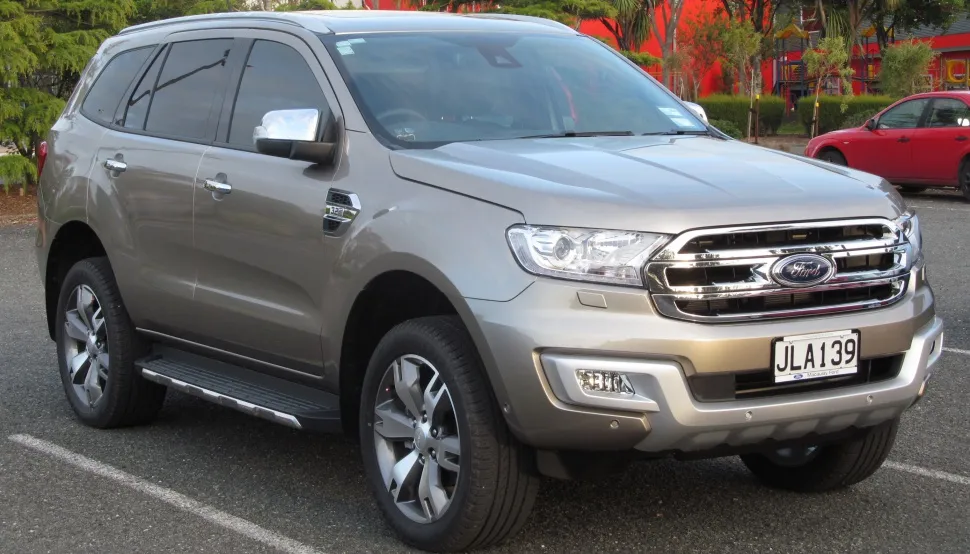
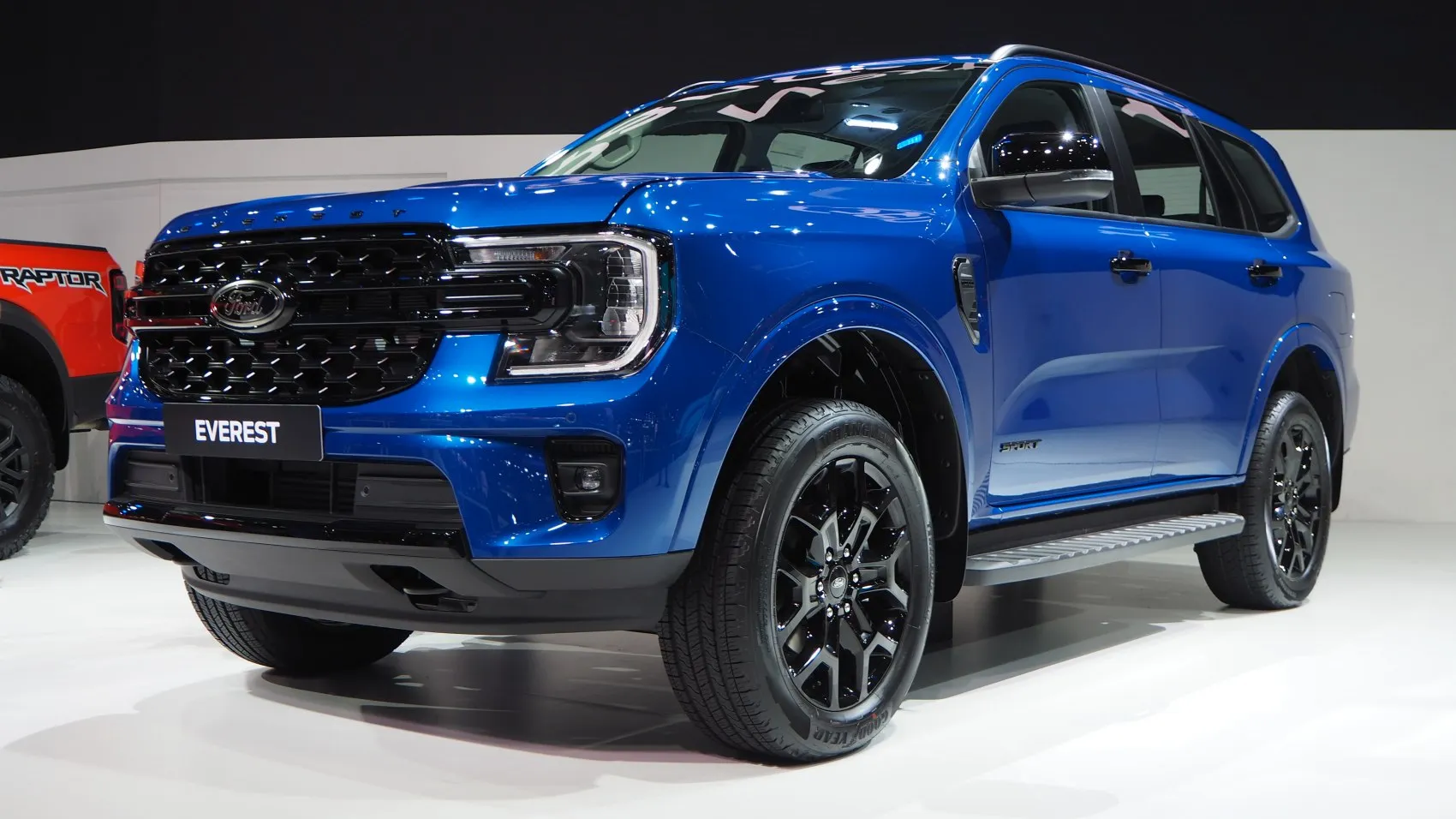



Your first impression of the Ford Everest in one word? Go!