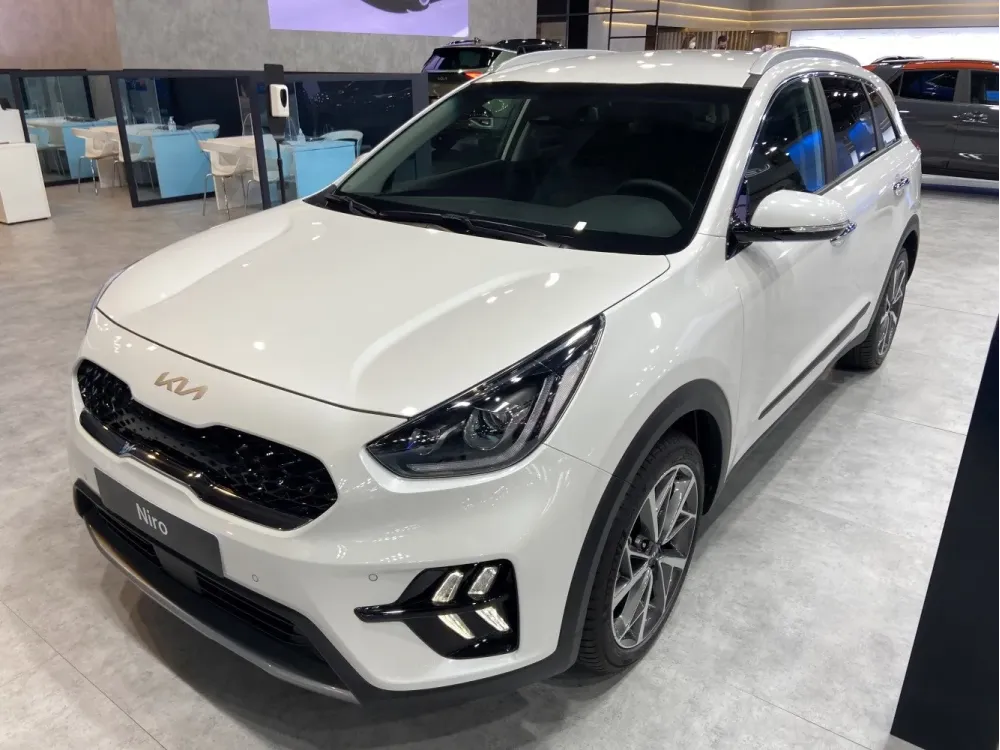
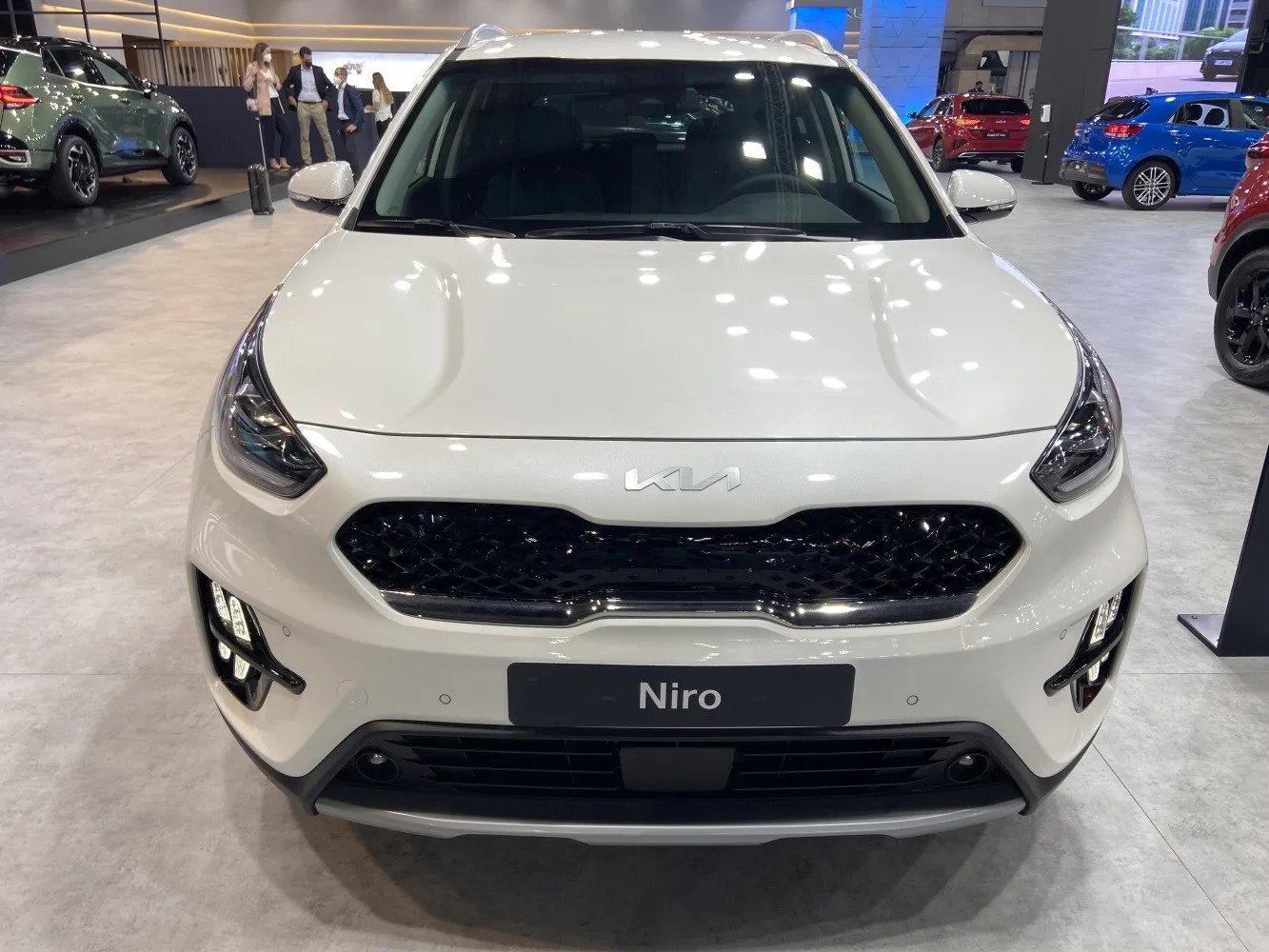
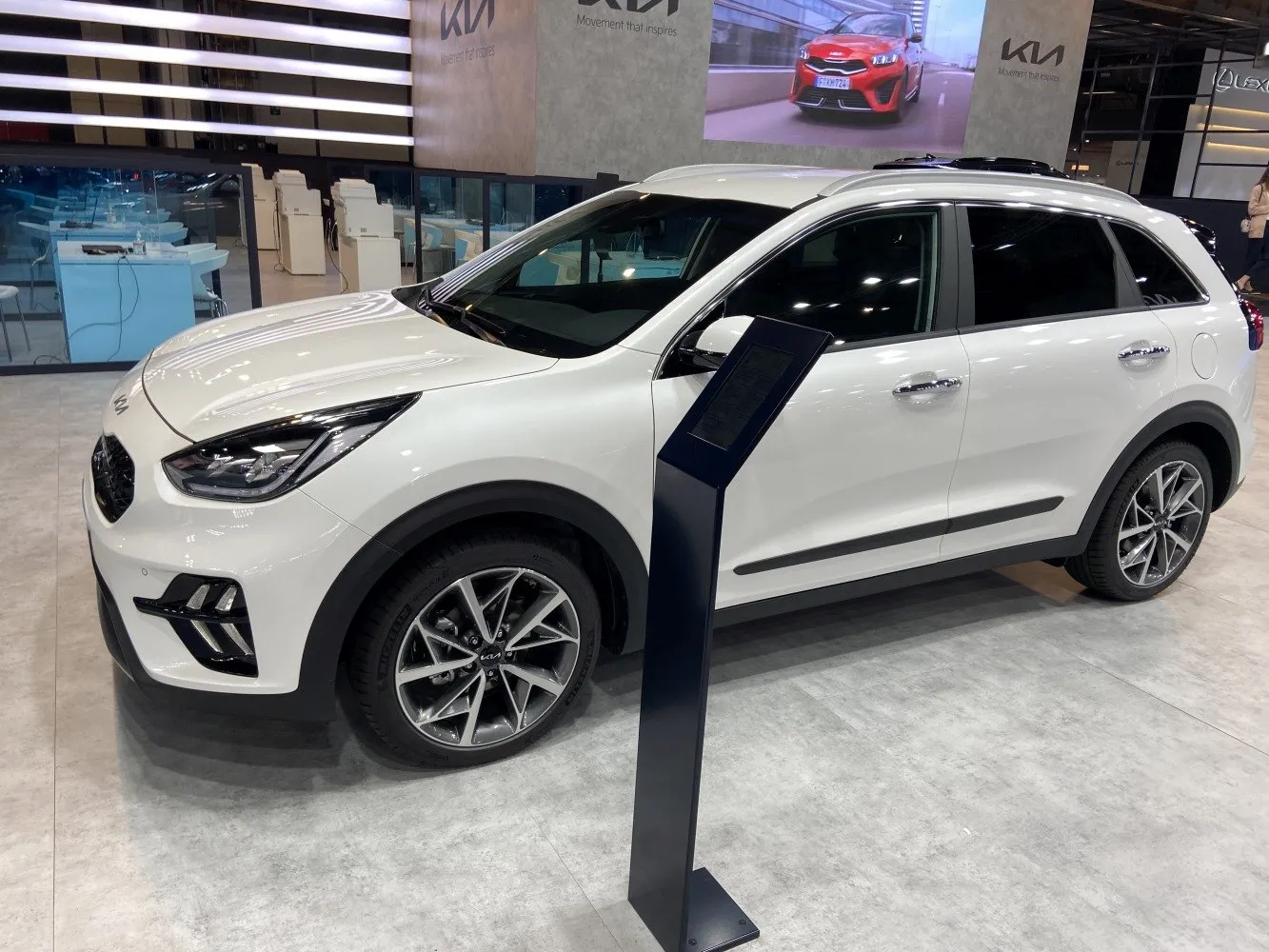
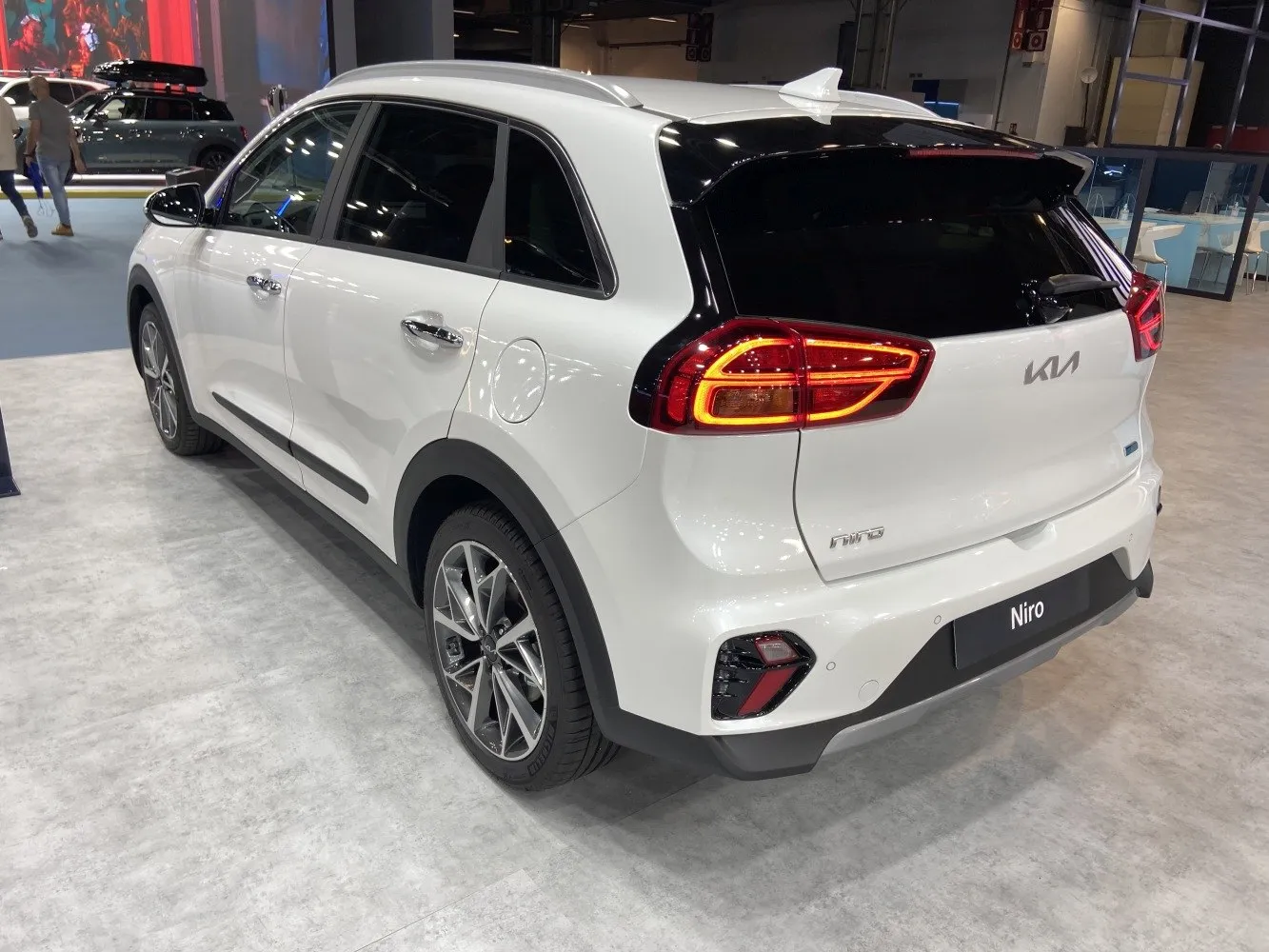
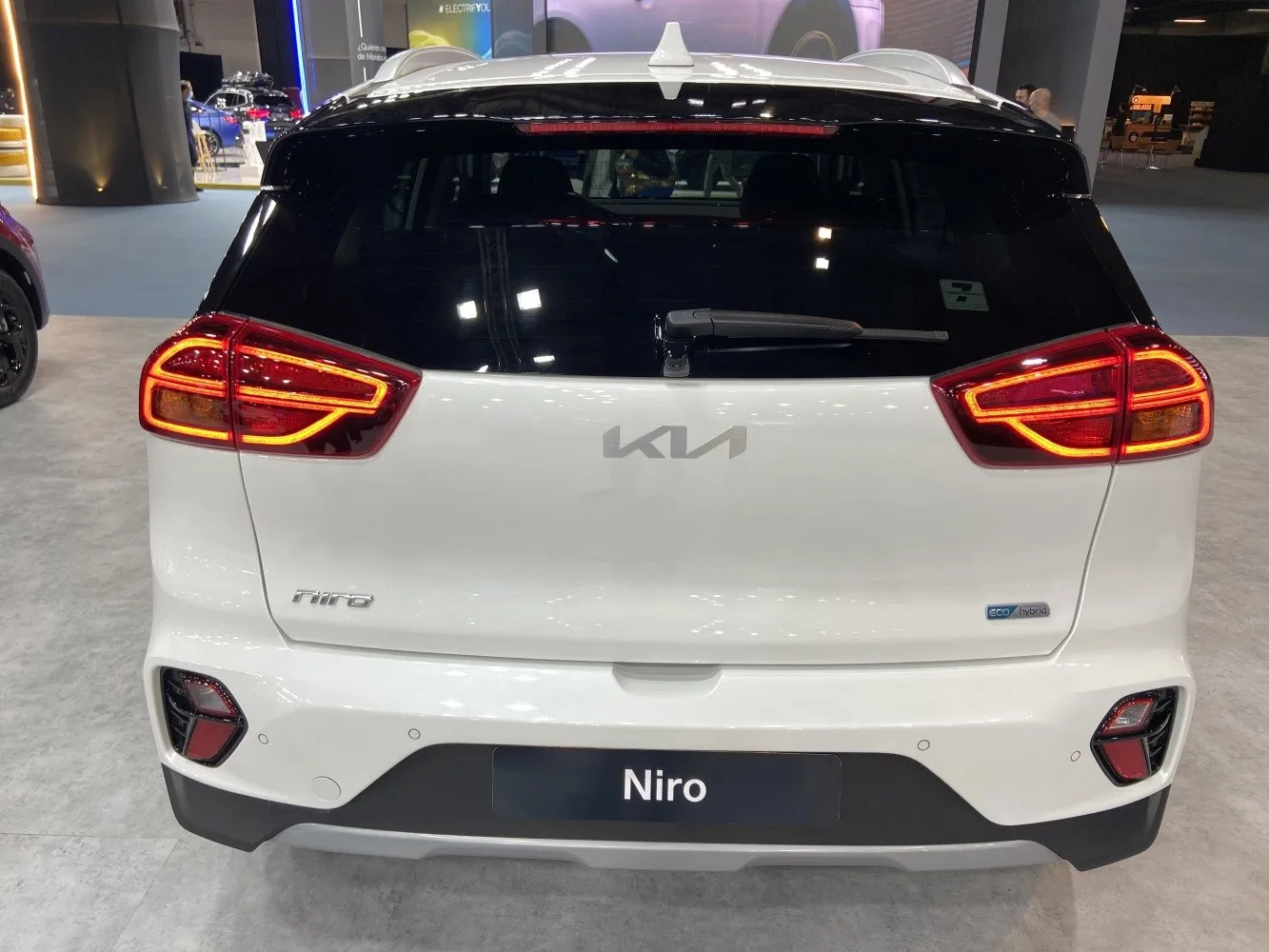
Kia Niro I (facelift 2019) 1.6 GDI (141 Hp) Hybrid DCT
People\'s Opinion
N/A / 5
Kia Niro:
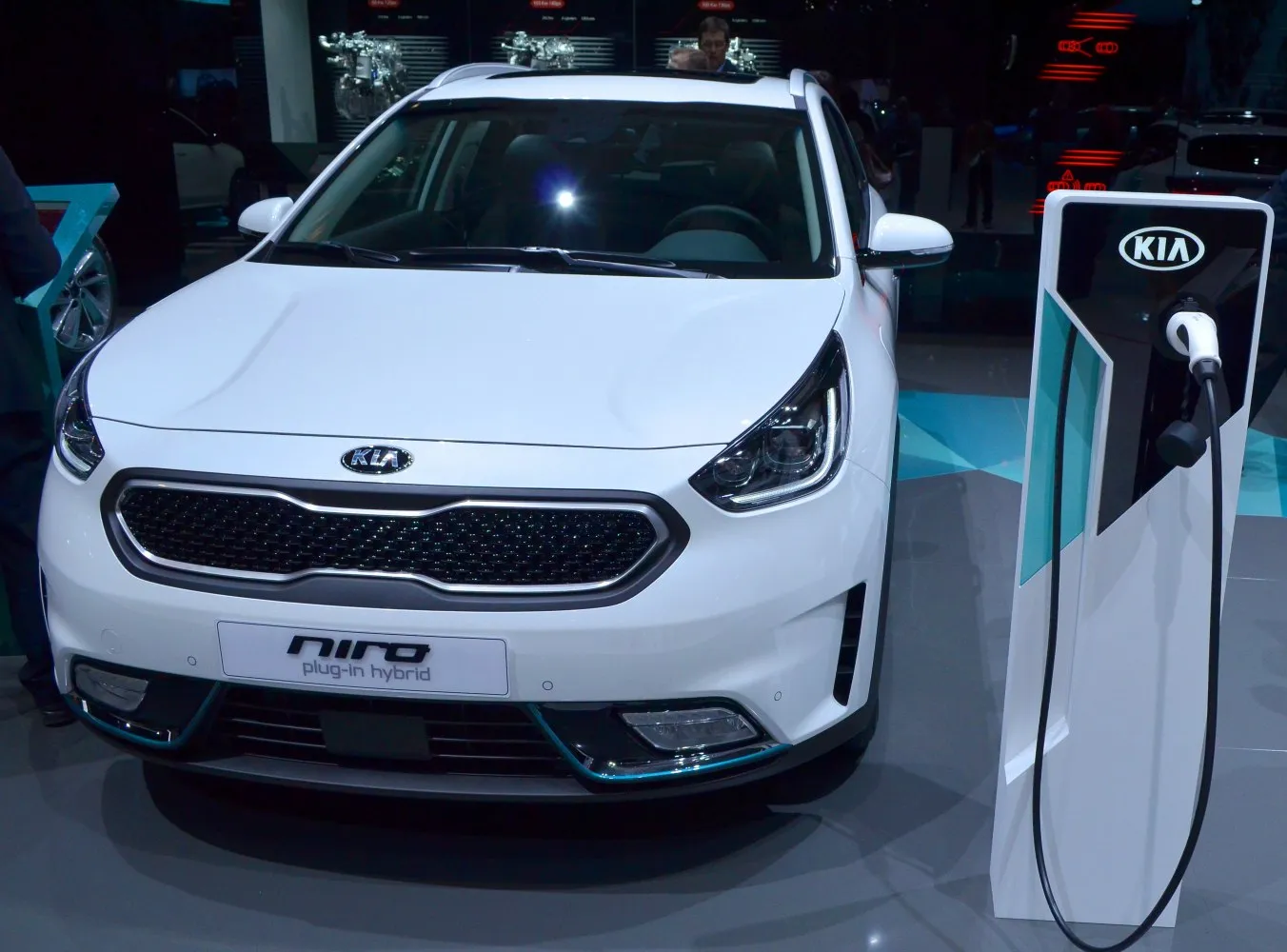
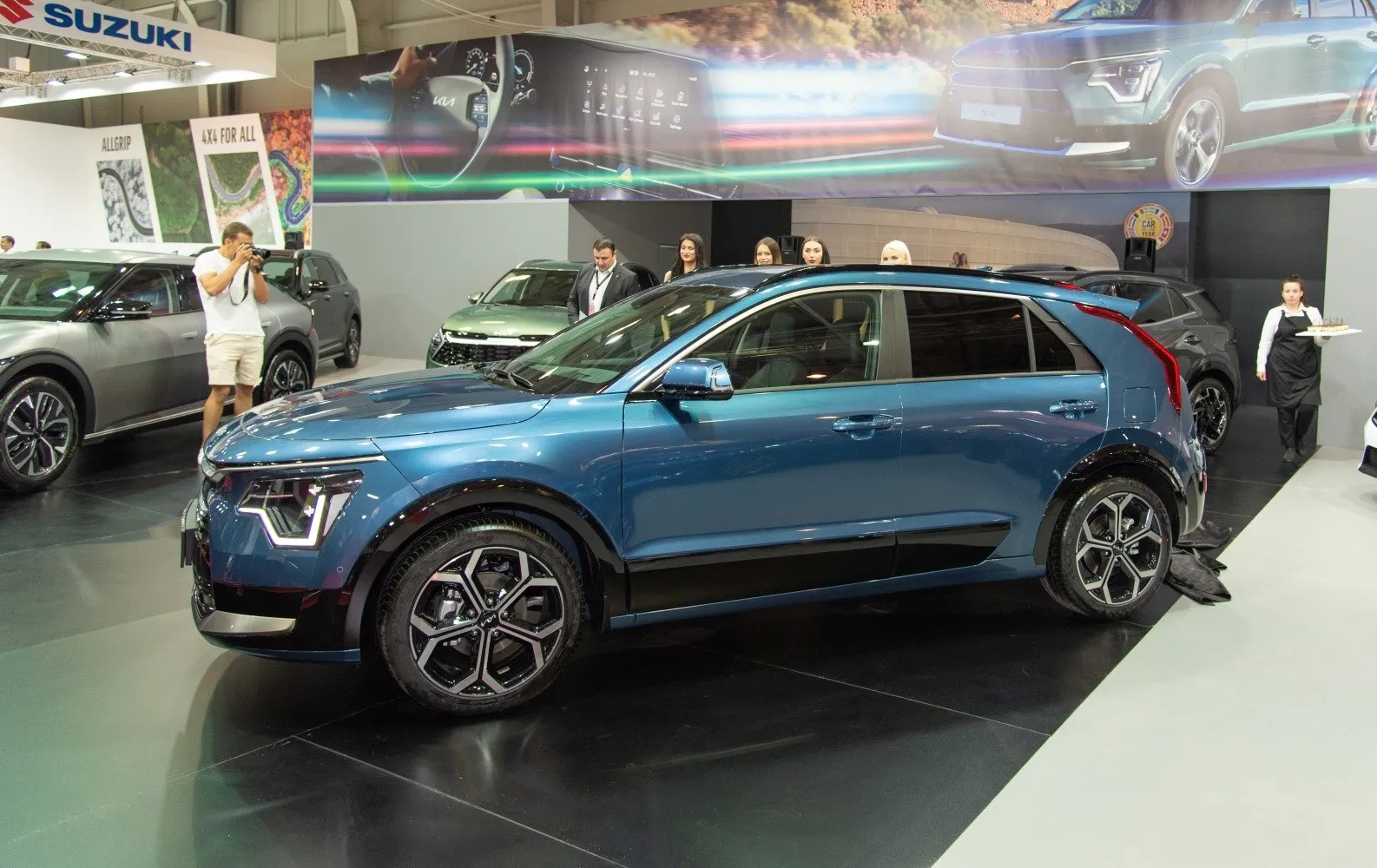
The Kia Niro is a subcompact crossover SUV manufactured by Kia since 2016. It is an electrification-focused vehicle, offering three versions: hybrid, plug-in hybrid and battery electric variants.
The first-generation Niro was introduced in 2016. Based on the same platform as the Hyundai Ioniq, Kia opted to use dual-clutch transmission instead of the more traditional continuously variable transmission found in most other hybrids to offer a more engaging driving experience....(Read more on Wikipedia)
I (facelift 2019) Overview:
Kia Niro (I (facelift 2019)). With 147 Nm of torque, it offers ample pulling power. It boasts low fuel consumption (~3.6 l/100km). With a weight of 1462 kg, it falls in the mid‑range. Front‑wheel drive delivers efficiency and easy handling. Acceleration is relatively slow (0–100 km/h in 11.5 s). The top speed reaches 162 km/h. A sport utility vehicle offering higher ground clearance and versatile cargo space. Seating for 5 makes it ideal for daily use.
Performance Verdict
Offers adequate performance for daily driving, with smooth power delivery suitable for urban and suburban commutes, though not particularly sporty.
Fuel Economy
Achieves excellent fuel efficiency, especially in city driving, making it a very economical choice for a compact SUV.
Best Use Case:
City / Mixed
Pros and Cons:
Pros:
- • Excellent fuel efficiency across the range
- • Choice of hybrid, PHEV, and full EV powertrains
- • Practical SUV body style with good cargo space
- • Strong warranty and reliability reputation
- • Refined and comfortable ride
Cons:
- • Hybrid performance can be uninspiring for some
- • DCT can be clunky at low speeds in hybrids
- • Interior design is functional but not particularly exciting
- • Rear visibility could be better
Specifications:
Specifications are compared to those of the previous generation(I (facelift 2019): December, 2018 - July, 2022).
| General: |
| Brand: | Kia |
|---|
| Model: | Niro |
|---|
| Generation: | I (facelift 2019) |
|---|
| Modification (Engine): | 1.6 GDI (141 Hp) Hybrid DCT |
|---|
| Start of production: | July, 2019 |
|---|
| End of production: | June, 2022 |
|---|
| Powertrain Architecture: | FHEV (Full Hybrid Electric Vehicle) |
|---|
| Body type: | SUV |
|---|
| Seats: | 5 |
|---|
| Doors: | 5 |
|---|
| Engine: |
| Engine systems: | Start & Stop System |
|---|
| Power: | 105 Hp @ 5700 rpm. [0hp less] |
|---|
| Power per litre: | 66.5 Hp/l [worst than previous generation] |
|---|
| Torque: | 147 Nm @ 4000 rpm. |
|---|
| Engine Model/Code: | Smartstream / G4LE More details about the engine Smartstream / G4LE |
|---|
| Engine displacement: | 1580 |
|---|
| Number of cylinders: | 4 |
|---|
| Engine configuration: | Inline |
|---|
| Number of valves per cylinder: | 4 |
|---|
| Fuel injection system: | Direct injection |
|---|
| Engine aspiration: | Naturally aspirated engine |
|---|
| Valvetrain: | DOHC, Dual CVVT |
|---|
| Engine oil capacity: | 3.8 l |
|---|
| Coolant: | 6 l |
|---|
| Engine layout: | Front, Transverse |
|---|
| Cylinder Bore: | 72 mm mm |
|---|
| Piston Stroke: | 97 mm mm |
|---|
| Compression ratio: | 13:1 |
|---|
| Performance: |
| Fuel Type: | Petrol (Gasoline) |
|---|
| Fuel consumption (economy) - urban: | 3.4-3.8 l/100 km |
|---|
| Fuel consumption (economy) - extra urban: | 3.6-4.5 l/100 km |
|---|
| Combined fuel consumption (WLTP): | 4.4-5.2 l/100 km |
|---|
| Fuel consumption (economy) - urban (NEDC, WLTP equivalent): | 3.4-3.8 l/100 km |
|---|
| Fuel consumption (economy) - extra urban (NEDC, WLTP equivalent): | 3.6-4.5 l/100 km |
|---|
| Fuel consumption (economy) - combined (NEDC, WLTP equivalent): | 3.4-4.2 l/100 km |
|---|
| Fuel consumption (economy) - combined: | 3.4-4.2 l/100 km |
|---|
| Emission standard: | Euro 6d |
|---|
| Acceleration 0 - 100 km/h: | 11.5 sec |
|---|
| Acceleration 0 - 62 mph: | 11.5 sec |
|---|
| Maximum speed: | 162 km/h |
|---|
| Weight-to-power ratio: | 10 kg/Hp, 99.6 Hp/tonne |
|---|
| Weight-to-torque ratio: | 5.3 kg/Nm, 187.3 Nm/tonne |
|---|
| Max speed (electric): | 120 km/h |
|---|
| Acceleration 0 - 60 mph: | 10.9 sec |
|---|
| Space: |
| Kerb Weight: | 1415-1510 |
|---|
| Max. weight: | 1930 |
|---|
| Max load: | 420-515 |
|---|
| Trunk (boot) space - maximum: | 1434 l |
|---|
| Trunk (boot) space - minimum: | 382 l |
|---|
| Permitted trailer load with brakes (12%): | 1300 kg |
|---|
| Fuel tank capacity: | 45 l |
|---|
| Permitted trailer load without brakes: | 600 kg |
|---|
| Permitted towbar download: | 100 kg |
|---|
| Size: |
| Length: | 4355 mm mm [20mm less] |
|---|
| Width: | 1805 mm mm [Same width.] |
|---|
| Height: | 1545 mm mm [25mm less] |
|---|
| Wheelbase: | 2700 mm mm [Same wheelbase.] |
|---|
| Front track: | 1555-1565 mm |
|---|
| Rear (Back) track: | 1569-1579 mm |
|---|
| Front overhang: | 870 mm |
|---|
| Rear overhang: | 785 mm |
|---|
| Ride height (ground clearance): | 160 mm |
|---|
| Minimum turning circle (turning diameter): | 10.6 m [above average] |
|---|
| Powertrain: |
| Drivetrain Architecture | The Internal combustion engine (ICE) and electric motor drive the front wheels of the car with the ability to work in full electric or mixed mode. |
|---|
| Drive wheel | Front wheel drive |
|---|
| Number of gears | 6 |
|---|
| Transmission type | Automatic |
|---|
| Gearbox type | DCT |
|---|
| Front brakes | Ventilated discs [Best for performance and cooling.] |
|---|
| Rear brakes | Disc [above average] |
|---|
| Assisting systems | ABS (Anti-lock braking system) |
|---|
| Steering type | Steering rack and pinion |
|---|
| Power steering | Electric Steering |
|---|
| Tires size | 205/60 R16 92H; 225/45 R18 91W |
|---|
| Wheel rims size | 6.5J x 16 ET45; 7.5J x 18 ET50 |
|---|
| Front suspension | Independent type McPherson |
|---|
| Rear suspension | Independent multi-link suspension |
|---|
| Electric: |
| Gross battery capacity: | 1.56 kWh |
|---|
| System power: | 141 Hp @ 5700 rpm. |
|---|
| System torque: | 265 Nm @ 1000-2400 rpm. |
|---|
| Electric motor power: | 44 Hp @ 1798-2500 rpm. |
|---|
| Electric motor Torque: | 170 Nm @ 0-1798 rpm. |
|---|
| Electric motor location: | Between the combustion engine and the transmission |
|---|











Behind the wheel of the Kia Niro. How does it handle on the road?