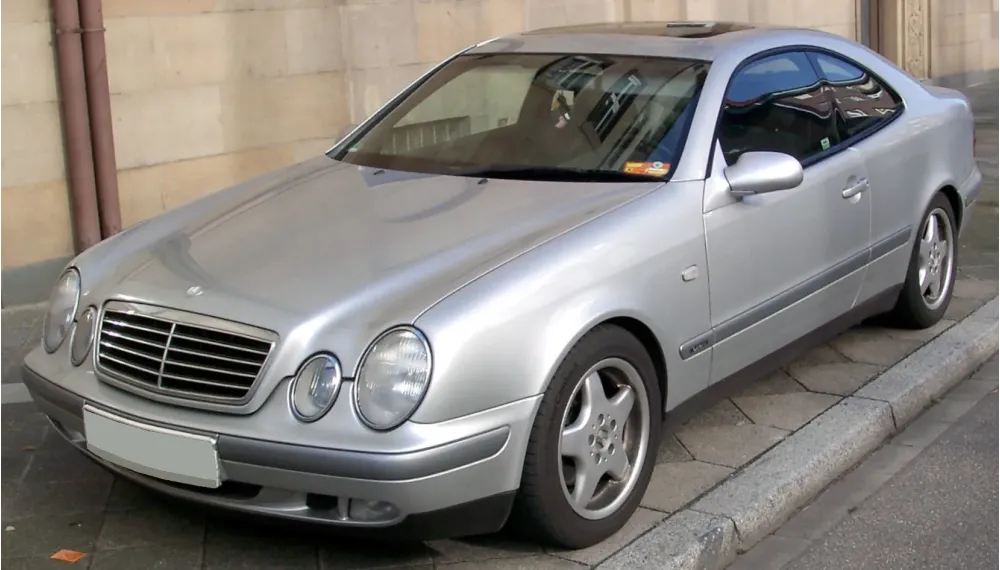
Click on image to view the full photo gallery
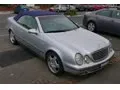
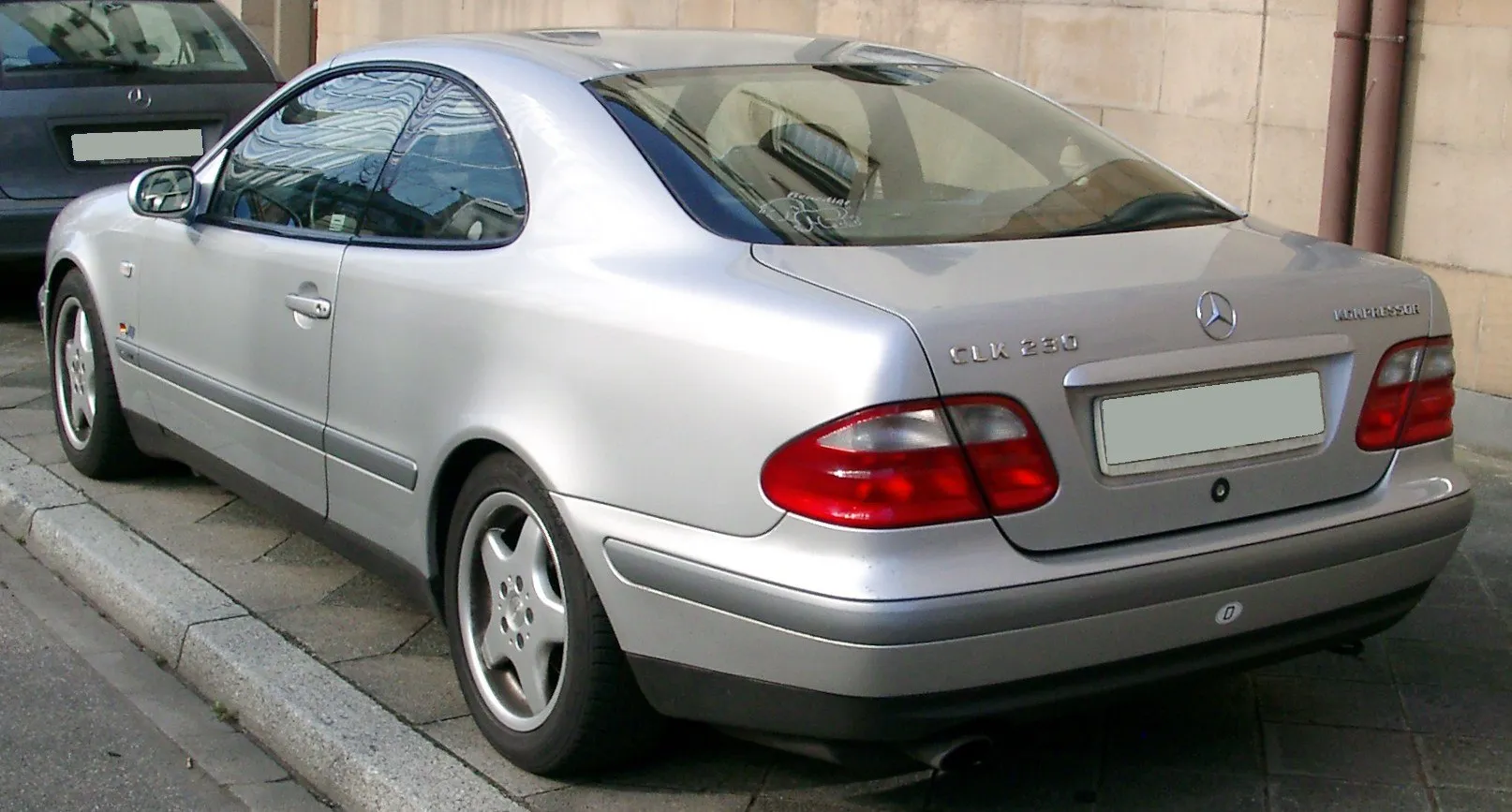
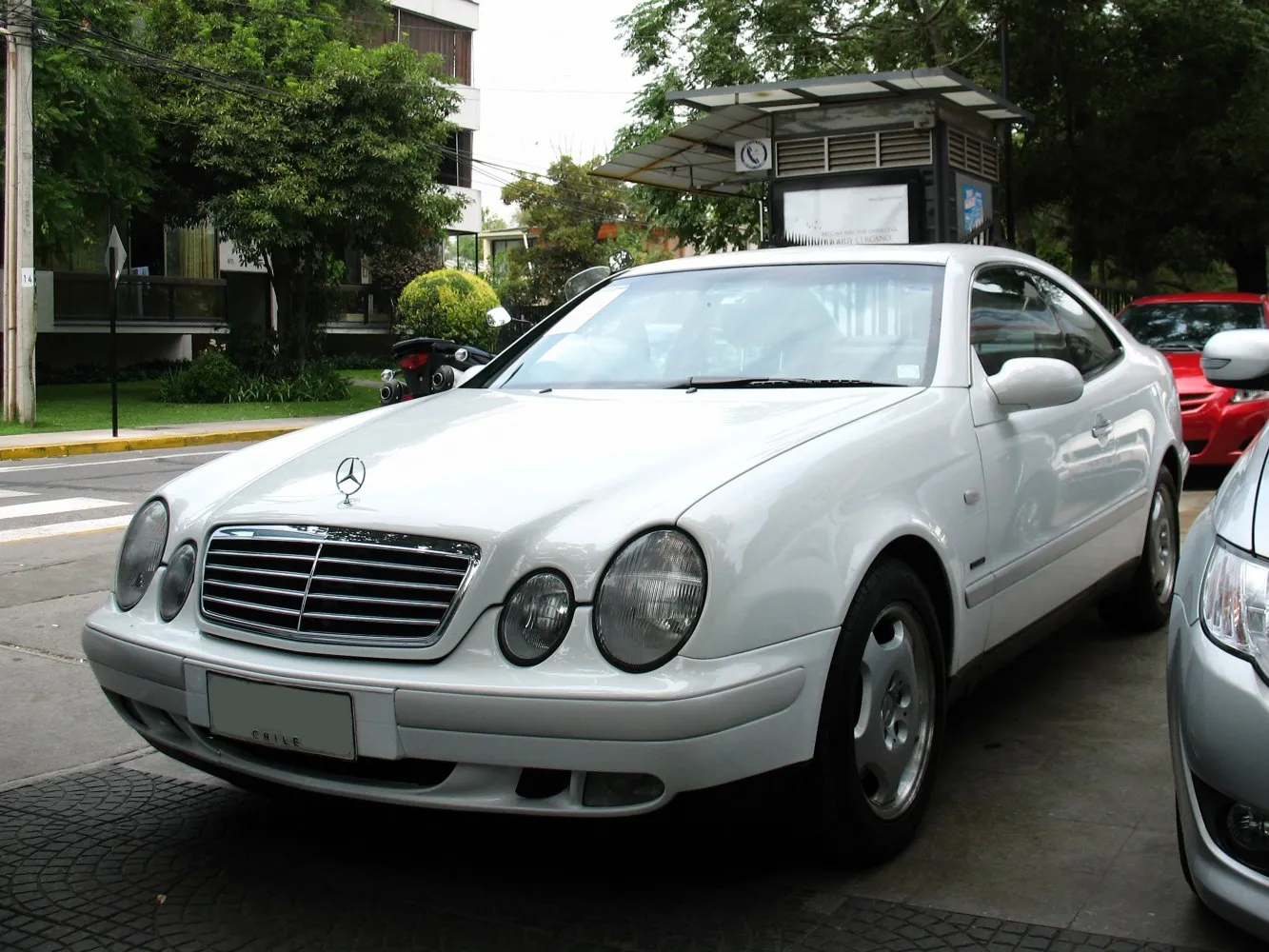
Mercedes-Benz CLK C208 CLK 200 (136 Hp)
Overall Rating
Mercedes-Benz CLK:
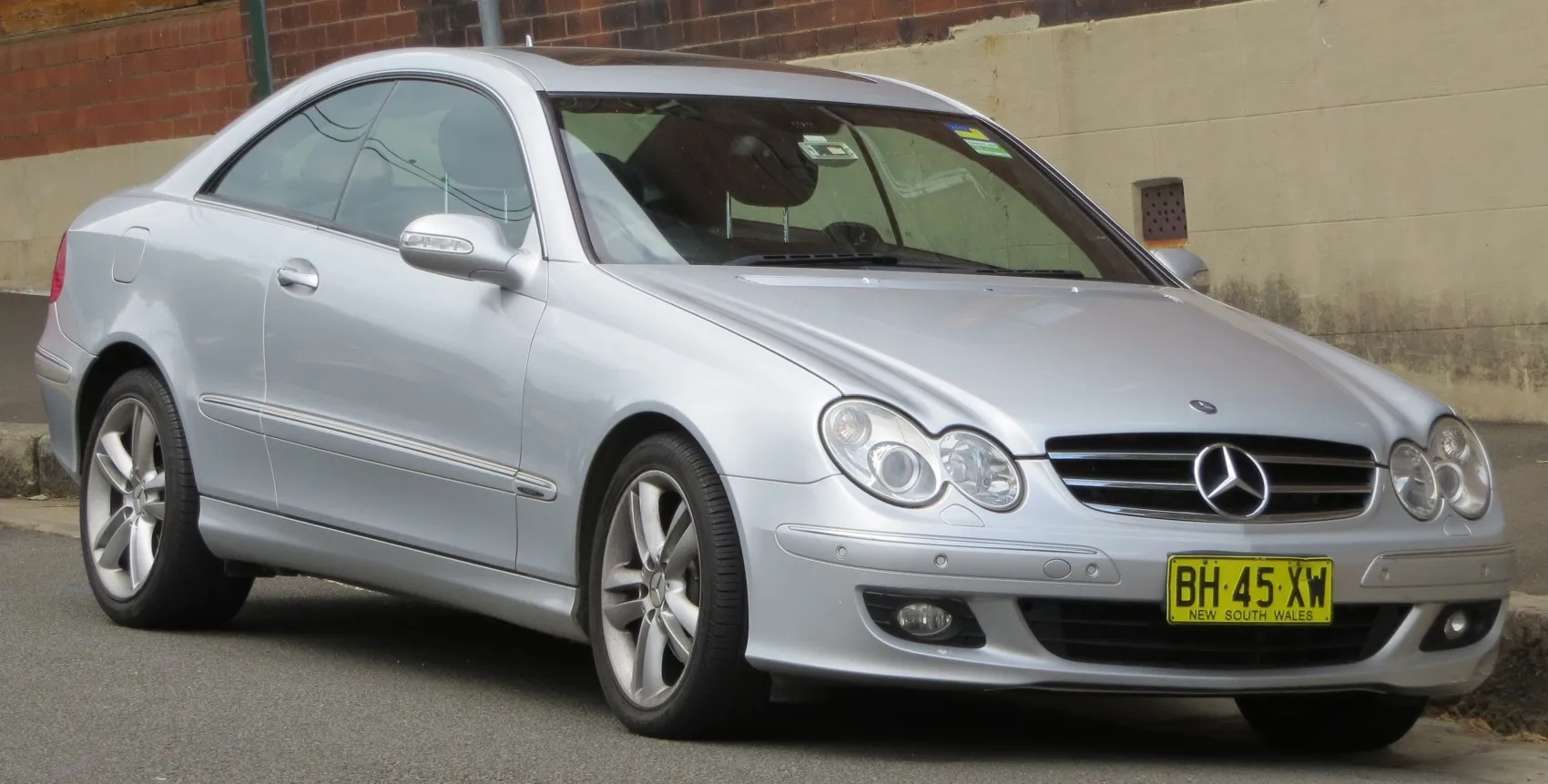
The Mercedes-Benz CLK-Class is a former series of mid-size or entry-level luxury coupés and convertibles produced by Mercedes-Benz between 1996 and 2010. Although its design and styling was derived from the E-Class, the mechanical underpinnings were based on the smaller C-Class, and was positioned between the Mercedes-Benz SLK-Class and CL-Class. The name CLK is either derived from the German words "Coupé", "Luxus" and "Kurz" or "Coupé", "Leicht" and "Kurz" , as the clear definition was never published. It primarily competes with the two-door BMW 3 and 6 Series, as well as the Audi A4 Cabriolet and Audi A5 Coupe/Cabriolet, as well as the Maserati Coupe and its convertible variant....(Read more on Wikipedia)
C208 Overview:
Mercedes-Benz CLK (C208). With 190 Nm of torque, it offers ample pulling power. With a weight of 1300 kg, it falls in the mid‑range. Rear‑wheel drive offers dynamic handling and sporty feedback. Acceleration is relatively slow (0–100 km/h in 11 s). The top speed reaches 208 km/h. A two-door car with a fixed roof, known for its sporty design and dynamic performance. Seating for 4 makes it ideal for daily use.
The Mercedes-Benz CLK (C208) generation was not officially tested by Euro NCAP. However, it featured standard safety equipment for its era, including multiple airbags and ABS, reflecting Mercedes-Benz's commitment to safety.
CLK 200 (136 Hp) Verdict:

Performance Verdict
The manual transmission improves the responsiveness of this entry-level engine, making it more engaging for city driving, though still modest on power.
Fuel Economy
Achieves slightly better fuel economy than its automatic counterpart, making it the most economical choice among the petrol engines for its power output.
Pros and Cons:
Pros:
- • Timeless, elegant styling
- • Comfortable and refined ride quality
- • High-quality interior materials for its era
- • Strong engine options (V6 and V8)
- • Good build quality and durability
- • Excellent highway cruiser
Cons:
- • Entry-level engines can feel underpowered
- • Rear seat space is limited for adults
- • Some common electrical issues with age
- • Rust can be an issue on older models
- • Automatic transmission can feel dated compared to modern units
- • Maintenance costs can be higher than average
Specifications:
Specifications are compared to those of the previous generation(C209, facelift 2005: 2006 - 2009).
| General: | |
|---|---|
| Brand: | Mercedes-Benz |
| Model: | CLK |
| Generation: | C208 |
| Modification (Engine): | CLK 200 (136 Hp) |
| Start of production: | April, 1997 |
| End of production: | August, 1999 |
| Powertrain Architecture: | Internal Combustion engine |
| Body type: | Coupe |
| Seats: | 4 |
| Doors: | 2 |
| Engine: | |
|---|---|
| Power: | 136 Hp @ 5500 rpm. Same horsepower |
| Power per litre: | 68.1 Hp/l [85mm less] |
| Torque: | 190 Nm @ 3700-4500 rpm. |
| Engine Model/Code: | M 111.945 More details about the engine M 111.945 |
| Engine displacement: | 1998 |
| Number of cylinders: | 4 |
| Engine configuration: | Inline |
| Number of valves per cylinder: | 4 |
| Fuel injection system: | Multi-port manifold injection |
| Engine aspiration: | Naturally aspirated engine |
| Valvetrain: | DOHC |
| Engine oil capacity: | 5.5 l |
| Coolant: | 8 l |
| Engine layout: | Front, Longitudinal |
| Cylinder Bore: | 89.9 mm mm |
| Piston Stroke: | 78.7 mm mm |
| Compression ratio: | 10.4:1 |
| Performance: | |
|---|---|
| Fuel Type: | Petrol (Gasoline) |
| Fuel consumption (economy) - urban: | 13.4 l/100 km |
| Fuel consumption (economy) - extra urban: | 7.1 l/100 km |
| Fuel consumption (economy) - combined (NEDC): | 9.4 l/100 km |
| Fuel consumption (economy) - urban (NEDC): | 13.4 l/100 km |
| Fuel consumption (economy) - extra urban (NEDC): | 7.1 l/100 km |
| Fuel consumption (economy) - combined: | 9.4 l/100 km |
| Emission standard: | Euro 3 |
| Acceleration 0 - 100 km/h: | 11 sec |
| Acceleration 0 - 62 mph: | 11 sec |
| Maximum speed: | 208 km/h |
| Weight-to-power ratio: | 9.6 kg/Hp, 104.6 Hp/tonne |
| Weight-to-torque ratio: | 6.8 kg/Nm, 146.2 Nm/tonne |
| Acceleration 0 - 60 mph: | 10.5 sec |
| Space: | |
|---|---|
| Kerb Weight: | 1300 |
| Max. weight: | 1800 |
| Max. roof load: | 100 kg |
| Max load: | 500 |
| Trunk (boot) space - minimum: | 420 l |
| Permitted trailer load with brakes (12%): | 1500 kg |
| Fuel tank capacity: | 62 l |
| Permitted trailer load without brakes: | 685 kg |
| Size: | |
|---|---|
| Length: | 4567 mm mm [85mm less] |
| Width: | 1722 mm mm [18mm less] |
| Height: | 1371 mm mm [29mm less] |
| Wheelbase: | 2690 mm mm [25mm less] |
| Width including mirrors: | 1960 mm |
| Front track: | 1505 mm |
| Rear (Back) track: | 1474 mm |
| Front overhang: | 860 mm |
| Rear overhang: | 1017 mm |
| Minimum turning circle (turning diameter): | 10.7 m [above average] |
| Powertrain: | |
|---|---|
| Drivetrain Architecture | The Internal combustion engine (ICE) drives the rear wheels of the vehicle. |
| Drive wheel | Rear wheel drive |
| Number of gears | 5 |
| Transmission type | Manual |
| Front brakes | Ventilated discs [Best for performance and cooling.] |
| Rear brakes | Disc [above average] |
| Assisting systems | ABS (Anti-lock braking system) |
| Steering type | Cone worm with recirculation balls |
| Power steering | Hydraulic Steering |
| Tires size | 205/55 R 16 |
| Wheel rims size | 7 J x 16 |
| Front suspension | Coil spring, Double wishbone, Transverse stabilizer |
| Rear suspension | Independent multi-link suspension, Transverse stabilizer |








Better than its competitors? Tell us why the Mercedes-Benz CLK stands out.