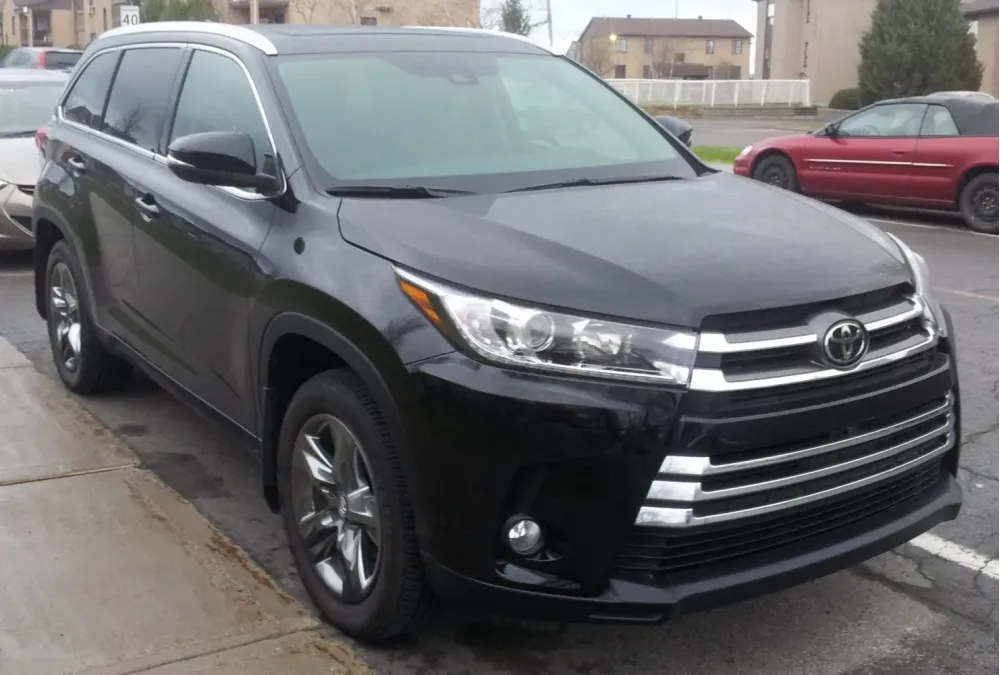
Click on image to view the full photo gallery
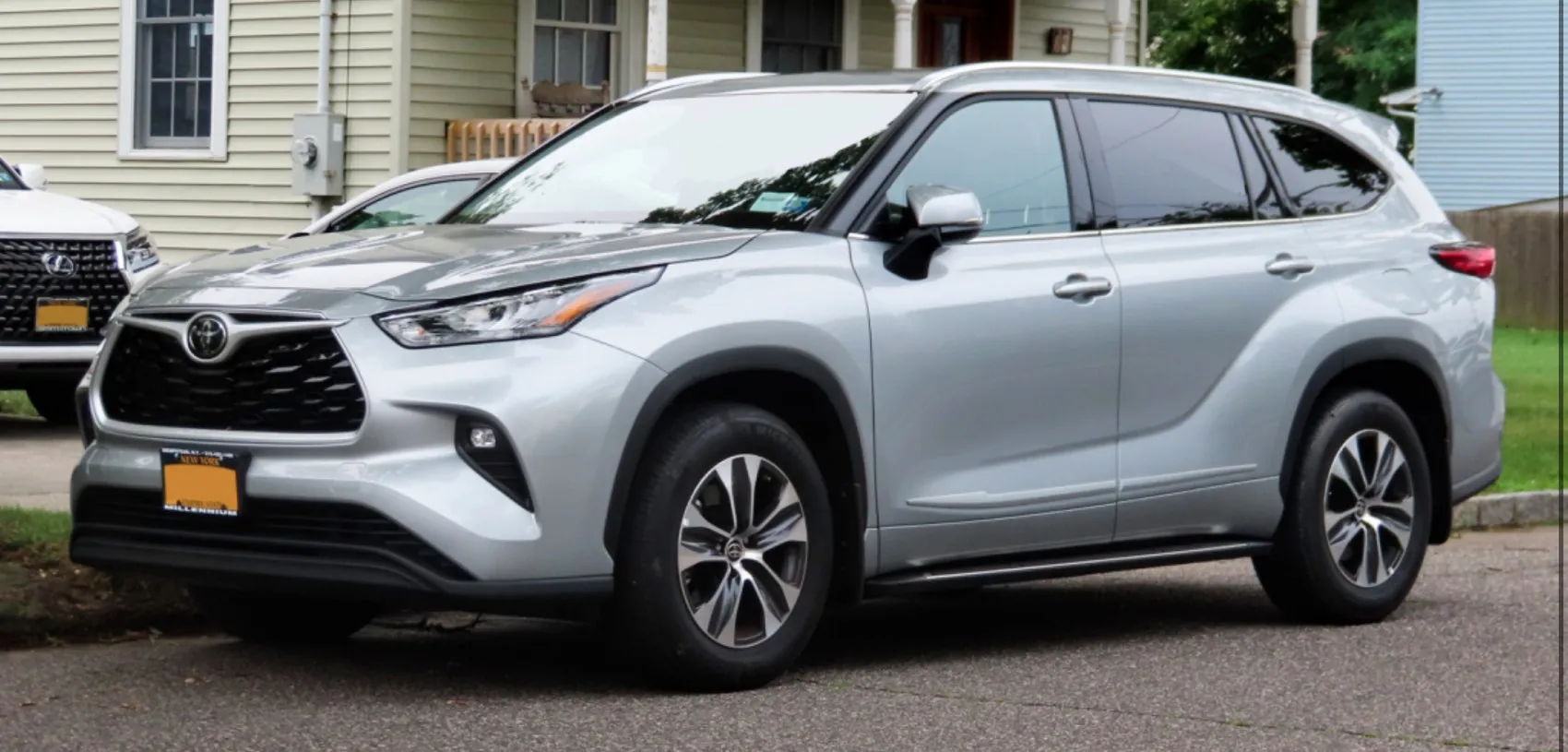
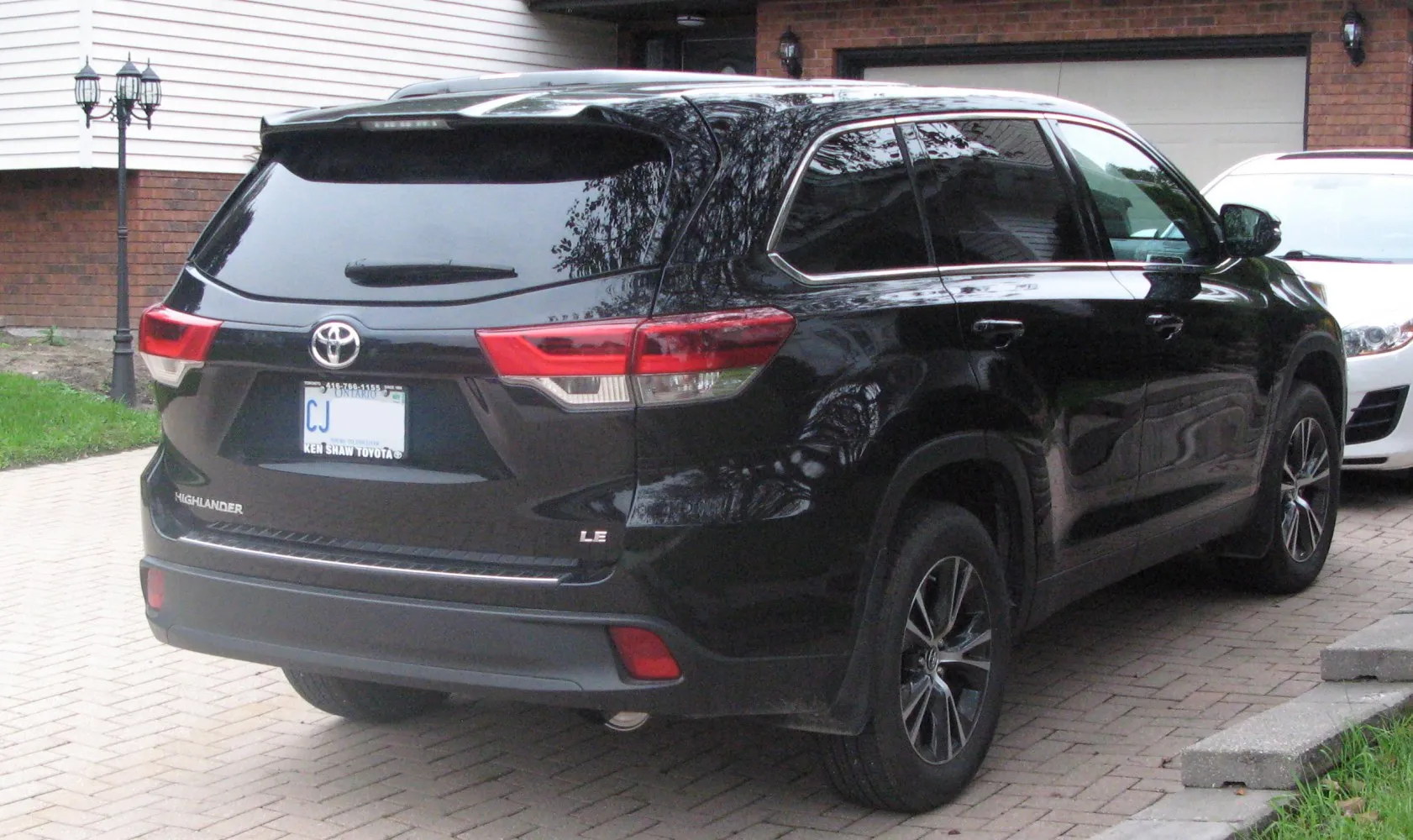
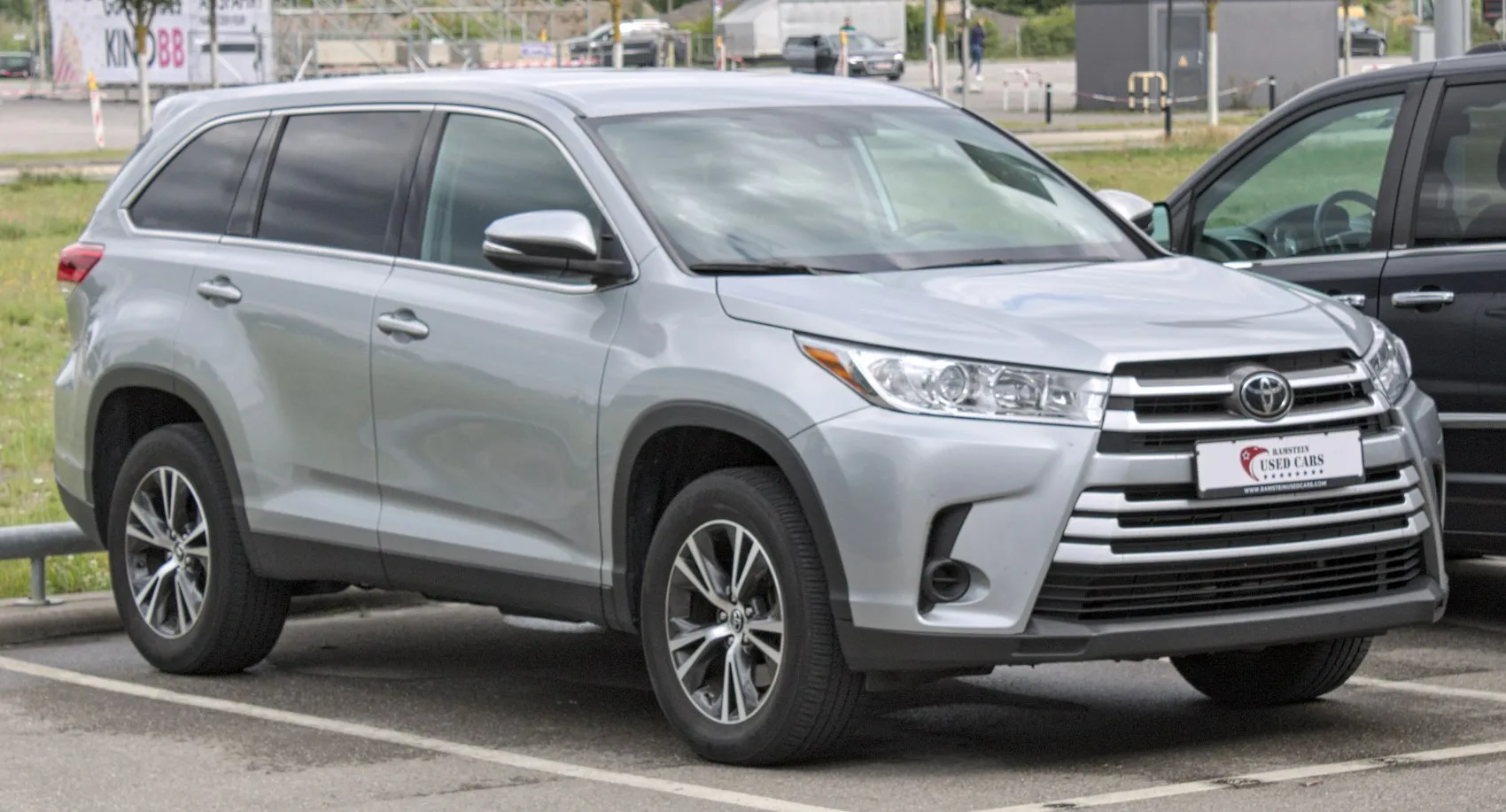
Toyota Highlander III (facelift 2016) 3.5 V6 (296 Hp) Automatic
Overall Rating
Toyota Highlander:
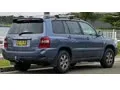
The Toyota Highlander , also known as the Toyota Kluger in some markets, is a mid-size crossover SUV with three-row seating produced by Toyota since 2000.
The Highlander was announced in April 2000 at the New York International Auto Show, arriving in Japan in late 2000, and North America in January 2001. It was among the first of a new class of mid-size SUVs that were based on a car platform. At the time, the Highlander was built on the company's existing Toyota K architecture, shared with the Camry. The Highlander became Toyota's best-selling SUV in the US before being surpassed by the smaller RAV4 in 2006....(Read more on Wikipedia)
III (facelift 2016) Overview:
Toyota Highlander (III (facelift 2016)). With 358 Nm of torque, it offers ample pulling power. It has moderate fuel consumption (~11.8 l/100km). With a weight of 1984 kg, it falls in the mid‑range. Front‑wheel drive delivers efficiency and easy handling. A sport utility vehicle offering higher ground clearance and versatile cargo space. With seating for 8, it’s perfect for larger families.
3.5 V6 (296 Hp) Automatic Verdict:

Performance Verdict
Delivers excellent performance, identical to its AWD counterpart, with strong acceleration and effortless power delivery for a large SUV.
Fuel Economy
Slightly better fuel economy than the AWD version at 10.2 l/100 km combined, making it a good choice for those who prioritize power but don't require all-wheel drive.
Pros and Cons:
Pros:
- • Exceptional Toyota reliability and durability
- • Spacious and comfortable interior, especially for families
- • Strong V6 engine options provide ample power
- • Smooth ride quality and quiet cabin
- • Good resale value
Cons:
- • Base 2.7L engine can feel underpowered for a vehicle of this size
- • Fuel economy, particularly with V6 engines, is not class-leading
- • Interior design, while functional, can be somewhat conservative
- • Limited off-road capability despite SUV styling
Specifications:
Specifications are compared to those of the previous generation(III: 2013 - 2016).
| General: | |
|---|---|
| Brand: | Toyota |
| Model: | Highlander |
| Generation: | III (facelift 2016) |
| Modification (Engine): | 3.5 V6 (296 Hp) Automatic |
| Start of production: | 2016 |
| End of production: | 2019 |
| Powertrain Architecture: | Internal Combustion engine |
| Body type: | SUV |
| Seats: | 8 |
| Doors: | 5 |
| Engine: | |
|---|---|
| Power: | 296 Hp @ 6600 rpm. Same horsepower |
| Power per litre: | 85.6 Hp/l [25mm more] |
| Torque: | 358 Nm @ 4700 rpm. |
| Engine Model/Code: | 2GR-FKS More details about the engine 2GR-FKS |
| Engine displacement: | 3456 |
| Number of cylinders: | 6 |
| Engine configuration: | V-engine |
| Number of valves per cylinder: | 4 |
| Fuel injection system: | Multi-port manifold injection |
| Engine aspiration: | Naturally aspirated engine |
| Valvetrain: | DOHC, D-VVT-i |
| Engine oil capacity: | 5.5 l |
| Coolant: | 11.6 l |
| Engine layout: | Front, Transverse |
| Cylinder Bore: | 94 mm mm |
| Piston Stroke: | 83 mm mm |
| Compression ratio: | 10.8:1 |
| Performance: | |
|---|---|
| Fuel Type: | Petrol (Gasoline) |
| Fuel consumption (economy) - urban: | 11.8 l/100 km |
| Fuel consumption (economy) - extra urban: | 8.7 l/100 km |
| Fuel consumption (economy) - combined: | 10.2 l/100 km |
| Emission standard: | Euro 5 |
| Weight-to-power ratio: | 6.7 kg/Hp, 149.2 Hp/tonne |
| Weight-to-torque ratio: | 5.5 kg/Nm, 180.4 Nm/tonne |
| Space: | |
|---|---|
| Kerb Weight: | 1984 |
| Max. weight: | 2651 |
| Max load: | 667 |
| Trunk (boot) space - maximum: | 813 l |
| Trunk (boot) space - minimum: | 269 l |
| Fuel tank capacity: | 72 l |
| Size: | |
|---|---|
| Length: | 4890 mm mm [25mm more] |
| Width: | 1925 mm mm [Same width.] |
| Height: | 1770 mm mm [40mm more] |
| Wheelbase: | 2790 mm mm [Same wheelbase.] |
| Front track: | 1635 mm |
| Rear (Back) track: | 1650 mm |
| Ride height (ground clearance): | 200 mm |
| Approach angle: | 18.0° |
| Departure angle: | 23.1° |
| Powertrain: | |
|---|---|
| Drivetrain Architecture | The Internal combustion engine (ICE) drives the front wheels of the vehicle. |
| Drive wheel | Front wheel drive |
| Number of gears | 8 |
| Transmission type | Automatic |
| Front brakes | Ventilated discs [Best for performance and cooling.] |
| Rear brakes | Disc |
| Assisting systems | ABS (Anti-lock braking system) |
| Steering type | Steering rack and pinion |
| Power steering | Electric Steering |
| Tires size | 245/60 R18; 245/55 R19 |
| Wheel rims size | 18; 19 |
| Front suspension | Independent, type McPherson with coil spring and anti-roll bar |
| Rear suspension | Independent coil spring |













Help others decide – share your experience!