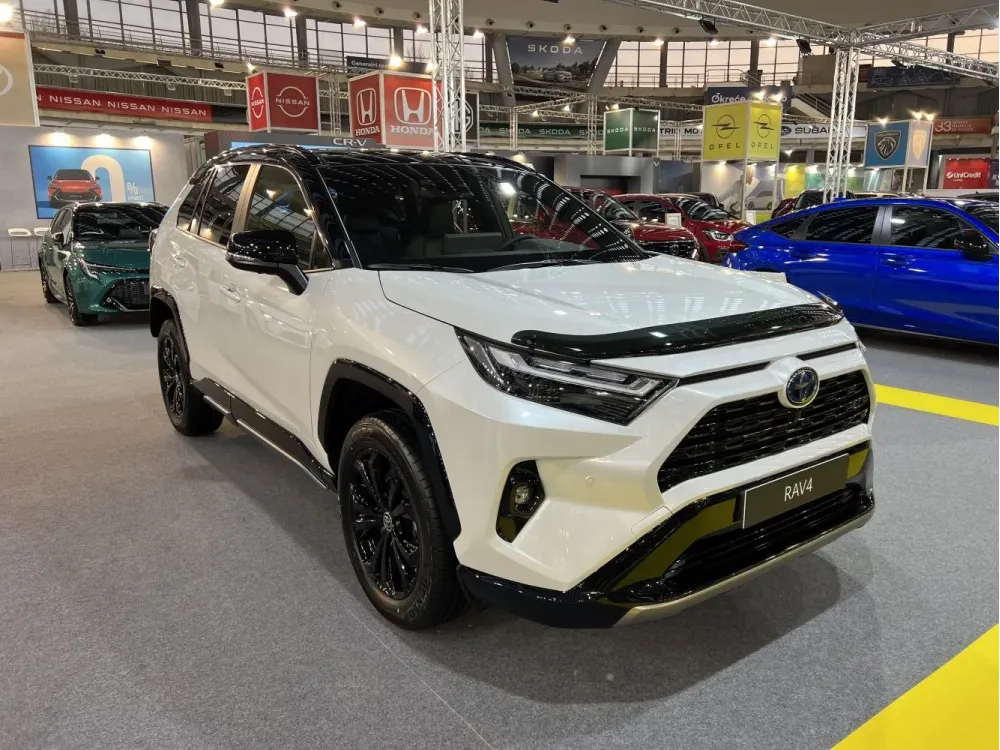
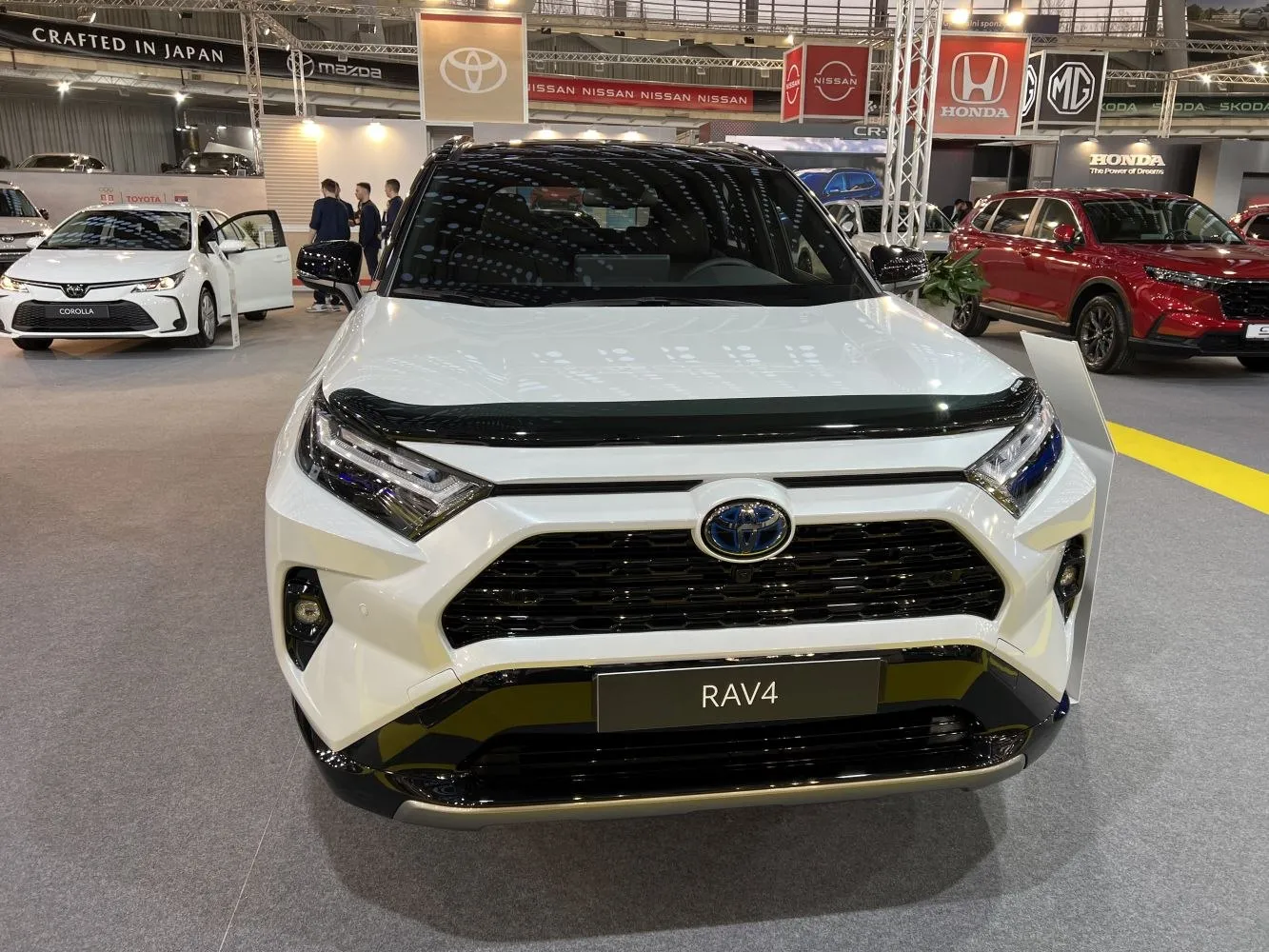
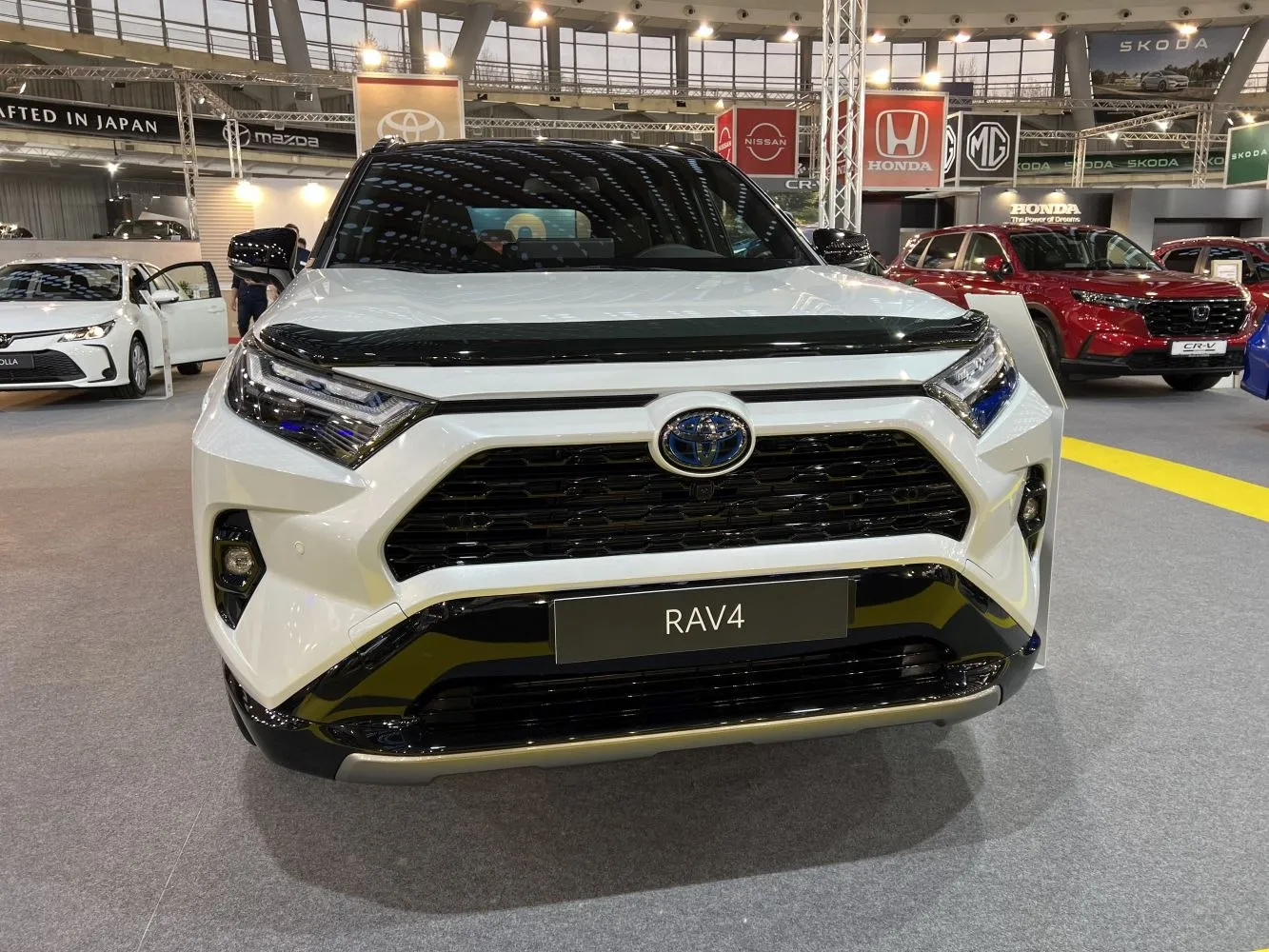
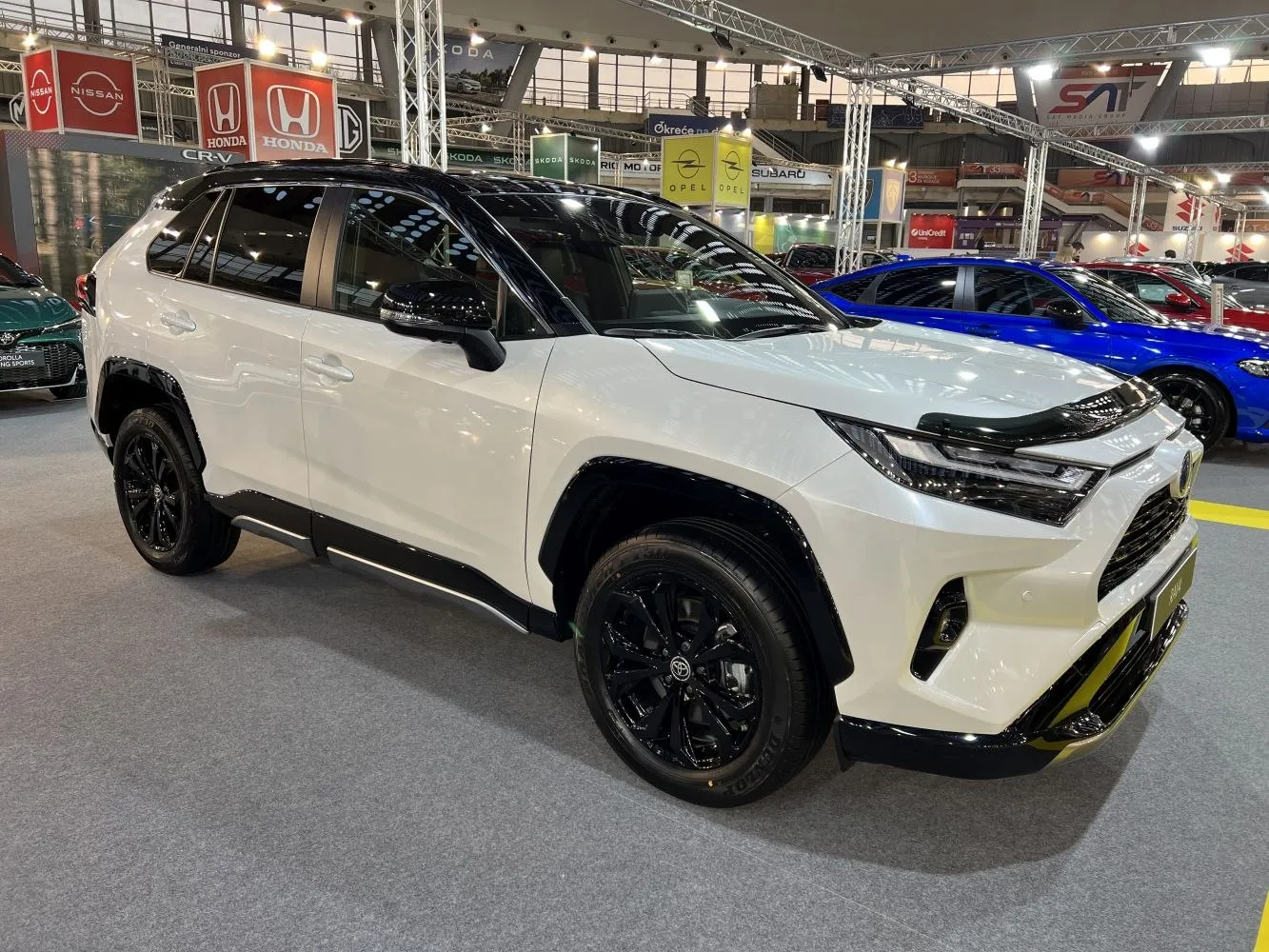
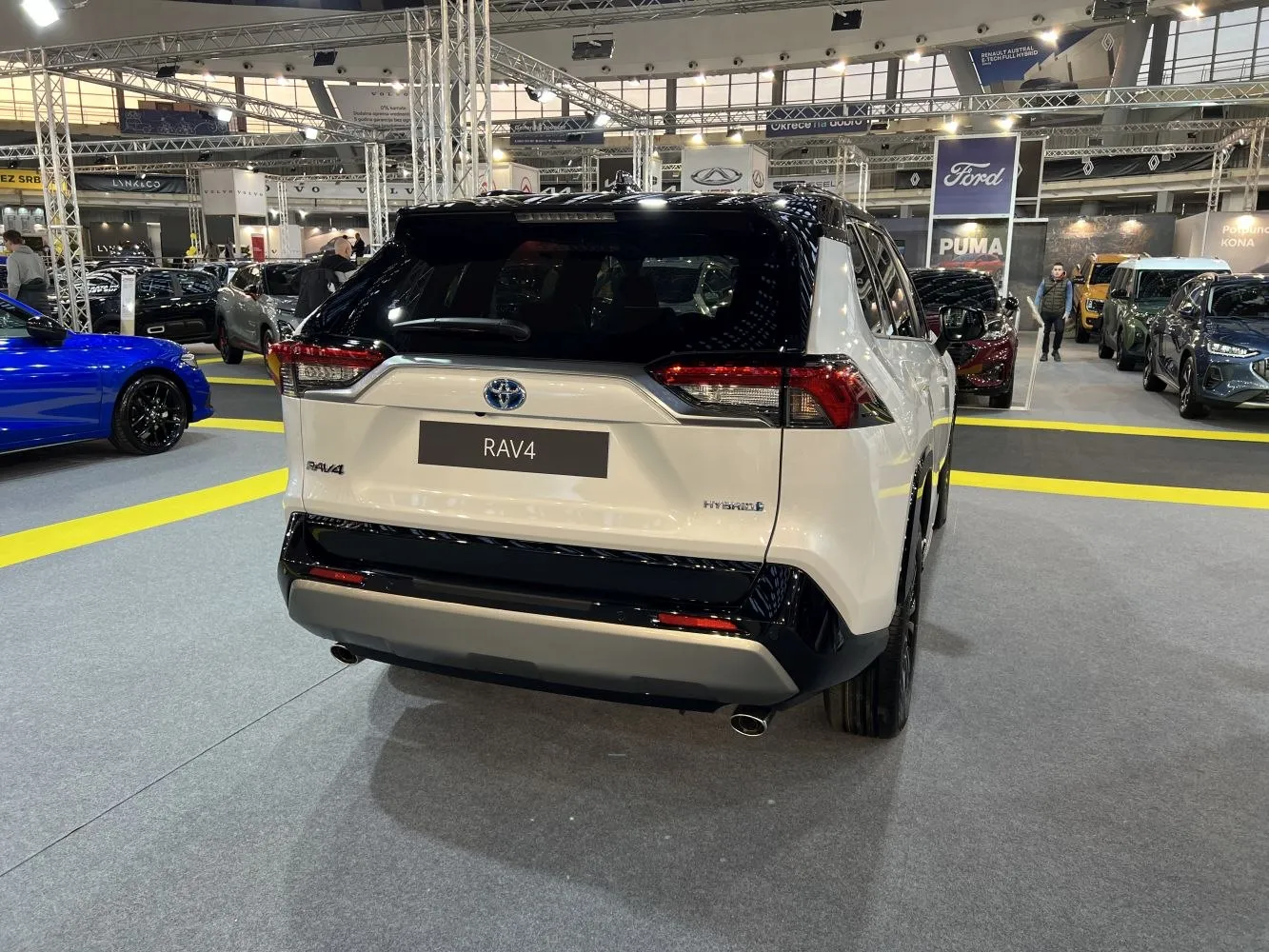
Toyota RAV4 V (facelift 2021) 2.5 (306 Hp) Plug-in Hybrid AWD-i eCVT
People\'s Opinion
N/A / 5
Toyota RAV4:
The Toyota RAV4 is a compact crossover SUV produced by the Japanese automobile manufacturer Toyota. It is known for starting the wave of compact crossovers. The RAV4 is the best-selling sport utility vehicle of all time, having sold over 10 million units by February 2020. In February 2025, the RAV4 replaced the Ford F-150 as the top selling car in the United States, after nearly four decades of the F-150's reign.
It made its debut in Japan and Europe in 1994, and in North America in 1995, being launched in January 1996. The vehicle was designed for consumers wanting a vehicle that had most of the benefits of SUVs, such as increased cargo room, higher visibility, and the option of full-time four-wheel drive, along with the maneuverability of a mid-size car. The vehicle's name is an abbreviation of "Recreational Active Vehicle with 4-wheel drive", or "Robust Accurate Vehicle with 4-wheel drive", although not all models come equipped with the four-wheel drive system....(Read more on Wikipedia)
V (facelift 2021) Overview:
Toyota RAV4 (V (facelift 2021)). With 227 Nm of torque, it offers ample pulling power. With a weight of 1880 kg, it falls in the mid‑range. All‑wheel drive provides excellent grip, ideal for off‑road use. Acceleration is excellent (0–100 km/h in 6 s). The top speed reaches 180 km/h. A sport utility vehicle offering higher ground clearance and versatile cargo space. Seating for 5 makes it ideal for daily use.
Performance Verdict
Exceptional acceleration (6.0s 0-100km/h) and robust system power make this the performance leader, ideal for spirited driving and confident overtaking, while the AWD-i system ensures superior traction.
Fuel Economy
Outstanding fuel efficiency, especially with regular charging, offering a significant electric-only range (75 km WLTP) for daily commutes and incredibly low combined WLTP consumption (1.0 l/100 km).
Best Use Case:
Mixed driving, long commutes with charging access, eco-conscious performance seekers.
Pros and Cons:
Pros:
- • Exceptional fuel efficiency, especially with hybrid and PHEV options
- • Renowned Toyota reliability and low maintenance costs
- • Spacious and practical interior with good cargo capacity
- • Strong safety ratings and comprehensive suite of driver-assist features
- • Available AWD-i system provides excellent traction and light off-road capability
- • Diverse engine lineup caters to various needs and budgets
Cons:
- • CVT can be noisy under hard acceleration in some non-PHEV trims
- • Infotainment system, while functional, can feel dated compared to rivals
- • Ride quality can be firm on larger wheels
- • Not a true hardcore off-roader (except for specific TRD trims)
- • Higher trims, especially the PHEV, can be expensive
Specifications:
Specifications are compared to those of the previous generation(V: September, 2020 - September, 2021).
| General: |
| Brand: | Toyota |
|---|
| Model: | RAV4 |
|---|
| Generation: | V (facelift 2021) |
|---|
| Modification (Engine): | 2.5 (306 Hp) Plug-in Hybrid AWD-i eCVT |
|---|
| Start of production: | September, 2021 |
|---|
| Powertrain Architecture: | PHEV (Plug-in Hybrid Electric Vehicle) |
|---|
| Body type: | SUV |
|---|
| Seats: | 5 |
|---|
| Doors: | 5 |
|---|
| Engine: |
| Engine systems: | Start & Stop System |
|---|
| Power: | 185 Hp |
|---|
| Power per litre: | 74.4 Hp/l |
|---|
| Torque: | 227 Nm @ 3200-3700 rpm. |
|---|
| Engine Model/Code: | A25A-FXS [Same engine] More details about the engine A25A-FXS |
|---|
| Engine displacement: | 2487 |
|---|
| Number of cylinders: | 4 |
|---|
| Engine configuration: | Inline |
|---|
| Number of valves per cylinder: | 4 |
|---|
| Fuel injection system: | Direct injection and Multi-port manifold injection |
|---|
| Engine aspiration: | Naturally aspirated engine |
|---|
| Valvetrain: | DOHC |
|---|
| Engine oil capacity: | 4.5 l |
|---|
| Coolant: | 6.7 l |
|---|
| Engine layout: | Front, Transverse |
|---|
| Cylinder Bore: | 87.5 mm mm |
|---|
| Piston Stroke: | 103.4 mm mm |
|---|
| Compression ratio: | 14:1 |
|---|
| Performance: |
| Fuel Type: | Petrol / electricity |
|---|
| Combined fuel consumption (WLTP): | 1.0 l/100 km |
|---|
| Emission standard: | Euro 6d-ISC-FCM |
|---|
| Acceleration 0 - 100 km/h: | 6.0 sec |
|---|
| Acceleration 0 - 62 mph: | 6.0 sec |
|---|
| Maximum speed: | 180 km/h |
|---|
| Weight-to-power ratio: | 6 kg/Hp, 166.8 Hp/tonne |
|---|
| Weight-to-torque ratio: | 8.1 kg/Nm, 123.7 Nm/tonne |
|---|
| Acceleration 0 - 60 mph: | 5.7 sec |
|---|
| Space: |
| Kerb Weight: | 1835-1925 |
|---|
| Max. weight: | 2510 |
|---|
| Max load: | 585-675 |
|---|
| Trunk (boot) space - maximum: | 1604 l |
|---|
| Trunk (boot) space - minimum: | 490 l |
|---|
| Permitted trailer load with brakes (12%): | 1500 kg |
|---|
| Fuel tank capacity: | 55 l |
|---|
| Permitted trailer load without brakes: | 750 kg |
|---|
| Permitted towbar download: | 70 kg |
|---|
| Size: |
| Length: | 4600 mm mm [5mm more] |
|---|
| Width: | 1855 mm mm [1mm more] |
|---|
| Height: | 1685 mm mm [17mm less] |
|---|
| Wheelbase: | 2690 mm mm [Same wheelbase.] |
|---|
| Ride height (ground clearance): | 180 mm |
|---|
| Approach angle: | 17.5° |
|---|
| Departure angle: | 20° |
|---|
| Powertrain: |
| Drivetrain Architecture | An Internal combustion engine (ICE) drives the front wheels, one electric motor drives the front wheels, one electric motor drives the rear wheels. There is an ability for running in full electric or mixed mode. |
|---|
| Drive wheel | All wheel drive (4x4) |
|---|
| Transmission type | Automatic |
|---|
| Gearbox type | eCVT |
|---|
| Front brakes | Ventilated discs [Best for performance and cooling.] |
|---|
| Rear brakes | Disc |
|---|
| Assisting systems | ABS (Anti-lock braking system) |
|---|
| Steering type | Steering rack and pinion |
|---|
| Power steering | Electric Steering |
|---|
| Tires size | 225/60 R18; 235/55 R19 |
|---|
| Wheel rims size | 7.0J x 18; 7.5J x 19 |
|---|
| Front suspension | Independent type McPherson |
|---|
| Rear suspension | Double wishbone |
|---|
| Electric: |
| Gross battery capacity: | 18.1 kWh |
|---|
| Battery technology: | Lithium-ion (Li-Ion) |
|---|
| Battery location: | Below the floor |
|---|
| System power: | 306 Hp |
|---|
| All-electric range: | 75 km |
|---|
| Electric motor power: | 182 Hp |
|---|
| Electric motor Torque: | 270 Nm |
|---|
| Average Energy consumption: | 16.6 kWh/100 km |
|---|
| Electric motor location: | Between the combustion engine and the transmission |
|---|
| Average Energy consumption (WLTP): | 16.6 kWh/100 km |
|---|
| Electric motor type: | Synchronous |
|---|
| All-electric range (WLTP): | 75 km |
|---|
| Electric motor model/code: | 5NM |
|---|
| Battery voltage: | 355 V |
|---|






















What’s the best feature of the Toyota RAV4? Tell us in the comments!